
Symptoms of a Failing High-Pressure Oil Pump and What to Watch For

Could a warm no-start point to more than a worn pump? Common symptoms of a failing high-pressure oil pump (HPOP) include hard starting, extended cranking, rough idle, misfires under load, power loss, and stalling. These signs can also result from leaks or other high-pressure oil system faults, so they’re clues, not a diagnosis.
For diesel truck and fleet operators, recurring starting or performance problems can disrupt schedules and complicate preventive maintenance planning. The HEUI system uses pressurized engine oil to actuate injectors, and the symptoms, oil condition, leaks, and operating demands can all factor into HPOP service life. Identifying the source of pressure loss matters before treating the pump as the only cause.
Key Takeaways
- Starting and performance problems can signal a high-pressure oil system issue, but they don’t identify the pump as the cause on their own.
- Understand how pressurized engine oil helps the 6.0 Powerstroke HEUI system operate its injectors.
- See how oil condition, leaks, and operating demands can affect HPOP wear and service life.
- Learn how fleet preventive maintenance and diesel engine repair can help address recurring engine concerns.
What are the signs an hpop is not good?
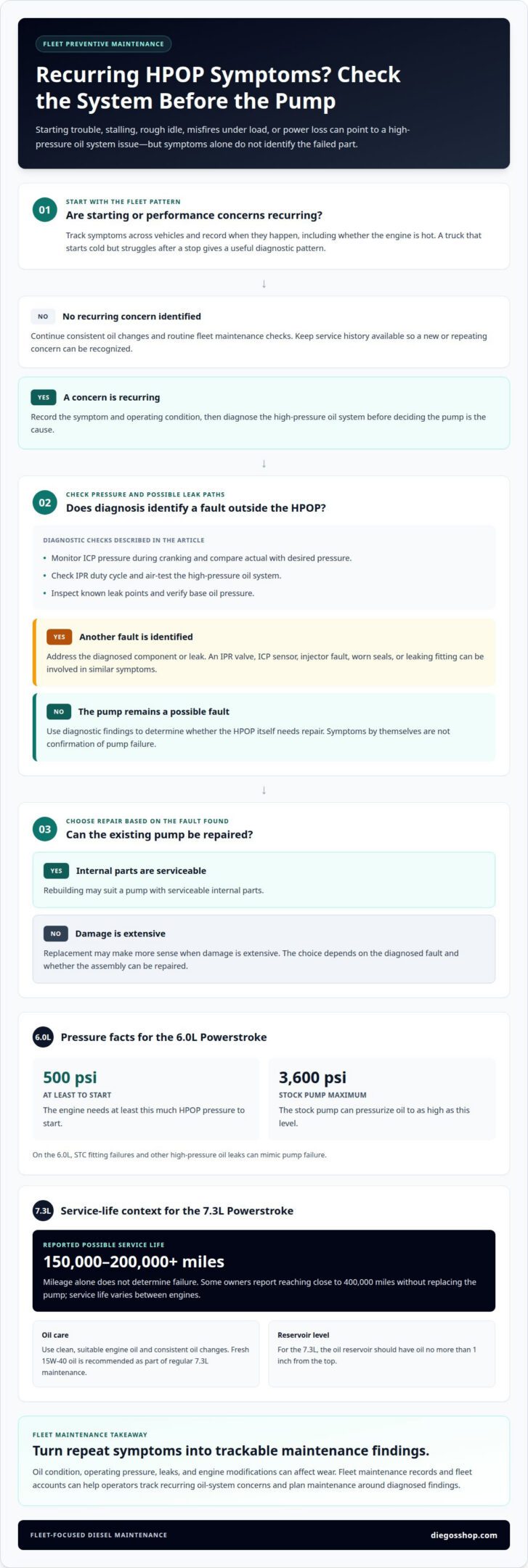
On a 6.0L Powerstroke, hard starting, prolonged cranking, or a warm no-start can point to inadequate high-pressure oil. When these symptoms recur across fleet vehicles, fleet maintenance planning can help identify patterns and schedule diagnosis. Other components can cause similar symptoms, so testing matters before repair or replacement.
Hard Starts and Long Cranking
Hard starts and long cranking occur when a diesel engine takes extra time to build enough pressure for injector operation. On a 7.3L Powerstroke, injection control pressure must reach at least 500 psi for the injectors to fire and the engine to start. A weak HPOP can contribute, but pressure loss elsewhere in the high-pressure oil system can produce similar trouble. Fleet preventive maintenance can help track recurring long-cranking issues and plan diagnosis across vehicles.
Hot-Engine Starting Problems
A hot-start problem means the engine cranks slowly to fire, or will not start, after reaching operating temperature. On a 6.0L Powerstroke, worn seals or a leaking fitting can let high-pressure oil escape, making it harder to build starting pressure when hot. A truck that starts cold but struggles after a stop shows a useful pattern for diagnosis. Fleet maintenance records can track when symptoms occur, including whether the engine is hot.
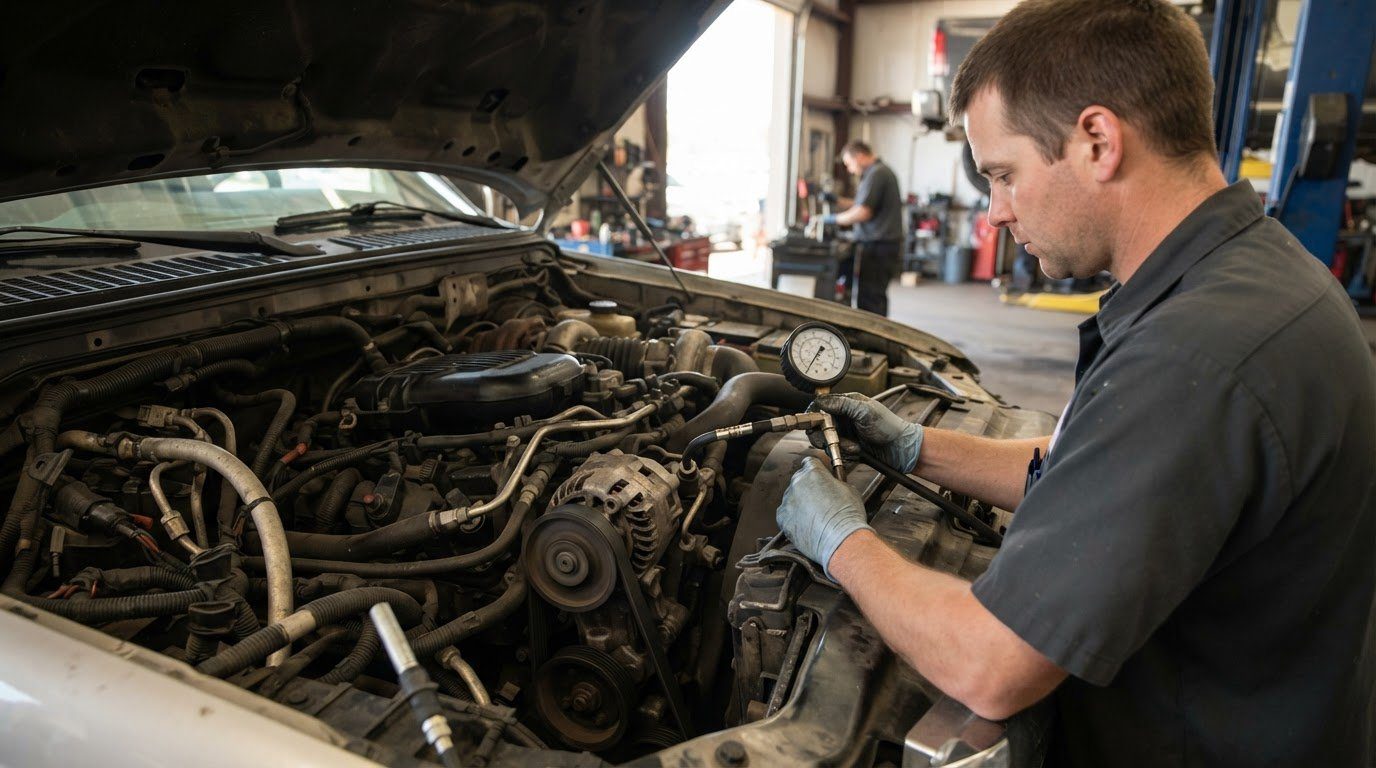
Warm-start and crank-no-start conditions don’t prove the HPOP itself has failed. Diagnosis can monitor ICP pressure during cranking, compare it with desired pressure, check IPR duty cycle, and air-test the high-pressure oil system. Inspecting known leak points and verifying base oil pressure helps distinguish a failing pump from other faults. Fleet accounts can use recurring diagnostic findings to plan maintenance; the IPR and related components may need attention before pump replacement is justified.
In the United States, HPOP replacement cost depends on the engine, required parts, labor, and any related high-pressure oil system repairs. The price is provided after a quote request.
How the HEUI System Works?
In a 6.0 Powerstroke, HEUI injectors use pressurized engine oil to help deliver fuel. That means starting and running depend on both oil pressure and properly working injection components.
The low-pressure oil pump sends oil from the crankcase to the HPOP. The HPOP raises its pressure and supplies the oil rails, which feed the injectors. A 6.0L Power Stroke needs at least 500 psi of HPOP pressure to start; its stock pump can pressurize oil to as high as 3,600 psi.
The 7.3L design differs: its gear-driven HPOP sits at the front of the engine valley and is described as a three-stage pump. The 6.0L HPOP sits at the rear of the engine. On either engine, leaks at fittings or elsewhere in the high-pressure system can prevent the injector from receiving enough oil pressure.
Insufficient or erratic pressure can cause rough idle, misfires under load, loss of power, or stalling. One 7.3L Power Stroke owner reported black smoke and a slight misfire-like sound while driving, though the truck did not feel very sluggish. These symptoms can have causes beyond the HPOP.
A failing pump can contribute to hard starts, stalling, power loss, or a no-start, but symptoms alone don’t identify the failed component. An IPR valve controls pressure, an ICP sensor reports it, and an injector fault can cause similar running problems. Diagnosis compares actual and desired ICP, checks IPR duty cycle, and can air-test the high-pressure oil system.
Driving with stalling or unpredictable power loss can create a road risk. Have the diesel engine assessed to identify the fault before continued operation.
HPOP service life and maintenance
A 7.3L Powerstroke HPOP may last 150,000 to 200,000+ miles, but mileage alone doesn’t determine failure. Some 7.3L owners report reaching close to 400,000 miles without replacing the pump. For fleet operators, oil condition, operating pressure, leaks, and engine modifications all affect wear, so service life varies between diesel engines.
Fleet preventive maintenance starts with clean, suitable engine oil and consistent oil changes. For a 7.3L Powerstroke, fresh 15W-40 oil is recommended as part of regular maintenance. Seals and O-rings can deteriorate internally over time, allowing pressure loss. Fleet maintenance checks can catch small leaks and hot-start trouble early, before continued operation adds stress to other components.
For the 7.3L, the oil reservoir should have oil no more than 1 inch from the top. Sustained high-pressure operation can wear pump components, and performance injectors may demand more oil than a stock HPOP supplies. On a 6.0L Powerstroke, STC fitting failures and other high-pressure oil leaks can mimic pump failure. Diagnosis should identify the failed part before choosing a repair.
Rebuilding may suit a pump with serviceable internal parts; replacement may make more sense when damage is extensive. The choice depends on the fault found and whether the existing assembly can be repaired. Replacement time varies with engine access, diagnosis, and related repairs. DIY work requires the right tools and system knowledge; incorrect installation can leave the engine with starting or pressure problems.
Fleet accounts can help operators track repeat oil-system concerns. Schedule diesel engine repair to diagnose the fault and plan the repair.
Diego’s Shop
Diego’s Shop helps diesel fleet operators address engine concerns with diesel engine repair, fleet maintenance, and preventive maintenance. If starting trouble, stalling, or power loss keeps returning, a focused diagnosis can help identify whether the HPOP, another oil-system component, or a different engine issue needs attention.
For fleet accounts, preventive maintenance can help bring recurring concerns into a planned maintenance process rather than leaving them unnoticed between breakdowns. Repair decisions should follow the diagnosed fault, not symptoms alone. Diego’s Shop also provides warrantied repair work.
Contact Diego’s Shop to discuss an HPOP concern or diesel fleet maintenance needs.
Turn the Next Warning Into a Plan
Recognizing symptoms of a failing high-pressure oil pump (HPOP) is most useful when observations lead to a clear maintenance decision. Record recurring engine concerns alongside operating conditions and service history. That context helps technicians investigate the issue and lets fleet managers plan follow-up instead of treating each warning as an isolated event.
Diego’s Shop provides diesel engine repair, fleet maintenance, and preventive maintenance. For fleet accounts, an ongoing maintenance approach can keep engine concerns visible during service planning. A practical next step is to discuss what the truck is doing, when the symptom appears, and whether it affects other vehicles in the fleet.
Contact Diego’s Shop for help with a diesel engine or fleet maintenance concern. Clear details about the issue give the conversation a useful starting point, so you can move forward with a plan suited to your fleet’s needs.
Frequently Asked Questions
How can fleet operators track recurring HPOP concerns?
A high-pressure oil pump (HPOP) supplies pressurized engine oil for HEUI injector operation. Unlike a fuel pump, it doesn’t deliver diesel to the cylinders; it creates hydraulic force that helps each injector deliver fuel. For fleet maintenance, log HPOP-related symptoms, diagnostic findings, and operating conditions for each truck. This distinction matters during diagnosis: an engine can have adequate fuel supply yet run poorly if its high-pressure oil circuit can’t operate the injectors correctly.
How can fleet preventive maintenance help address HPOP concerns?
HPOP failure can result from mechanical wear or pressure escaping through deteriorated seals, O-rings, or leaking fittings. Neglected oil changes and poor-quality oil can accelerate wear, while continuous high-pressure operation adds stress. Performance injectors may demand more oil than a stock pump can provide. Fleet preventive maintenance can include tracking oil-change history and recurring pressure complaints. A pressure complaint calls for checking the full high-pressure system, rather than assuming the pump alone caused it.
What recurring symptoms should fleet operators document?
Symptoms of a failing high-pressure oil pump (HPOP) may include intermittent no-starts, leaks in the high-pressure oil circuit, or unstable engine operation. A truck might start reliably one day but stall or lose power under load another. Fleet accounts can record whether trouble follows a hot restart, extended idle, or heavy pull. That operating context can help technicians reproduce and diagnose the fault.
How should fleets account for engine model when planning HPOP diagnosis?
The 7.3L Powerstroke was used from model years 1994.5 through 2003, and the 6.0L Powerstroke from 2003 through 2007. Their layouts and high-pressure oil components differ, so a fitting issue on a 6.0L may not apply to a 7.3L. Identify each truck’s engine model and model year before interpreting symptoms or selecting diagnostic checks.
Which diagnostic trouble codes and live-data readings can help fleets plan HPOP maintenance?
P1211 and P2290 can be associated with injection-control-pressure problems, but neither code proves the HPOP has failed. Compare actual and desired ICP during cranking, then review IPR duty cycle. Diagnosis can also include an air test of the high-pressure circuit and verification of base oil pressure. For fleets in Utah County and the Wasatch Front, recording recurring codes with operating conditions can aid fault tracking and maintenance planning.