
Utah County Aggregate Hauler Fleet Service Options

When an aggregate truck is down, more than one job can be affected. A Utah County aggregate hauler fleet service plan should put preventive maintenance first, with fleet maintenance and diesel repair available when equipment needs attention.
Keeping a fleet working takes more than responding to breakdowns. A consistent maintenance approach helps address service needs before they become urgent and coordinate work across multiple vehicles.
This article explains what fleet service can cover and how to identify the right focus for your operation. You’ll learn how preventive maintenance, repair needs, and fleet accounts fit into a practical service approach, so you can make a clearer decision about what your trucks need.
Key Takeaways
- Separate routine fleet maintenance from repairs needed to address a specific issue, so service can match the equipment’s condition.
- Use preventive maintenance to plan upkeep and make maintenance needs easier to manage across the fleet.
- Consider how a fleet account can support a more organized approach to ongoing maintenance needs.
- Recognize when diesel engine repair is the right next step for a truck that needs more than scheduled maintenance.
Utah county aggregate hauler fleet service
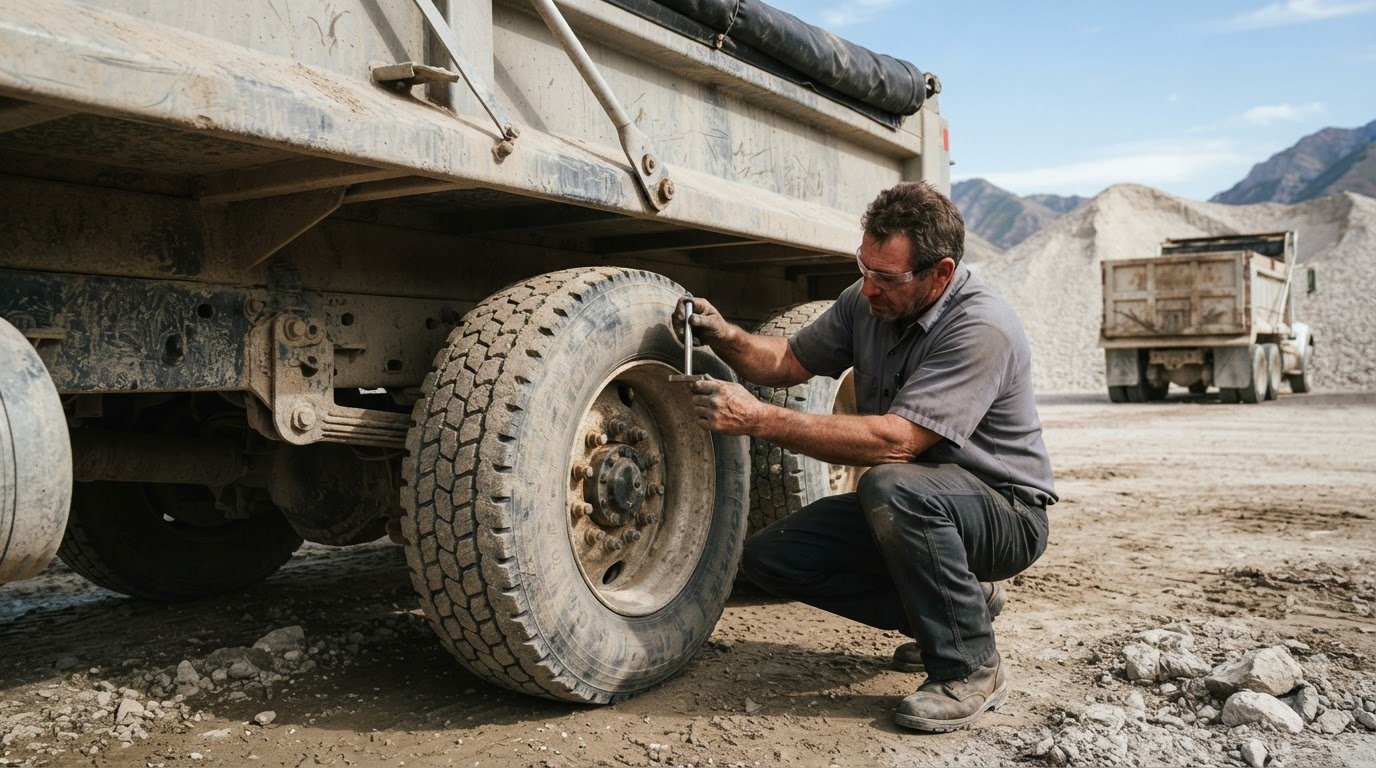
Aggregate hauling puts repeated demands on trucks carrying material between sites, stockpiles, and delivery points. A practical plan combines fleet maintenance with preventive maintenance instead of treating every shop visit as an isolated repair. The work should reflect each vehicle’s condition, service history, and role. A hauler making frequent loaded runs may need a different maintenance focus from a lightly used support vehicle.
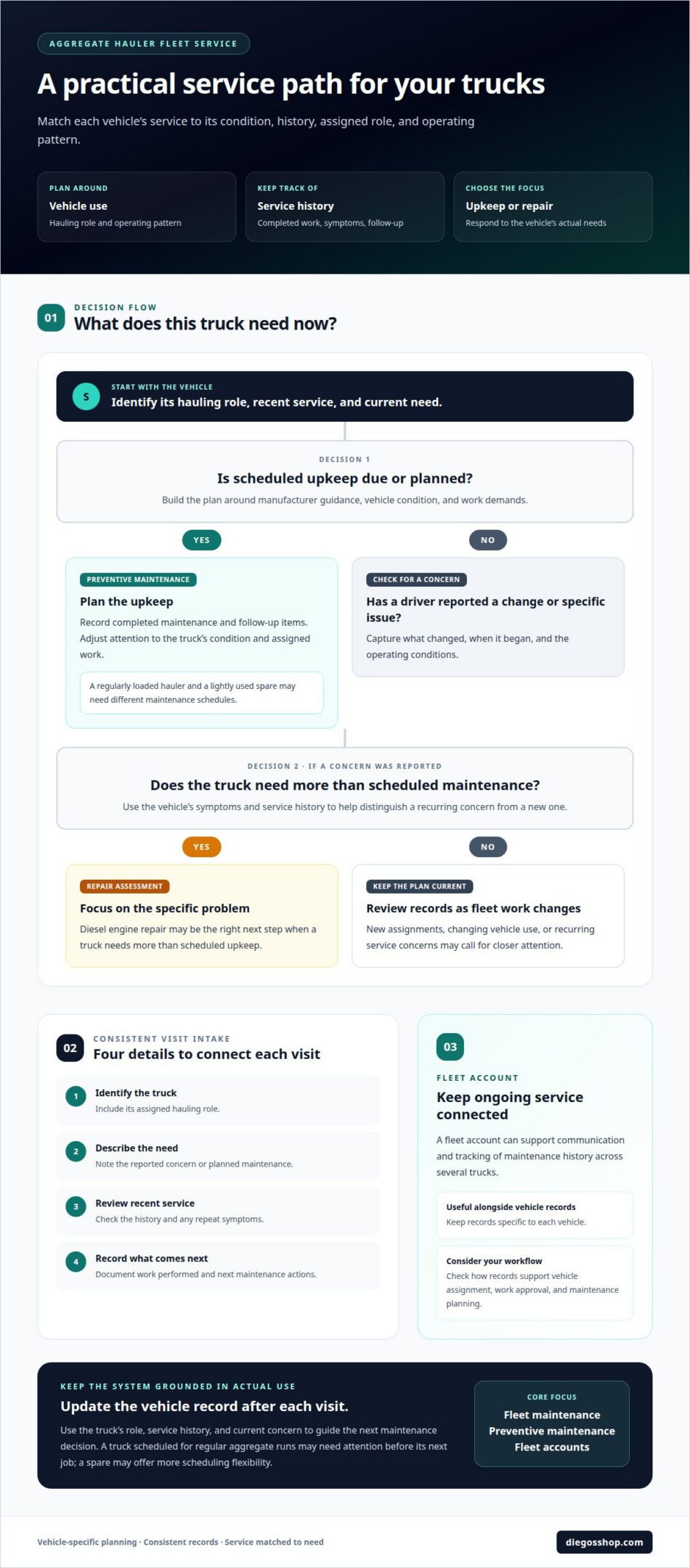
Start by grouping trucks according to vehicle type, assigned work, and operating pattern. A regularly loaded hauler and a lower-use spare, for example, may not need the same maintenance schedule. Keep each vehicle’s service history with its identifying information. This makes recurring concerns easier to spot and helps you plan service around actual use.
Preventive maintenance gives your team a repeatable way to review equipment before a concern grows into a larger interruption. Build the plan around manufacturer guidance, vehicle condition, and work demands. Record completed maintenance, reported symptoms, and follow-up items. If a driver notices a change in engine performance, note when it began and the operating conditions. Specific observations give maintenance staff a clearer starting point than a general report that a truck “doesn’t feel right.”
Use a consistent intake sequence for each maintenance visit:
- Identify the truck and its assigned hauling role.
- Describe the reported concern or planned maintenance need.
- Review recent service history and any repeat symptoms.
- Document the work performed and the next maintenance actions.
Consistent records connect each service visit to the fleet’s broader maintenance picture. If a truck returns with a similar concern, previous notes can show what was addressed and when the issue resurfaced. Good records also help distinguish a new symptom from a recurring one. Avoid relying on memory or scattered paperwork; a consistent record for each vehicle supports better planning.
A fleet account can keep ongoing service connected through a consistent account relationship. For an operation with several trucks, this can make it easier to track maintenance history and communicate which vehicles need attention. Consider whether account records support how your operation assigns vehicles, approves work, and plans maintenance. An account should complement, not replace, vehicle-specific records and a clear preventive maintenance process.
Plan service around operational priorities. A truck assigned to regular aggregate runs may need attention before its next job, while a spare may offer more scheduling flexibility. When arranging service, share the truck’s role, recent maintenance, and reported concern. These details help focus the work on the vehicle rather than treating every hauler as interchangeable.
Review the plan when fleet work changes. A new hauling assignment, a change in vehicle use, or recurring service concerns may mean some trucks need closer attention. Update records after each visit and use them to guide the next maintenance decision. This keeps preventive maintenance grounded in actual fleet conditions and helps managers see upcoming service needs more clearly.
Diego’s Shop
Diego’s Shop helps aggregate haulers organize fleet maintenance around scheduled upkeep and vehicle-specific needs. Turn to the shop for preventive maintenance across your fleet or when a diesel truck develops a problem that needs repair. Keeping service history and reported concerns together helps connect each decision to the vehicle’s condition and role.
When a truck needs more than scheduled upkeep, diesel engine repair can address the specific problem. Diego’s Shop provides warrantied repair work. Start by identifying whether the vehicle needs routine fleet maintenance, preventive maintenance, or a repair. Contact Diego’s Shop to discuss your aggregate hauler fleet’s needs.
Set Your Fleet Up for the Next Haul
A Utah County aggregate hauler fleet service plan works best when it can adapt to changing vehicle use and maintenance needs. Use your fleet records to identify which trucks need scheduled attention and which need a repair assessment. This gives your operation a practical starting point for planning service around actual equipment needs.
Diego’s Shop offers fleet maintenance, preventive maintenance, and diesel engine repair for commercial fleets. Bring forward the vehicle’s service history and a concise description of its current needs to help focus the conversation.
Contact Diego’s Shop to discuss maintenance for your aggregate haulers. A clear plan can help you move forward with confidence.