
What Causes Low Oil Pressure at Idle in a Cummins?

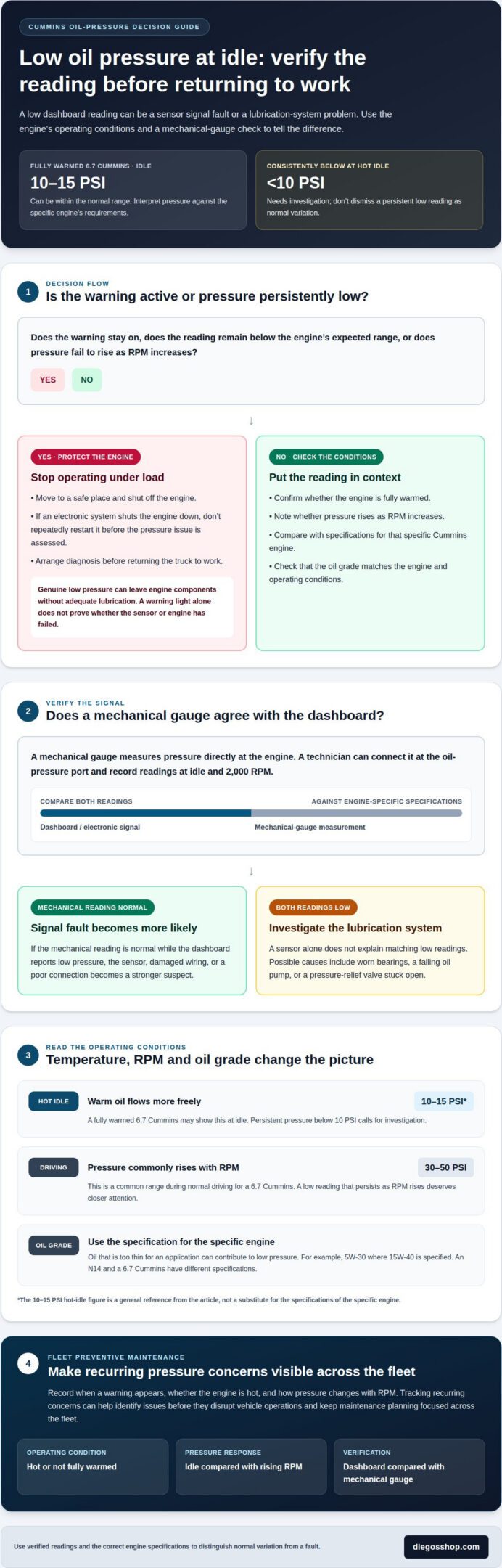
A low oil-pressure reading at idle doesn’t always mean a Cummins engine is failing. The causes of low oil pressure at idle in a Cummins can include normal pressure changes as the engine warms, an inaccurate sensor, oil that’s too thin, or wear in the lubrication system. On a fully warmed-up 6.7 Cummins, 10-15 PSI at idle can be within the normal range; consistently falling below 10 PSI calls for investigation.
It’s reasonable to take a low oil-pressure warning seriously, especially when deciding whether it’s safe to keep driving. The key is to distinguish a normal hot-idle reading from a genuine pressure problem: a faulty signal and a lubrication-system fault need different responses.
This guide explains common causes and warning signs, and how a mechanical gauge can help confirm the reading. You’ll also learn when continued operation may put the engine at risk and when a diesel technician’s diagnosis is the safer next step.
Key Takeaways
- A mechanical-gauge test can help distinguish a faulty sensor reading from a real oil-pressure problem.
- Oil viscosity and the specifications for the specific Cummins engine both affect how to interpret pressure readings.
- Learn which warning signs mean you should stop driving instead of risking further engine damage.
- Fleet preventive maintenance can help identify recurring pressure concerns before they disrupt vehicle operations.
Can a Bad Sensor Cause False Low Oil Pressure?
Yes. A faulty oil-pressure sensor or circuit can report low pressure even when a mechanical gauge shows otherwise. On a 6.7 Cummins, hot-idle pressure commonly ranges from 10-20 PSI, so readings need context.
Sensor Readings and Gauge Testing
An oil-pressure sensor converts pressure into an electrical signal for the gauge or engine control system. A failed sensor, damaged wiring, or poor connection can distort that signal. The dashboard reading alone therefore can’t confirm whether the engine’s lubrication system is producing low pressure. For a 6.7 Cummins showing a low reading at hot idle, comparing the electronic display with a mechanical gauge helps separate a signal fault from an engine problem.
Confirming Pressure with a Mechanical Gauge
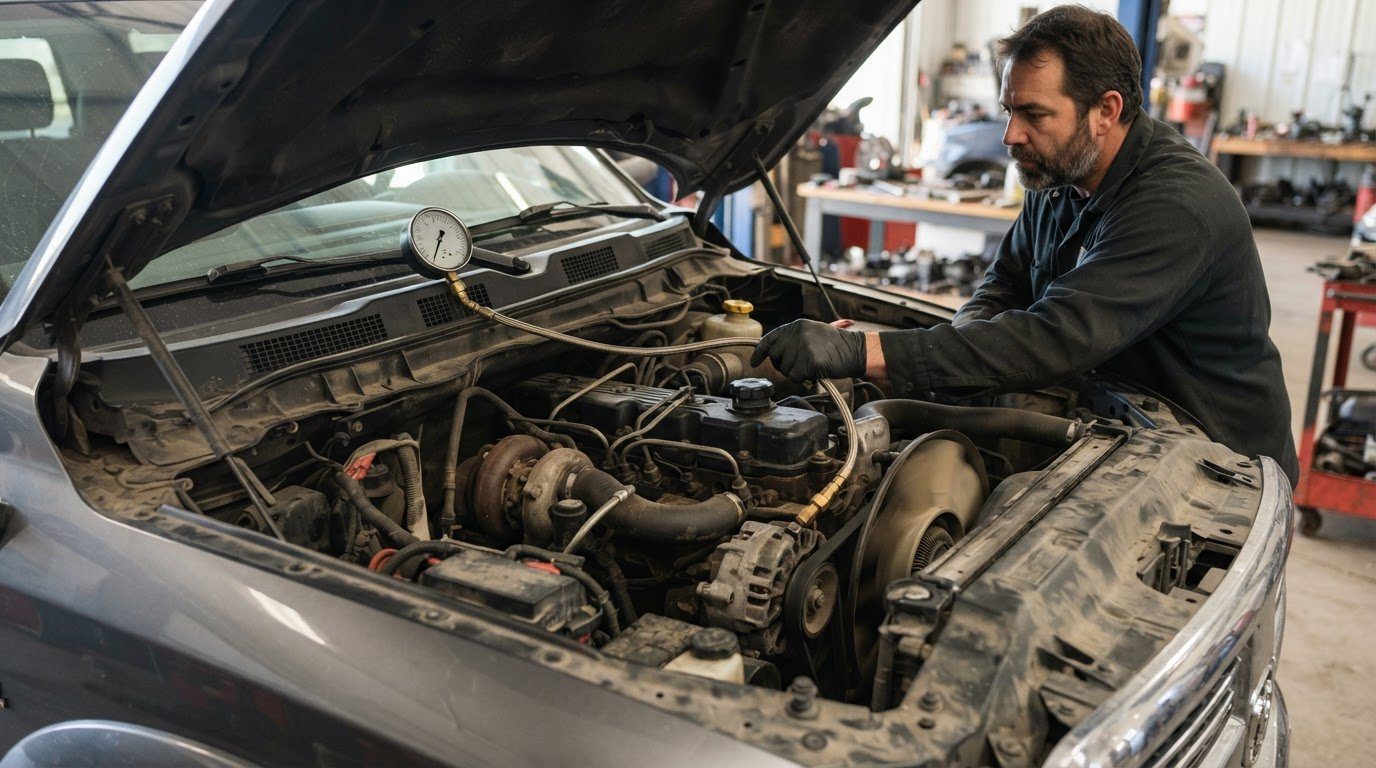
A mechanical gauge measures oil pressure directly at the engine, providing an independent comparison with the sensor reading. A technician connects the gauge at the engine’s oil-pressure port, then records readings at idle and 2,000 RPM. Those results should be compared with the specifications for the specific Cummins engine, since requirements vary by engine. If the mechanical reading is normal while the dashboard reports low pressure, the sensor or its circuit becomes a stronger suspect.
Worn bearings, a failing oil pump, or a pressure-relief valve stuck open can cause genuinely low pressure at idle. Worn bearings let more oil escape through increased clearances, while pump or relief-valve faults can reduce the pressure the system maintains.
If both a mechanical gauge and the dashboard show low pressure, the sensor alone doesn’t explain the problem. A gauge test helps direct diagnosis toward the engine’s lubrication system instead of replacing an electrical component based only on the display.
What Are the Warning Signs That Your Diesel Is Losing Oil Pressure?
Oil grade, engine temperature, and RPM all affect a Cummins pressure reading. Understanding what causes low oil pressure at idle in a Cummins starts with comparing readings with the correct engine specifications, rather than judging one number in isolation.
As a Cummins warms, its oil becomes less viscous and flows more freely, so hot-idle pressure can fall. A fully warmed 6.7 Cummins may show 10-15 PSI at idle, while pressure commonly reaches 30-50 PSI during normal driving. This change needs context: a warm idle reading and a driving reading reflect different operating conditions.
Oil Viscosity and Engine Specifications
Oil viscosity describes how readily oil flows at different temperatures. Using oil that’s too thin for an application, such as 5W-30 where 15W-40 is specified, can contribute to low pressure. The correct grade depends on the engine and operating conditions. An N14 and a 6.7 Cummins have different specifications, so don’t use one engine’s pressure expectations for another.
How Temperature and RPM Change Pressure
Hot oil thins as the engine reaches operating temperature, which can lower pressure at idle. To understand what causes low oil pressure at idle in a Cummins, compare the hot reading with the specifications for that specific engine, and note whether pressure rises as RPM increases.
Oil pressure usually rises with RPM because the oil pump turns faster. On a 6.7 Cummins, checking pressure around 1,500 RPM can show whether it responds to engine speed. A low reading that persists as RPM rises deserves closer attention. A diesel technician can assess the engine through diesel engine repair.
Warning signs and when to stop driving
A low oil-pressure warning deserves immediate attention, especially when the reading stays low after the engine warms. On a 6.7 Cummins, hot-idle pressure consistently below 10 PSI is a reason to investigate, not a reading to dismiss as normal variation.
Watch for a pressure warning that stays on, a gauge reading below the engine’s expected range, or pressure that fails to rise as RPM increases. Electronic control systems may shut an engine down when pressure falls below the level needed for safe operation. A warning light means pressure needs attention, but it doesn’t prove by itself that the sensor or engine has failed.
If the warning appears while driving, move to a safe place and shut off the engine rather than continuing under load. Genuine low pressure can leave engine components without adequate lubrication. Even if the gauge reading is low while the engine sounds and runs normally, a developing lubrication problem cannot be ruled out.
- Pressure stays below 10 PSI at hot idle: Arrange prompt diagnosis, particularly if the reading is consistent.
- The warning remains on as RPM rises: Treat the reading seriously and avoid continued operation.
- An electronic engine shuts down: Don’t repeatedly restart it before the pressure problem is assessed.
A 6.7 Cummins reading around 10-15 PSI at hot idle may fall within the common range, but a persistent reading below 10 PSI needs investigation. The engine’s specific requirements and a verified pressure reading help distinguish normal variation from a fault. If pressure is low or the warning stays on, stop driving and arrange a diagnosis before returning the truck to work.
Diego’s Shop
Diego’s Shop can diagnose whether a Cummins idle-pressure concern comes from a faulty reading or an engine problem. Diesel engine repair can identify the cause and address the repair with warrantied work. For commercial vehicles, fleet maintenance and preventive maintenance can help identify recurring issues and keep maintenance planning focused across the fleet.
Share details that can help explain the concern, such as when the warning appears, whether the engine is hot, and how pressure changes with RPM. This context can support a more focused diagnosis. Diego’s Shop provides warrantied repair work for fleet operators and individual diesel owners who need engine service.
Contact Diego’s Shop to discuss a Cummins oil-pressure concern or fleet maintenance needs.
Make the Next Maintenance Decision With Confidence
Understanding what causes low oil pressure at idle in a Cummins can help you decide what to do next, especially when the truck supports daily fleet operations. Treat an unexplained warning as useful maintenance information: record when it occurs and add it to the vehicle’s service history. Clear records can help reveal recurring concerns and support more consistent preventive maintenance planning.
Diego’s Shop works with diesel owners and fleets on engine repair, fleet maintenance, and preventive maintenance. If an oil-pressure concern needs professional attention or you want to discuss maintenance for your fleet, contact Diego’s Shop. A clear diagnosis is a practical starting point for keeping your equipment ready for its next job.
Frequently Asked Questions
Can You Drive With Low Oil Pressure?
Don’t continue driving if the warning stays on or pressure is confirmed low. Pull over safely and shut off the engine, since continued operation can worsen lubrication-related damage. If the warning appears briefly and clears, don’t assume the problem is resolved. Record when it happened, including whether the truck was idling, accelerating, or carrying a load, and arrange an assessment.
Does Thicker Oil Increase Oil Pressure?
Thicker oil can produce a higher pressure reading, but that doesn’t prove the engine is healthy or make a heavier grade the right fix. Use the viscosity specified for the exact Cummins engine and its operating conditions. Changing grades to mask a low reading may obscure the underlying issue, so consider the oil specification alongside the engine’s symptoms and measured pressure.
How Do You Diagnose the Root Cause, and Can You Do It Yourself?
You can gather useful clues, but identifying an internal engine fault may require professional diagnosis. Note the oil grade and level, recent service history, warning behavior, and whether the reading changes with engine speed. Compare the symptoms with service information for that Cummins model. A mechanical pressure test can help distinguish an inaccurate dashboard reading from a lubrication-system fault.
What Is Considered Normal Oil Pressure for a 6.7 Cummins?
A 6.7 Cummins commonly shows 10-20 PSI at hot idle. The reading changes with temperature and engine speed, so compare it under the same operating conditions as the engine’s specifications. The specific service information for your engine is the reference point, especially if its model year or configuration differs from another 6.7 Cummins.
When Is It Time to Stop Driving and Call a Diesel Specialist?
Stop if a low-pressure warning remains on, pressure stays below the engine’s requirements, or an electronically controlled engine shuts down. Avoid repeatedly restarting the engine before the cause is assessed. For a fleet vehicle, record the warning and take the truck out of normal use until it’s evaluated. Diego’s Shop provides diesel engine repair in Springville for diesel owners and fleets across Utah County and the Wasatch Front.