
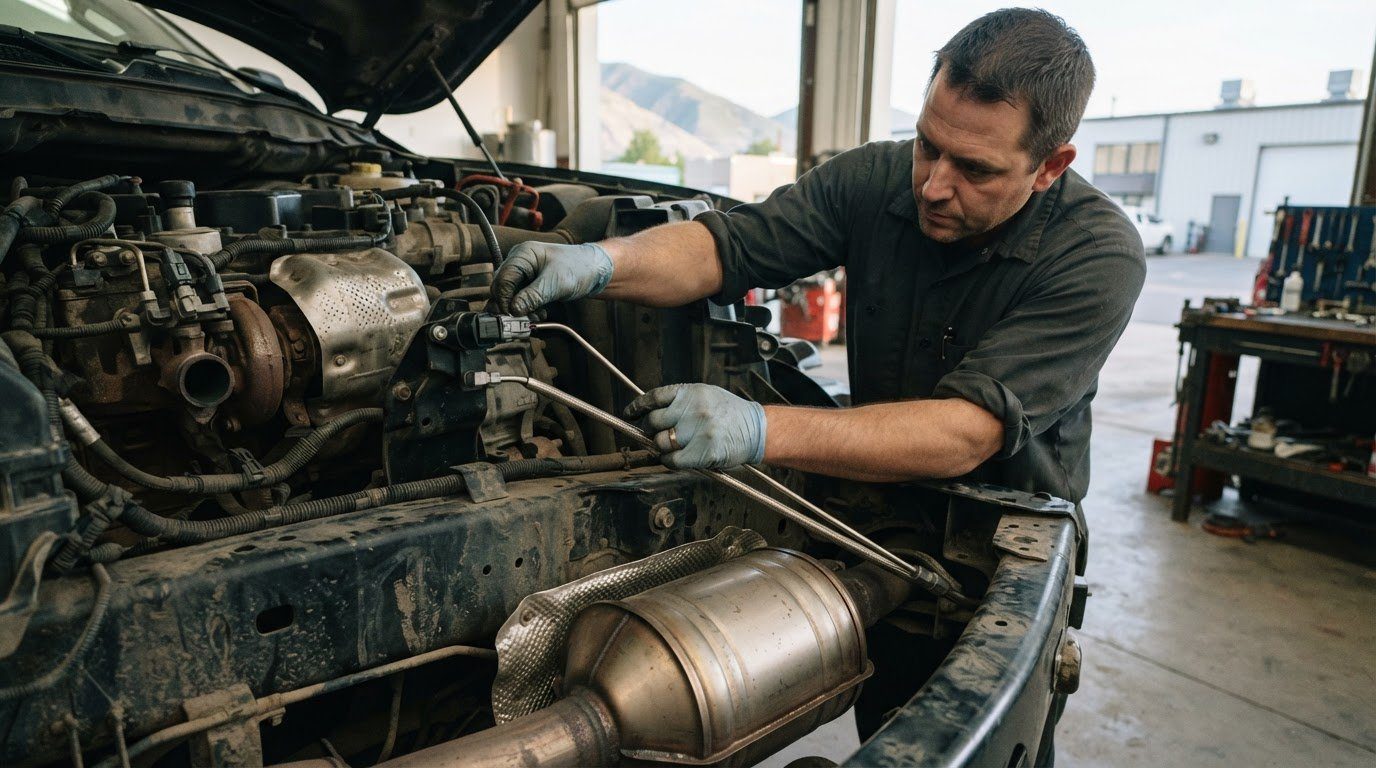
Troubleshooting Constant DPF Regeneration and Its Causes

Troubleshooting constant DPF regeneration issues starts with identifying whether the filter is producing excess soot or its sensors are triggering regeneration incorrectly. Active regeneration burns soot by raising exhaust temperatures to around 600 to 700°C (1100 to 1300°F), while short trips and stop-and-go driving can make regeneration happen more often. Faults elsewhere can also interrupt the process, and a forced regeneration can be unsafe if excessive heat risks damaging the filter or igniting nearby combustible materials.
Frequent regeneration is frustrating, but repeating a forced cycle without finding the cause can make the problem worse. This guide explains how DPF regeneration works, why it may happen too often, which active faults can block it, and when to avoid a forced regeneration. You’ll also learn how diesel diagnostics can distinguish a filter problem from sensor, engine-control, or other exhaust-system faults.
Key Takeaways
- Frequent regeneration can point to short-trip use, excess soot, or inaccurate sensor readings. The pattern alone doesn’t identify the cause.
- Diagnosis should consider sensor readings and active engine or exhaust faults, since some faults can prevent regeneration.
- A forced regeneration isn’t a fix for every DPF problem. Filter condition, soot loading, and the risk from high exhaust heat all matter.
- For fleets, tracking repeated regeneration concerns can support preventive maintenance and help identify underlying engine issues before they persist.
Frequent DPF regeneration as a sign of soot buildup or sensor problems
A diesel particulate filter captures soot, but repeated regeneration can signal excess soot or inaccurate sensor readings. The pattern matters because the engine relies on sensor data to decide when the filter needs cleaning.
DPF Soot Capture and Removal
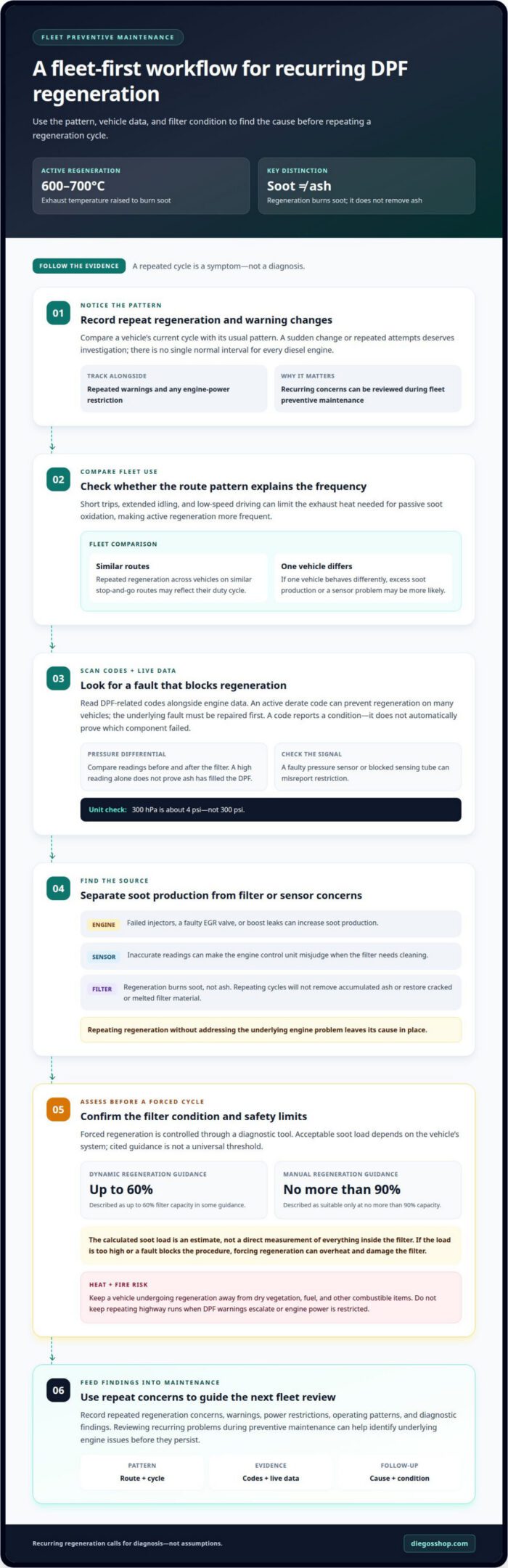
A diesel particulate filter traps soot in its porous walls while allowing exhaust gases to pass through. Regeneration oxidizes that soot, reducing the material collected inside the filter. During active regeneration, the engine control unit raises exhaust temperature, typically to around 600 to 700°C (1100 to 1300°F). This process matters because regeneration burns soot, not ash; recurring cycles cannot remove ash buildup. If soot returns quickly, the engine may be producing excess soot, or sensor readings may be inaccurate.
Soot Levels for Forced Regeneration
Forced regeneration is a diagnostic-tool-controlled cycle, and the acceptable soot load depends on the vehicle’s system. Some guidance describes dynamic regeneration at up to 60% filter capacity, while manual regeneration is described as suitable only when capacity is no more than 90%. These are not universal thresholds for every diesel particulate filter. The engine’s calculated soot load is an estimate, not a direct measurement of everything inside the filter. If the load is too high or a fault blocks the procedure, forcing regeneration can overheat and damage the filter.
Normal Regeneration Frequency
There is no single normal regeneration interval for every diesel engine. Vehicle design, driving conditions, and soot production all affect timing. Under steady driving, the filter can reach the temperatures needed for passive soot oxidation. The engine control unit also uses temperature and pressure readings to determine when active regeneration is needed. Reputable vehicle maintenance specialists like Thurton Auto Centre highlight that regular vehicle servicing is essential for monitoring system health, and a sudden change in the vehicle’s usual cycle, especially repeated attempts, deserves investigation rather than comparison with an assumed mileage target.
Driving Patterns and Frequent Regeneration
Yes. Short trips, extended idling, and low-speed driving can prevent exhaust heat from supporting effective passive regeneration. The filter may then need active cycles more often to burn accumulated soot. For a fleet, repeated regeneration across vehicles on similar stop-and-go routes may reflect their duty cycle. If one vehicle behaves differently, excess soot production or a sensor problem may be more likely. Comparing operating patterns helps distinguish use-related frequency from a developing fault.
Other active fault codes that block regeneration
An active fault elsewhere in the engine or exhaust system can block regeneration, even when the DPF is involved. A diagnostic scan helps identify which condition needs attention first.
Diagnostic Scans and DPF Fault Codes
A diagnostic scan retrieves DPF-related codes and engine data, helping identify faults that may inhibit regeneration. An active derate code can prevent regeneration on many vehicles. The underlying fault must be repaired before a derate-disable command and regeneration command are used. Read codes alongside live data: a code reports a condition, but doesn’t automatically prove which component failed. In the United States, diagnosis, cleaning, or replacement costs depend on vehicle condition, the fault found, and whether cleaning or replacement is needed; pricing follows a quote request.
Pressure-Differential Readings and Sensor Faults
Pressure differential compares exhaust pressure before and after the filter to help assess restriction. A high reading alone doesn’t prove ash has filled the DPF. A faulty pressure sensor or blocked sensing tube can misreport restriction and confuse the diagnosis. For example, 300 hPa is about 4 psi, not 300 psi. Comparing sensor readings with operating data helps distinguish a real restriction from a misleading signal.
Engine Faults Affecting Regeneration
Failed injectors, a faulty EGR valve, and boost leaks can increase soot production. These faults disrupt fueling, exhaust flow, or airflow, causing the filter to collect soot faster. Repeating regeneration without addressing the underlying engine problem leaves its cause in place. Diagnosis should consider engine faults alongside DPF readings. For related concerns, diesel engine repair and DPF and SCR diagnosis can help assess the source of the problem.
Safety limits for forced regeneration
Forced regeneration raises exhaust temperature to burn soot, so it’s a controlled procedure, not a universal fix. Manual regeneration is described as appropriate only when the filter is no more than 90% capacity filled. Above that threshold, forcing a cycle can expose the DPF to damaging heat instead of safely clearing deposits.
Heat also creates a fire risk. Keep a vehicle undergoing regeneration away from dry vegetation, fuel, and other combustible items. An unsuitable cycle can damage the filter, particularly if its internal material is already cracked or melted. Cleaning may remove deposits, but it can’t restore damaged filter material.
Constant regeneration can point to a filter that restricts exhaust flow, raising backpressure and affecting engine performance and fuel consumption. Regeneration burns soot, not ash, so repeating cycles won’t remove accumulated ash. Resetting DPF learned values or service counters also doesn’t clear physical deposits. The fault, filter condition, and type of buildup determine the appropriate next step.
Driving risks increase when DPF warnings escalate or engine power becomes restricted. Don’t keep repeating highway runs in those conditions. A diagnostic assessment should establish whether regeneration is permitted and whether soot, ash, contamination, or filter damage is involved. For fleet vehicles, recording repeated warnings and power restrictions helps identify recurring problems during preventive maintenance.
Arrange a diesel engine assessment when repeated regeneration or escalating warnings raise safety concerns.
Diego’s Shop
Diego’s Shop provides DPF and SCR diagnosis and repair for diesel vehicles with repeated regeneration problems. When fault codes, sensor readings, or engine issues point beyond the filter itself, accurate diagnosis helps identify what needs attention before another regeneration is attempted.
For commercial operators, fleet and preventive maintenance can help address recurring DPF concerns across vehicles and support consistent maintenance planning. Diego’s Shop also provides diesel engine repair when an engine fault contributes to excess soot or regeneration problems. All repairs are warrantied.
If repeated regeneration is affecting your vehicle or fleet, contact Diego’s Shop to discuss the issue and schedule service.
Make DPF concerns part of your maintenance plan
For a fleet, recurring DPF concerns can inform maintenance planning, not just a single repair decision. Keep service records linked to each vehicle’s history so your team can spot repeat patterns and plan preventive maintenance around individual needs. This creates a clearer starting point for addressing ongoing issues and maintaining fleet readiness.
Diego’s Shop provides Fleet Maintenance, Preventive Maintenance, and Diesel Engine Repair. A practical next step is to discuss how these services can support your fleet when repeated regeneration concerns affect its maintenance needs. For help with troubleshooting constant DPF regeneration issues, contact Diego’s Shop about your fleet’s maintenance needs. A clear plan starts with the right conversation.
Frequently Asked Questions
What Is DPF Regeneration?
DPF regeneration is the vehicle’s process for reducing soot collected in its filter. It can happen passively during driving, actively through engine-managed exhaust heating, or as a parked cycle while the vehicle is stationary. Recognizing which mode is underway helps distinguish an expected cleaning event from a repeated cycle that interrupts normal work.
What causes a diesel truck to regenerate its DPF constantly?
Repeated cycles can result from driving conditions, inaccurate sensor input, or an engine fault producing excess soot. If several trucks on the same urban route show this pattern, their duty cycle may contribute. If one truck differs from the rest of the fleet, its engine or exhaust system needs closer diagnosis. Injector, EGR, and boost faults are possible causes.
How can I tell whether frequent DPF regeneration is caused by a faulty sensor or a clogged filter?
A technician compares pressure and temperature sensor data with the vehicle’s operating state, then inspects pressure-sensing tubes and connections. Consistent readings that indicate restriction can point to a filter problem, while implausible or conflicting data may indicate a sensor or tube fault. Soot estimates also help, but they don’t directly measure all material inside the filter.
What diagnostic trouble codes indicate DPF regeneration problems?
There isn’t one universal code list for every diesel truck; identifiers vary by engine and control system. A scan may show a DPF restriction, a temperature or pressure-sensor fault, or an active derate condition that inhibits regeneration. Read the exact code and its status alongside live data, since a code identifies a detected condition rather than confirming a failed part by itself.
How do I troubleshoot frequent DPF regeneration step by step?
A sound workflow for troubleshooting constant DPF regeneration issues starts with scan results and live sensor data. Technicians then inspect pressure-sensing lines, assess engine faults that increase soot, and evaluate the filter for restriction, ash, contamination, or damage. They address blocking faults before deciding whether regeneration is safe. For fleets in Springville, Orem, Provo, Spanish Fork, Payson, Nephi, Lindon, Pleasant Grove, and Utah County, maintenance records can help reveal repeat patterns.