
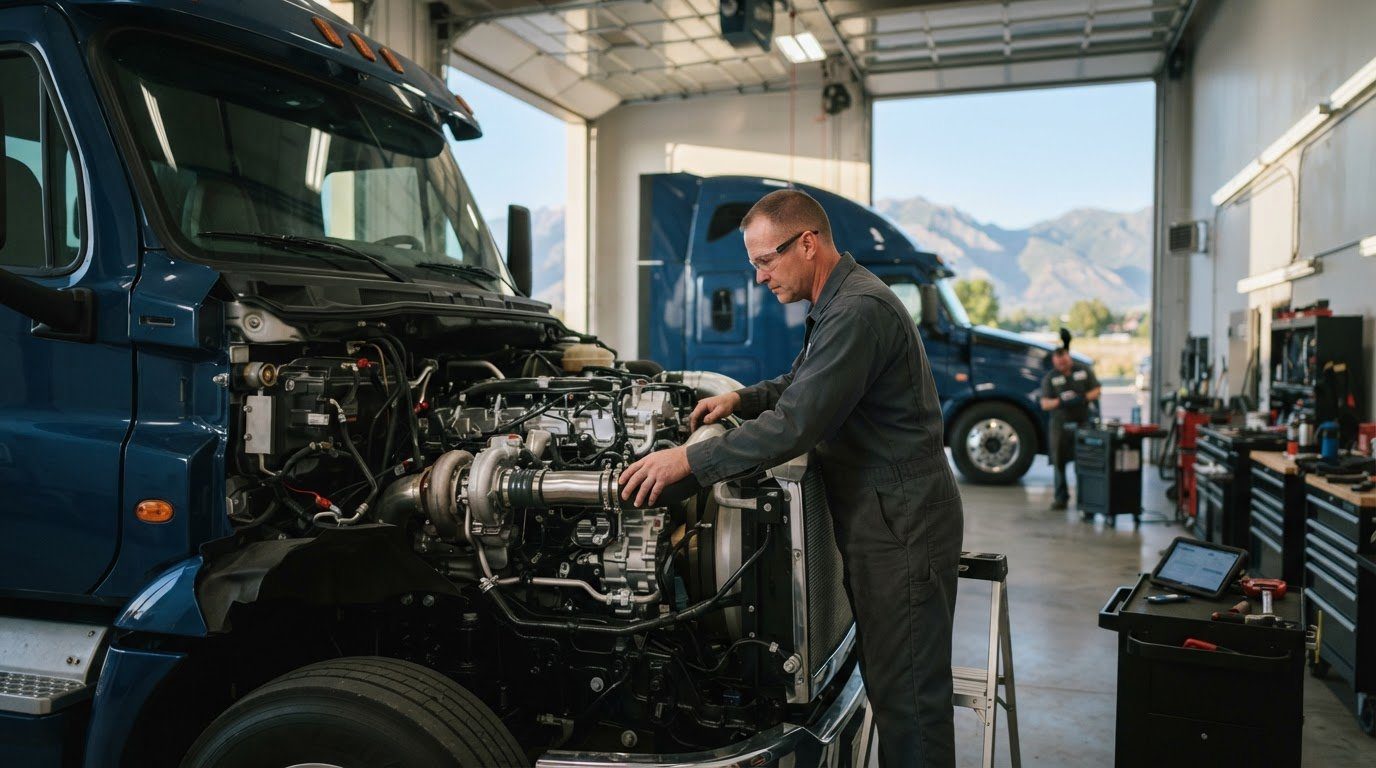
What Maintenance Is Needed After a Turbo Replacement?

A replacement turbo is only one part of getting a diesel vehicle back to reliable operation. Knowing what maintenance is needed after a turbo replacement means following the repair-specific instructions, addressing the cause of the original failure, and watching for changes as the vehicle returns to work.
For fleet managers, a clear follow-up plan helps drivers report concerns and keeps repair details connected to the vehicle’s service history. The right steps depend on the vehicle and the work performed, so use the repair documentation and manufacturer guidance rather than applying a one-size-fits-all break-in rule. This article covers practical follow-up checks, including oil supply and intake-system concerns, warning signs that need attention, and ways to include relevant checks in fleet preventive maintenance. Organized maintenance and diesel diagnostics can help fleets manage repaired vehicles and identify concerns before they disrupt operations.
Key Takeaways
- Understanding what maintenance is needed after a turbo replacement starts with addressing the original failure, not just fitting a replacement.
- Use repair documentation and vehicle manufacturer instructions to guide checks before returning the truck to work and during early operation.
- Watch for changes in engine performance or signs of oil, intake, or exhaust concerns, and respond promptly.
- Record repair details and follow-up findings in fleet records, then fold appropriate checks into preventive maintenance.
Why the Cause of Turbo Failure Matters After a Replacement
A replacement addresses the damaged component, but it may not resolve the condition that caused the damage. Post-replacement maintenance means following the instructions for the specific repair and monitoring the engine as the vehicle returns to work. For fleet managers, understanding what maintenance is needed after a turbo replacement starts with knowing what the repair revealed and what requires follow-up.
A turbocharger depends on the engine’s systems to operate as designed. Engine oil lubricates its moving components, while the intake and exhaust paths affect airflow through the system. A restriction, leak, or related engine fault can change operating conditions and contribute to poor performance or further damage. The Turbocharger overview explains how the device uses exhaust energy to compress intake air.
Why a replacement turbo needs the surrounding system considered
Oil condition and flow matter because the turbo’s components depend on a steady supply of clean engine oil. If the original problem involved oil supply or contamination, fitting a replacement without addressing the underlying issue can put the new unit at risk. Follow the vehicle manufacturer’s guidance and repair documentation for the correct oil and service timing instead of relying on a universal interval.
Air leaks, blocked intake paths, exhaust restrictions, and related faults call for diagnosis rather than guesswork. A change in power, unusual noise, smoke, or oil use can be useful information, but it does not identify the cause on its own. Record what the driver observes and have the concern assessed through diesel diagnostics—established service centers like parkertransmissionrepair.com provide comprehensive truck maintenance and diagnostic evaluations for complex vehicle symptoms. These details give fleet maintenance teams a better basis for deciding whether a symptom may be connected to the repair or points to another engine-system problem.
Diesel Checks and Operation After Turbo Replacement
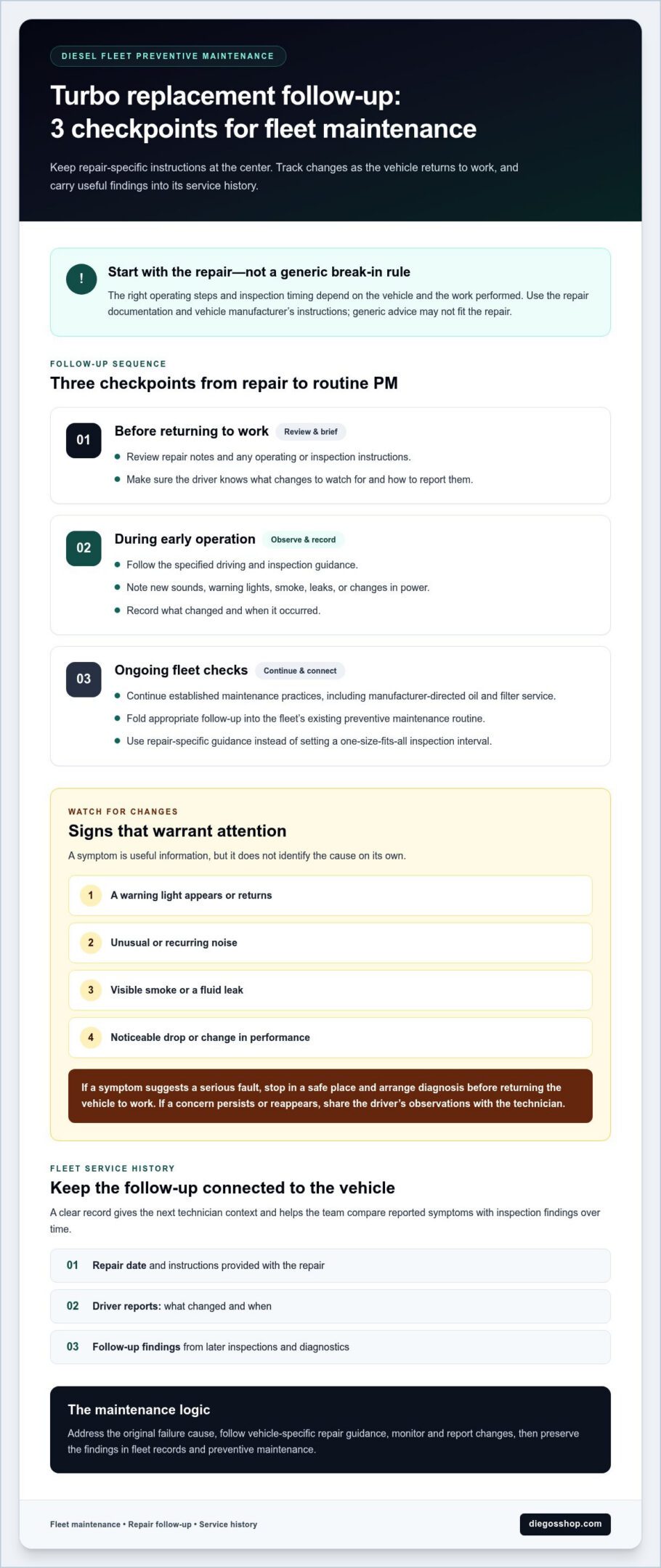
Post-repair operating steps and inspection timing depend on the vehicle and the repair. Use the repair documentation and vehicle manufacturer’s instructions as the authority. Generic break-in advice may not fit the work performed or the diesel engine in your truck.
Organize the follow-up in three stages:
- Before returning to work: Review the repair notes and any operating or inspection instructions. Make sure the driver knows what changes to watch for and how to report them.
- During early operation: Follow the specified driving and inspection guidance. Note new sounds, warning lights, smoke, leaks, or changes in power, and record when they occur.
- Ongoing checks: Continue the vehicle’s established maintenance practices, including manufacturer-directed oil and filter service. General Diesel Engine Servicing guidance can provide context, but it should not replace instructions specific to this repair.
Which warning signs should prompt a prompt inspection?
Pay attention to a warning light that appears or returns, unusual noise, visible smoke, fluid leaks, or a noticeable drop in performance. These signs do not identify the cause on their own, so avoid guessing or assuming the replacement turbo is responsible.
If a symptom suggests a serious fault, stop in a safe place and arrange for the vehicle to be diagnosed before putting it back to work. For fleet teams, a clear driver report of what changed and when can make follow-up more useful. Diesel diagnostics and fleet maintenance support help address post-repair concerns and connect follow-up with the vehicle’s service needs.
Build Turbo Follow-Up Into Diesel Fleet Preventive Maintenance
Make post-repair follow-up part of the fleet’s preventive maintenance process. Record the repair date, instructions provided with the repair, symptoms reported by the driver, and findings from later inspections. Keep those notes with the vehicle’s service history so the next technician has useful context.
A fleet record helps teams compare post-repair symptoms with inspection findings and spot changes over time. It can also help managers plan vehicle availability, share relevant details across shifts, and decide when a concern needs further attention. Rather than setting a separate inspection interval for every truck, incorporate appropriate checks into the fleet’s established maintenance routine and follow repair-specific guidance. For teams reviewing how comprehensive log book servicing and fleet vehicle management support long-term reliability, velocetuning.com.au offers a helpful example of structured vehicle care.
When a diesel fleet should arrange diagnostic follow-up
A warning light that returns, recurring unusual sounds, smoke, a leak, or a noticeable change in performance warrants attention. If a symptom persists or reappears, computerized diagnostics can help identify what needs investigation instead of relying on assumptions. Record the driver’s observations and share them with the technician.
Diego’s Shop supports diesel fleets with engine repair, computerized diagnostics, and preventive maintenance programs. These services help fleet teams address concerns and organize maintenance across their vehicles. For additional fleet context, see Fleet Maintenance: A Complete Guide to Preventing Downtime and Expert Diesel Engine Repair: A Guide to Service Done Right. The Diesel Engine Maintenance Program also provides background on diesel engine maintenance. Keep repair notes accessible, follow vehicle-specific instructions, and include relevant follow-up in the fleet’s routine. That’s a practical way to manage what maintenance is needed after a turbo replacement without applying a one-size-fits-all schedule.
Keep Your Fleet Ready for the Miles Ahead
Use the follow-up after a turbo replacement to strengthen your fleet’s maintenance process. Clear service records and timely attention to changes help your team make informed decisions about each vehicle and plan work with fewer surprises. When deciding what maintenance is needed after a turbo replacement, let repair documentation and vehicle-specific guidance shape the next steps.
Diego’s Shop supports diesel vehicles and fleets with preventive maintenance programs and modern diesel diagnostic technology. Certified technicians handle the work, and all repairs are 100% warrantied. For fleets in Utah County and the Wasatch Front, including Springville, Orem, Provo, Spanish Fork, Payson, Nephi, Lindon, and Pleasant Grove, Diego’s Shop provides local diesel repair and fleet maintenance support.
Schedule diesel service with Diego’s Shop for your fleet’s next maintenance need.
Frequently Asked Questions
Can I drive normally immediately after a turbo replacement?
Not necessarily. Follow the repair instructions and vehicle manufacturer guidance before returning the truck to regular work. There is no single break-in rule that fits every diesel engine and repair. For example, a fleet dispatcher can give the driver any documented operating limits before assigning a demanding route. If the truck develops a new sound, smoke, warning light, or performance change, do not assume it is normal.
Should I change the engine oil after a turbo replacement?
Follow the oil and filter requirements in the repair documentation and the vehicle manufacturer’s maintenance guidance. Do not assume every replacement requires the same immediate oil change or service interval. Enter the completed service in the vehicle record, including the date and work performed. This gives fleet staff a reliable reference when planning the next maintenance task.
What warning signs should I watch for after a turbo replacement?
Watch for new or returning warning lights, unusual engine or turbo sounds, visible leaks, smoke, or a noticeable change in power. These symptoms can have different causes, so they are not a diagnosis by themselves. If a symptom is severe or getting worse, stop safely and arrange an inspection. A driver’s notes about when it began and under what conditions can help technicians assess it.
Does fleet maintenance need to change after a turbo replacement?
Update the vehicle’s service record and coordinate follow-up with your existing preventive maintenance process instead of setting one interval for every truck. Diego’s Shop provides preventive maintenance programs for diesel fleets in Utah County and the Wasatch Front. The shop serves Springville, Orem, Provo, Spanish Fork, Payson, Nephi, Lindon, and Pleasant Grove, helping fleet teams organize diesel maintenance locally.