
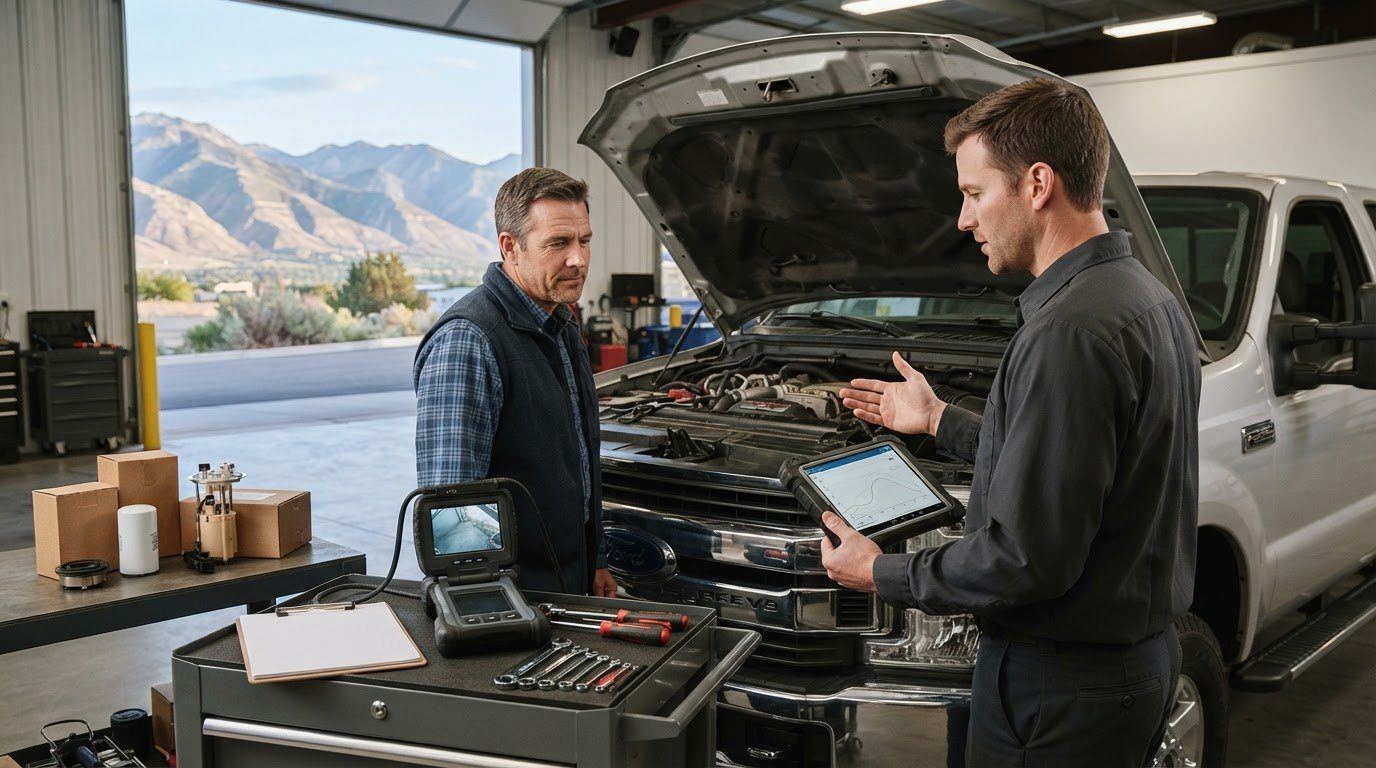
Insurance for Diesel Engine Replacement: 2026 Guide

What caused your diesel engine to fail may matter more to an insurance claim than the replacement estimate. Using insurance for diesel engine replacement may be possible when damage results from a covered sudden event, but mechanical breakdown, wear, and missed maintenance are generally treated differently.
It’s understandable to feel uncertain while an insurer reviews the failure, inspects the engine, and weighs repair options. Start by checking your policy and building a clear record before authorizing major work.
This guide explains which policy details and claim circumstances can affect coverage, what to document after an engine failure, and how to handle inspections and repair estimates with your insurer. You’ll also learn how to compare repair, rebuild, and replacement recommendations and choose a diesel specialist who can explain technical findings clearly. Diego’s Shop provides diesel engine diagnostics and repair for light-, medium-, and heavy-duty vehicles, and can help you understand your engine’s condition and repair needs. Coverage decisions remain with your insurer, but a well-documented assessment can help you discuss the work with greater confidence.
Key Takeaways
- Coverage for a diesel engine replacement depends on the policy, the cause of failure, and the facts of the claim.
- Using insurance for diesel engine replacement starts with checking your policy and asking the insurer what steps and approvals it requires.
- Compare repair, rebuild, and replacement recommendations using the documented engine condition, proposed work, and supporting evidence.
- Before authorizing teardown or additional diagnostics, ask whether the insurer needs to approve the work first.
- Choose a diesel repair shop that can explain its findings and estimate clearly. Shop selection alone doesn’t determine claim coverage.
Can Insurance Pay for a Diesel Engine Replacement? Start With the Cause
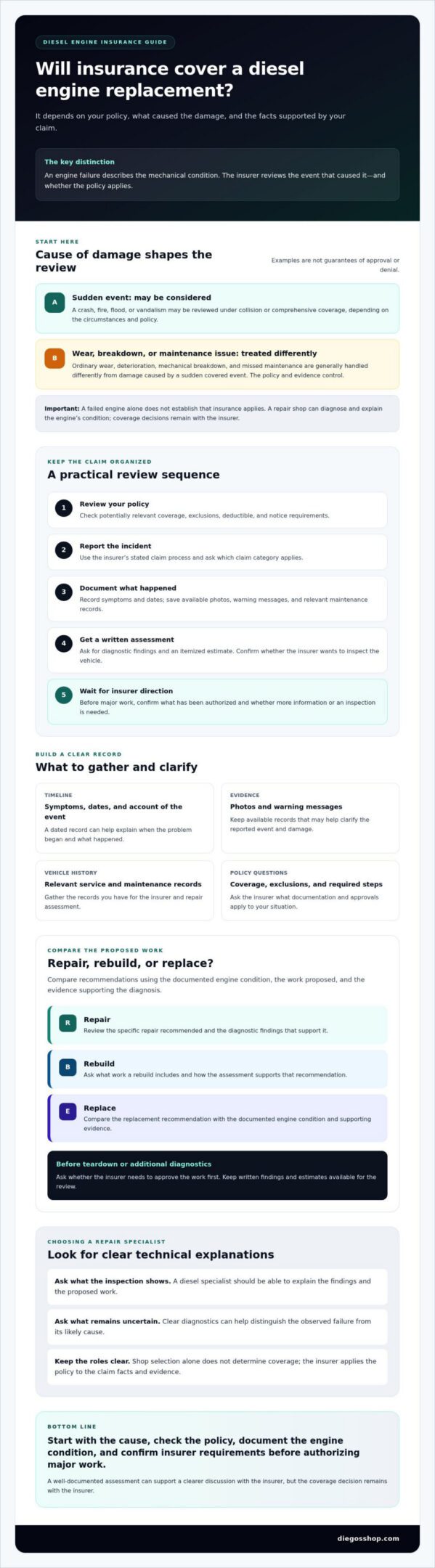
Yes, a diesel engine replacement may be covered, but coverage depends on the policy language, the cause of the damage, and the facts of the claim. A sudden event, such as a crash, fire, flood, or vandalism, may be considered under collision or comprehensive coverage, depending on the circumstances and policy. Ordinary wear, mechanical breakdown, and maintenance issues are generally treated differently. No single type of failure guarantees approval or denial.
An engine failure describes what happened mechanically; an insured cause is the event the policy may cover and that led to the damage. That distinction matters. The failed engine is the condition to assess, while the insurer investigates what caused it and whether the policy applies. A repair shop can diagnose the engine and explain its condition, but the insurer decides coverage under the policy.
What circumstances may lead to an engine replacement claim?
A collision that damages the engine, a fire in the engine compartment, or floodwater entering the engine are examples of events an insurer may review. Whether any of these is covered depends on the policy and claim facts. A dated account of what happened, photos, warning messages, and service records can help clarify the timeline and connect the reported event to the damage. Check your policy’s definitions, exclusions, and conditions, then ask your insurer what documentation it needs.
Does insurance cover mechanical breakdown or wear?
A mechanical problem alone doesn’t establish that insurance applies. Wear, deterioration, or an internal failure may be handled differently from damage caused by a sudden covered event, but the policy and evidence control. Some owners may have a separate mechanical-breakdown contract, which isn’t necessarily part of an auto insurance policy. Review the contract’s terminology and ask the provider what it covers before assuming it applies.
Clear diagnostics can help distinguish the observed failure from its likely cause. Diesel engines, including the turbo-diesel engine designs common in trucks, have systems that require diesel-specific technical assessment. Ask the repair specialist to explain what the inspection shows, what remains uncertain, and how the findings relate to the reported event. That information can support a useful discussion with the adjuster, but it doesn’t determine coverage.
When using insurance for diesel engine replacement, start with the cause and your policy, not the assumption that a failed engine will automatically be covered. Confirm the insurer’s review steps before authorizing major work, and keep records of communications and findings as the claim progresses.
How Insurers Review a Diesel Engine Replacement Claim
After you report the incident, the insurer will review the policy and available evidence before deciding how to handle the claim. The process may involve questions about what happened, an inspection, or requests for more information. Ask what the insurer needs, and wait for its direction before authorizing work that could affect the review.
Use this sequence to keep the claim organized:
- Review your policy. Find the coverage that may apply and check its exclusions, deductible, and notice requirements.
- Report the incident. Contact the insurer through its stated claim process and ask which claim category applies.
- Document the damage. Record symptoms and dates, save available photos and warning messages, and gather relevant maintenance records.
- Obtain an assessment. Ask the repair shop for written diagnostic findings and an itemized estimate. Confirm whether the insurer wants to inspect the vehicle.
- Wait for direction. Confirm what work, if any, the insurer has authorized and whether it needs more information before repairs proceed.
These are practical steps, not a promise of coverage. The insurer applies the terms of your individual policy to the reported incident and available evidence.
Which policy details should you check first?
Read the actual policy, including applicable coverage sections, exclusions, deductibles, and any requirements for reporting a loss. Then ask the insurer which coverage and documents apply to your situation. General descriptions of collision, comprehensive, or mechanical-breakdown coverage can help you frame questions, but they can’t confirm how your claim will be decided.
What records help explain the engine damage?
Gather the records you have, even if they’re incomplete. A dated account of the incident and symptoms, warning messages, maintenance history, service records, and photos can help establish the sequence of events. Request written diagnostic findings and an itemized repair estimate from the shop. Diagnostics describe the engine’s condition and may inform discussion of the likely cause, but they don’t guarantee coverage.
Before discussing the claim, organize your policy, incident notes, maintenance and service records, warning messages, diagnostic findings, estimate, and insurer correspondence. Keep a log of conversations with dates, names, questions, and requested follow-up. If your concern is about auto repair or warranty service, rather than the insurance decision, USA.gov’s guidance on filing a car complaint may help you identify a separate next step.
Clear diesel diagnostics can make technical findings easier to discuss with your insurer. If you need help understanding an engine’s condition or repair needs, you can discuss diesel engine diagnostics with Diego’s Shop. The insurer remains responsible for determining coverage.
Repair, Rebuild, or Replace: Compare the Insurer’s Options
Replacing the engine isn’t the only possible response to a serious failure. Depending on the inspection findings, proposed repair scope, and vehicle’s needs, options may include repairing affected components, rebuilding the engine, or installing a replacement. The right option depends on the findings and what the vehicle needs, not simply on which estimate has the lowest total.
An insurer may review the shop’s assessment and estimate, request an inspection, or ask for more detail before deciding what work it will consider under the claim. Ask the adjuster how to submit alternatives and whether another inspection or authorization is needed before work begins. A shop’s technical recommendation and the insurer’s coverage decision are separate matters.
When might repair or rebuilding be considered?
Ask the technician to identify the damaged components and explain whether related systems need inspection. A repair may address specific damage, while a rebuild involves work on the engine itself. The scope depends on the findings, so don’t assume a rebuild is always cheaper or more reliable than replacement. Request written findings that describe the parts and labor included, the evidence behind the recommendation, and any remaining uncertainty.
What should a replacement estimate make clear?
A useful estimate should identify the proposed engine and relevant specifications, the components included, the labor scope, and any related work. Ask how the replacement matches the vehicle’s application and addresses the diagnosed failure. If estimates differ, compare what each includes and assumes, not just the total. For more context on repair scope, see this guide to expert diesel engine repair guidance.
Use a consistent set of questions to compare options:
- Condition: What inspection findings support the proposed work?
- Scope: Which parts, labor, and related work are included or excluded?
- Evidence: Does the estimate explain how the work addresses the documented damage?
- Open items: What could change after further inspection, and would that require insurer approval?
When using insurance for diesel engine replacement, keep the written assessment, estimates, and insurer instructions together. If a revised estimate adds work or changes the proposed option, ask the shop to explain why and check with the insurer about its review and approval requirements before authorizing the change. Clear comparisons help you discuss the repair plan with both the technician and adjuster without assuming any option guarantees claim payment.
What to Do Before Authorizing Diesel Engine Work in Utah
Before approving major work, document the vehicle’s condition and understand what the insurer and repair shop each need. A clear sequence can help preserve useful evidence and prevent avoidable confusion. If the vehicle may be unsafe to operate, don’t drive it until you’ve confirmed a safe way to handle it.
- Protect the vehicle. Avoid running or moving it if doing so could create a safety risk or worsen damage. Ask the insurer or shop how to handle transport and storage.
- Contact the insurer. Report the situation and ask about the claim process, inspection, and any advance approvals.
- Document symptoms. Record when the problem appeared, what you observed, and any warning messages. Keep relevant photos and service records.
- Arrange an assessment. Ask the shop to explain its findings and proposed work in writing. Confirm which diagnostic steps the insurer wants before they begin.
- Confirm authorization. Get the insurer’s instructions in writing before approving work that may affect the claim.
Ask specifically whether teardown, storage, or additional diagnostics need advance approval. These steps may affect what can be inspected or documented, so confirm requirements with both the insurer and repair facility. Urgency depends on the vehicle’s condition and safety. Don’t assume there is a universal deadline or that every claim follows the same sequence.
How should you coordinate the insurer and repair shop?
Share the claim contact details and the insurer’s instructions with the repair facility. Ask who will arrange any inspection, how the shop should submit additional findings, and whom to contact if the diagnosis changes. Keep copies of written approvals and note which work each one covers before authorizing it. Clear communication helps keep the claim review and repair assessment aligned.
What should Utah owners confirm before work begins?
Confirm the applicable policy terms and claim process directly with your insurer rather than assuming one rule applies across Utah. Ask the shop what diagnostic findings, estimate details, and records it can provide for review. For commercial vehicles, coordinate with the fleet manager and document decisions about downtime and vehicle use.
Diego’s Shop provides diesel engine diagnostics and repair for light-, medium-, and heavy-duty vehicles in Springville, serving Utah County and the Wasatch Front. Learn more about diesel repair in Utah. If you need help clarifying your engine’s condition before discussing the repair scope with your insurer, talk with a diesel repair specialist. The insurer, not the shop, determines whether the claim is covered.
Choosing a Diesel Repair Shop for an Insurance-Supported Replacement
Look for a repair facility that can assess diesel-specific engine concerns, explain its findings in plain language, and provide an estimate that clearly describes the proposed work. A detailed assessment can help you discuss the repair scope with your insurer. Choosing a shop and obtaining insurer approval are separate decisions, and neither guarantees that a claim will be paid.
Questions to ask before selecting a repair facility
Start by asking whether the shop works on your vehicle’s engine and application. If it’s used for heavy-duty or commercial work, ask about experience with that type of use. Then discuss how the shop communicates diagnostic findings and explains estimate changes if inspection reveals additional damage.
- Can the shop explain the diagnosis, recommended scope, and what remains uncertain?
- Will you receive a written estimate, and how will changes be communicated?
- What warranty terms apply to the proposed repair? Ask for the applicable terms in writing before relying on them.
- Can the shop coordinate its findings with the insurer’s inspection or documentation requests?
Clear answers help you understand the technical recommendation and next steps. They also make it easier to identify questions for the adjuster before authorizing work.
How Diego’s Shop can support the repair decision
Diego’s Shop provides diesel engine diagnostics and repair for light-, medium-, and heavy-duty vehicles from its location in Springville, serving Utah County and the Wasatch Front. Its experience includes Peterbilt, Kenworth, Isuzu, and Ford vehicles. Discuss your vehicle and how it is used with the shop to determine whether its diesel repair experience fits your needs.
As you consider using insurance for diesel engine replacement, keep the roles clear: a repair shop assesses engine condition and repair needs, while your insurer determines coverage and any claim authorization. Ask the shop what findings and estimate details it can provide, then confirm directly with the insurer what it requires. No diagnostic assessment or shop selection can promise a particular claim outcome.
If you have questions about a diesel engine concern or want to discuss repair needs, contact Diego’s Shop to discuss diesel engine repair. It’s a practical way to talk through the technical side before deciding on next steps.
Move Forward With a Clear Repair Plan
Using insurance for diesel engine replacement starts with understanding what caused the failure and how your policy applies. Keep records of the incident and diagnostic findings, confirm the insurer’s inspection and authorization requirements, and compare repair, rebuild, or replacement estimates by their documented scope, not just the total. The insurer makes the coverage decision; a diesel repair shop can explain the engine’s condition and repair needs.
For technical guidance, choose a shop that can communicate clearly about your vehicle and the proposed work. Diego’s Shop serves Utah County and the Wasatch Front from Springville, with experience repairing light-, medium-, and heavy-duty diesel vehicles.
If you have questions about your engine’s condition or repair options, contact Diego’s Shop to discuss your diesel engine repair. A clear conversation is a practical next step toward deciding what to do.
Frequently Asked Questions
Can insurance cover a diesel engine replacement?
Yes, a diesel engine replacement may be covered, depending on your policy and why the engine failed. A sudden event may be treated differently from wear, maintenance issues, or a mechanical breakdown. Review your policy wording and ask your insurer how it applies to your specific claim. A shop’s diagnosis and repair estimate can support the review, but neither guarantees coverage or payment.
Does comprehensive insurance cover engine failure?
Not necessarily. Comprehensive coverage doesn’t automatically pay for every engine failure. Whether it applies depends on the policy language and cause of the damage, since mechanical breakdown may be treated differently from damage linked to a covered event. Ask your insurer which policy section, exclusions, and evidence apply to your claim. Request the explanation in writing when possible, so you can refer to the insurer’s guidance as the review proceeds.
Should I contact my insurer before replacing a diesel engine?
Yes. Contact your insurer before authorizing major work, particularly if the claim may require an inspection, estimate review, or prior approval. Ask whether diagnostics, teardown, storage, or other steps need authorization first. The process depends on your policy and claim circumstances, so get instructions directly from the insurer. Keep written directions and share them with the repair shop to coordinate the assessment and avoid misunderstandings about what has been approved.
What documents do I need for an engine replacement insurance claim?
Ask your insurer for a document list, since requirements vary by claim. Records that may help include your policy details, dated incident notes, maintenance history, warning messages, photos, diagnostic findings, and an itemized repair estimate. Keep copies of everything you submit, along with insurer communications. Note dates, names, and requested follow-up. Before repairs begin, confirm whether the insurer needs an inspection or additional records to assess the engine damage.
Can I choose my own diesel repair shop for an insurance claim?
Ask your insurer about its process and any requirements in your policy before scheduling repairs. Don’t assume a preferred facility is mandatory, or that an estimate from any shop will be accepted without review. Look for a diesel repair facility that can explain its diagnostic findings, proposed work, and estimate clearly. Confirm how the insurer wants inspections and estimate updates handled. Choosing a shop doesn’t guarantee claim approval or payment.
What if the insurance adjuster and repair shop disagree about replacing the engine?
Ask the adjuster and shop to explain their positions and the evidence behind them in writing. Clarify the diagnosed cause, recommended repair scope, and whether another inspection or additional information could resolve the difference. Keep communications organized and follow the insurer’s stated review process. A disagreement doesn’t by itself establish that the claim has been denied. If you’re unsure what to do next, ask your insurer how to request further review under your policy.
Can a diesel repair shop guarantee insurance will pay for the replacement?
No. A repair shop can’t determine or guarantee an insurer’s coverage decision. The insurer evaluates the claim under your policy and the available facts. A diesel specialist may assess engine condition, explain the proposed repair scope, and provide diagnostic information the insurer requests. Ask the shop what documentation it can provide, then confirm coverage, approvals, and claim decisions directly with your insurer. When using insurance for diesel engine replacement, keep those roles clear.