
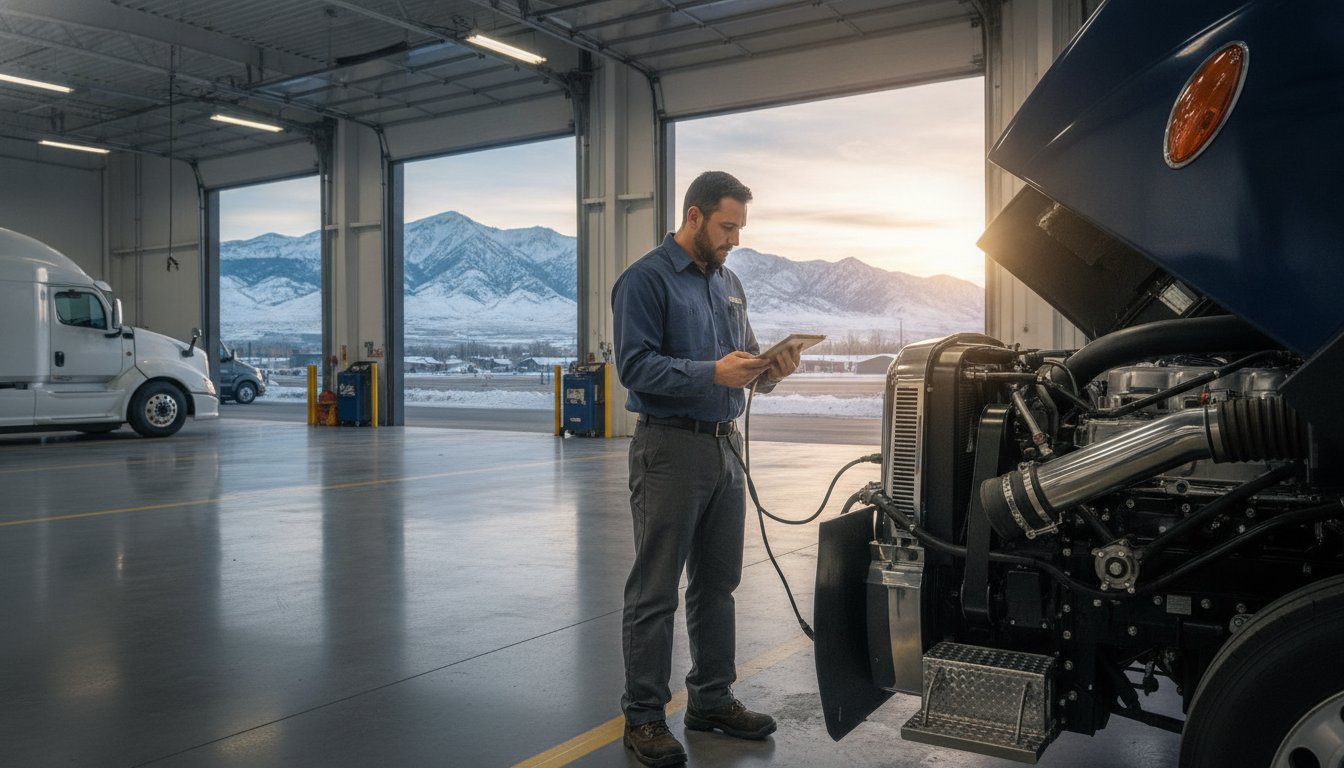
Wasatch Front Diesel Fleet Maintenance: 2026 Guide

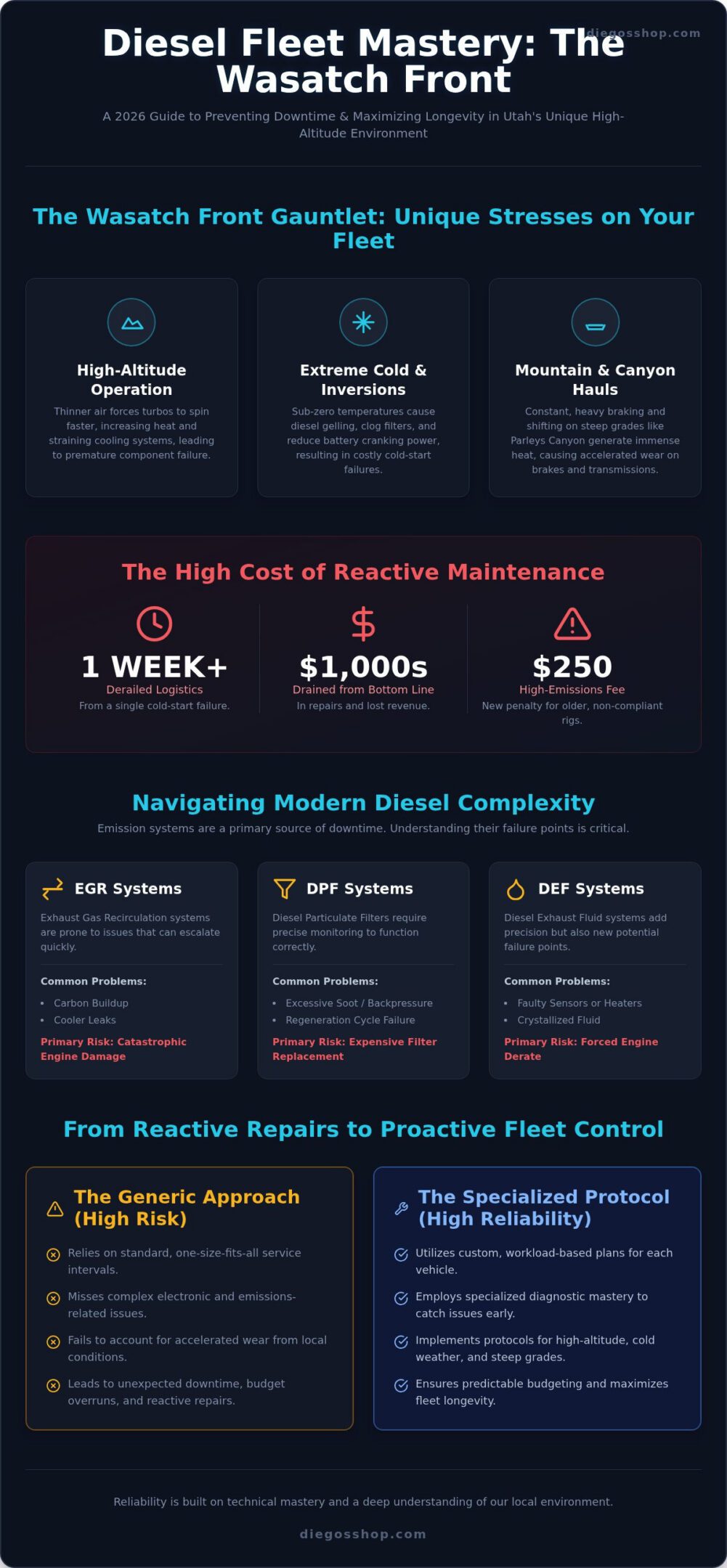
A single cold-start failure during a January inversion doesn’t just stall a truck; it can derail an entire week’s logistics and drain thousands from your bottom line. You already know that the Wasatch Front demands more from your engines than almost anywhere else in the country. Between the steep grades of Parleys Canyon and the corrosive road salt of a Utah winter, generic service schedules aren’t enough to keep a commercial fleet profitable.
Effective diesel fleet maintenance Wasatch Front requires a technical mastery that goes beyond basic oil changes. You need a partner who understands why your 2020 or 2024 model year vehicles face mandatory emissions testing this year and how to navigate the new 250 dollar high-emissions fees for older heavy-duty rigs. Relying on shops that miss complex, diesel-specific issues is a risk your budget can’t afford.
This 2026 guide will show you how specialized diesel maintenance protocols prevent unexpected downtime and maximize your fleet’s longevity in our unique environment. We’ll explore the latest regulatory changes, strategies for predictable maintenance budgeting, and how to build a trusted relationship with a technical specialist who understands modern engine management. It’s time to move from reactive repairs to total fleet control.
Key Takeaways
- Understand how high-elevation operations along the Wasatch Front impact turbocharger efficiency and why cooling systems require specialized protocols.
- Learn why modern diesel engine management in 2026 demands specialized diagnostic mastery to catch complex electronic issues before they cause failure.
- Discover how to transition from generic service schedules to a custom, workload-based plan for diesel fleet maintenance Wasatch Front.
- Access a professional inspection framework that empowers fleet managers to monitor critical wear points and reduce unexpected downtime.
- Identify the benefits of partnering with a local master craftsman who provides personal accountability and warrantied repair work for commercial fleets.
The High Stakes of Diesel Fleet Maintenance on the Wasatch Front
Operating a fleet along the Wasatch Front presents a set of technical challenges that standard maintenance schedules simply aren’t designed to handle. From the salt-heavy air of the Great Salt Lake to the thin atmosphere of our mountain passes, Utah’s geography acts as a constant stress test for diesel engines. When you’re hauling heavy loads through Parleys Canyon or navigating the stop-and-go traffic of I-15, your equipment is working harder than it would in almost any other region. Generic maintenance intervals fail here because they don’t account for the accelerated wear caused by high-elevation operations and extreme thermal cycles.
High-altitude environments significantly impact turbocharger efficiency. In the thinner air of the Wasatch Mountains, your turbo must spin faster to maintain the necessary boost levels, which increases internal heat and puts additional strain on the cooling system. Without specialized diesel fleet maintenance Wasatch Front protocols, this leads to premature component failure and costly, unexpected downtime. We focus on these specific variables to ensure your trucks remain reliable regardless of the terrain.
Utah’s Climate and Diesel Reliability
The 2026 winter season is expected to bring the same harsh temperature swings that historically cause cold-start failures across Utah County. When temperatures drop below zero, standard diesel fuel can begin to gel, clogging filters and stalling engines. Managing fuel quality isn’t just about additives; it’s about a comprehensive strategy that includes testing and the use of high-quality, synthetic lubricants designed for sub-zero performance. We’ve seen that fleets utilizing specialized cold-weather protocols experience significantly fewer morning-start delays during the peak of winter. Battery health is also a major concern, as the extreme cold reduces cranking power exactly when the engine needs it most. Our preventive maintenance checks prioritize these high-risk components long before the first frost hits.
Mountain Driving and Engine Longevity
Canyon hauls are a daily reality for many local operators, but they take a massive toll on transmission and braking systems. The constant shifting and heavy braking required for steep grades generate immense heat. This thermal fatigue can lead to warped rotors or transmission fluid breakdown if not monitored closely. Cooling system maintenance is critical for fleets based in Springville and the wider Wasatch Front, as even a minor leak or a slightly inefficient radiator can lead to catastrophic engine overheating during a climb. We implement rigorous inspection frameworks that look for early signs of thermal stress in heavy-duty diesel engines. By identifying these issues early, we help you avoid the high cost of road-side failures and keep your operations moving forward with confidence. Reliability is built on technical mastery and a deep understanding of our local environment.
Technical Mastery: Solving Complex Modern Diesel Engine Issues
Modern diesel engines operate through a sophisticated web of electronic controls and physical mechanical systems. This evolution has made engines more efficient and powerful, but it has also introduced layers of complexity that generic shops often struggle to diagnose. For effective diesel fleet maintenance Wasatch Front, technical mastery is no longer optional; it’s a requirement for keeping your assets on the road. Understanding the delicate balance between peak engine performance and strict emission controls is where a specialist’s value truly shines. We focus on solving these complex issues with a direct, no-nonsense approach that eliminates the guesswork from your repair cycle.
EGR, DPF, and DEF: Managing Emission Controls
Emission systems are frequently the primary source of unexpected downtime for commercial fleets. Exhaust Gas Recirculation (EGR) systems often suffer from carbon buildup or cooler leaks that can lead to catastrophic engine damage if ignored. Similarly, Diesel Particulate Filters (DPF) require precise monitoring of backpressure to ensure the regeneration cycle functions correctly. When soot levels exceed manageable limits, the filter can become face-plugged, requiring expensive cleaning or replacement. Diesel Exhaust Fluid (DEF) systems add another layer of precision, where even a slightly faulty sensor or crystallized fluid can trigger a derate. Managing these systems requires an understanding of the chemistry and physics at play to prevent recurring failures.
Electronic Control Module (ECM) Calibration
The ECM acts as the brain of your vehicle, constantly adjusting fuel timing and air intake to balance power with fuel economy. When a sensor fails, the ECM may default to a limp mode to protect the engine, effectively sidelining your truck. Expert diagnostics allow us to pinpoint whether the issue is a physical component or a calibration error before you’re stuck on the shoulder of I-15. ECM diagnostics represent a comprehensive central nervous system check-up for a diesel engine. Whether you’re managing Peterbilt, Kenworth, Isuzu, or Ford diesel platforms, accuracy is everything. By monitoring these electronic signals, we catch minor irregularities before they escalate into major mechanical failures. If you’re dealing with recurring fault codes, a professional diagnostic assessment can provide the clarity and peace of mind you need to keep your fleet operational. We stand behind our technical skill with warrantied repair work, giving you the confidence that the job was done right the first time.
Custom Preventive Maintenance: Beyond the Basic Oil Change
Rigid maintenance schedules are a liability for modern fleets. If your vehicles follow a standard 10,000-mile interval regardless of the load or terrain, you’re likely under-protecting your assets. For diesel fleet maintenance Wasatch Front to be effective, it must account for the specific duty cycle of every unit. A long-haul Peterbilt cruising the interstate faces different wear patterns than a vocational dump truck working a construction site in Utah County. We move beyond generic checklists to develop workload-based plans that protect the durability of your hardworking machinery. This specialized approach ensures that high-stress components receive attention exactly when they need it.
Tailoring Intervals to Your Fleet’s Duty Cycle
Vocational vehicles often accumulate more engine hours than miles. High idle times and frequent Power Take-Off engagement accelerate oil degradation and soot accumulation in the DPF. Conversely, light-duty commercial trucks like Ford, Chevy, or Ram models—such as those available through Tom Whiteside Chrysler Dodge Jeep Ram—used for local deliveries require specific focus on suspension and braking systems due to the stop-and-go nature of city driving. Consistent service reporting is essential for fleet managers to track these variables. By adjusting your schedule based on actual engine stress rather than just the odometer, you ensure every dollar spent on maintenance provides maximum protection.
The financial logic of proactive care is undeniable. Catching a leaking seal or a worn sensor during a scheduled inspection is a minor expense. Ignoring that same issue until it causes a catastrophic failure on the road can lead to an engine overhaul costing fifteen thousand dollars or more. Proactive care is the most effective way to extend the lifecycle of medium-duty Isuzu and Kenworth trucks, keeping them in service years longer than neglected equipment. This disciplined approach transforms maintenance from an unpredictable expense into a manageable investment. Effective diesel fleet maintenance Wasatch Front relies on this commitment to technical detail. For a deeper look at these strategies, consult our fleet maintenance guide. We take pride in the technical skill required to keep your fleet running at peak performance. Our preventive maintenance protocols are designed to catch problems before they become failures.
The Fleet Manager’s Guide to Reducing Downtime
Unplanned downtime is the single greatest threat to your fleet’s profitability. While professional shop visits are essential, the time between those appointments determines the long-term reliability of your equipment. A robust internal inspection framework empowers your team to catch minor issues before they escalate into roadside failures. Technical transparency and clear communication with your service partner are the foundations of effective diesel fleet maintenance Wasatch Front. By establishing a consistent routine, you replace uncertainty with predictable performance.
Daily and Weekly Fleet Inspection Protocols
Implementing a structured checklist ensures that nothing is overlooked during a busy work week. Focus on these four critical areas to maintain operational readiness:
- Visual fluid and leak detection: Check for puddles under the chassis and monitor oil, coolant, and DEF levels daily. Early detection of a cooling system leak prevents catastrophic thermal fatigue.
- Tire pressure and tread wear: Under-inflated tires increase rolling resistance and kill fuel economy. Monitor wear patterns to identify alignment issues before they ruin a set of tires.
- Air filtration monitoring: Utah’s dusty construction sites and dry valleys can clog air filters rapidly. Restricted airflow forces the turbocharger to work harder, increasing internal heat.
- Lighting and safety systems: Verify that all markers, signals, and brake lights are functional. This simple step is the easiest way to avoid unnecessary DOT stops and fines.
Winter months require an even stricter protocol. We recommend a “no-start” prevention routine that includes testing block heaters and verifying battery voltage every Monday morning. These small actions prevent the logistical nightmare of a dead truck during a January inversion.
Preparing for DOT Truck Inspections
Failing a DOT inspection leads to immediate out-of-service orders and damage to your safety rating. On the Wasatch Front, common failure points often involve brake adjustment issues, lighting malfunctions, and visible exhaust leaks. A dedicated maintenance partner doesn’t just fix what’s broken; they ensure your fleet stays road-legal through proactive compliance checks. If you are looking for DOT truck inspections near me, choose a specialist who understands the 2026 regulatory landscape. We provide the technical mastery needed to pass these inspections with confidence. To secure your fleet’s reliability and schedule a comprehensive review, contact our Springville shop today. Our warrantied repair work guarantees that your trucks remain in peak condition.
Diego’s Shop: Your Local Partner for Professional Fleet Services
Choosing a partner for diesel fleet maintenance Wasatch Front is a decision that impacts your business’s bottom line and operational peace of mind. While corporate shops often hide behind layers of management, Diego’s Shop is built on a foundation of personal accountability. We don’t just clear fault codes; we take ownership of your fleet’s technical health. Our Springville-based expertise allows us to serve the entire Utah County region with a level of dedication that larger franchises simply can’t match. When you bring your vehicles to us, you’re working with a master craftsman who understands that every hour of downtime is an hour of lost revenue.
Our commitment to excellence is backed by a warrantied repair work guarantee. This isn’t just a promise; it’s a standard of integrity that ensures your investment is protected. We’ve spent years refining our service protocols to meet the specific demands of Utah’s environment. This makes Diego’s Shop the logical conclusion for any fleet manager who has educated themselves on the complexities of modern diesel care. We provide the technical mastery required to maintain control over even the most complex mechanical situations. Reliability is our signature.
Comprehensive Solutions for Light to Heavy-Duty Fleets
We specialize in providing high-level care for a wide range of equipment. Our technicians possess deep technical expertise in Peterbilt, Kenworth, Isuzu, and Ford diesel platforms. Whether you’re managing a fleet of over-the-road heavy-duty trucks or light-duty commercial delivery vehicles, we apply the same master craftsman standards to every job. We understand the unique engineering of each platform, from modern emission controls to complex engine management systems. You can learn more about our approach and why local drivers rely on us for expert diesel repair in Utah. We focus on the durability of the work performed, ensuring your machinery stays hardworking and dependable.
Get Started with a Custom Fleet Service Plan
Transitioning your fleet into a structured preventive maintenance program is a straightforward process. We begin by evaluating your current equipment and identifying any immediate risks. Your first visit includes a comprehensive diagnostic session where we establish a baseline for every vehicle in your fleet. We look past the obvious issues to find the root causes of potential failures. This proactive approach allows us to build a service plan tailored to your specific duty cycle and workload. Don’t wait for a catastrophic failure to find a technical specialist you can trust. Contact us today for a fleet evaluation tailored to the Wasatch Front and experience the difference that professional accountability makes. We keep your fleet moving. We keep your business profitable.
Secure the Future of Your Fleet Today
Maintaining a commercial fleet in Utah’s high-stress environment requires more than basic service; it demands a technical partnership rooted in local expertise. You’ve seen how specialized diesel fleet maintenance Wasatch Front protocols protect your engines from canyon hauls and sub-zero winters while ensuring compliance with 2026 emission standards. By shifting from reactive repairs to a custom, workload-based preventive plan, you eliminate the high cost of unexpected downtime and keep your operations moving forward.
Diego’s Shop provides the technical mastery of modern diesel management you need to keep your assets road-legal and productive. Based in Springville and serving the entire region, we back our skill with a warrantied repair work guarantee. This commitment to integrity and personal accountability is what sets a true master craftsman apart from a generic corporate shop. Don’t leave your reliability to chance when technical excellence is within reach.
Take the first step toward predictable maintenance budgeting and total operational control. Request a Custom Fleet Maintenance Plan from Diego’s Shop today. Your fleet is the backbone of your business, and with the right technical support, it’ll remain dependable for years to come.
Frequently Asked Questions
How often should a diesel fleet on the Wasatch Front be serviced?
Service intervals for your fleet should be determined by the specific duty cycle of each vehicle rather than a generic odometer reading. Heavy-duty trucks navigating the steep grades of the Wasatch Front often require more frequent inspections of cooling systems and brakes. We recommend a workload-based schedule that accounts for idle time and high-stress mountain driving. This approach ensures your diesel fleet maintenance Wasatch Front remains proactive and prevents premature wear in our harsh environment.
What are the most common diesel engine failures in Utah’s climate?
The most frequent failures we see are related to extreme temperature swings and high-altitude operations. Winter inversions often lead to cold-start failures caused by battery degradation or diesel fuel gelling. Additionally, the thin air at high elevations puts extra strain on turbochargers and cooling systems, leading to thermal fatigue. Vocational trucks that idle frequently also experience rapid soot buildup in DPF and EGR systems, which can trigger restrictive limp mode settings if not monitored.
Does Diego’s Shop offer warranties on fleet maintenance work?
Yes, we provide a warrantied repair work guarantee on all the services we perform. This commitment to personal accountability ensures that business owners can trust the durability of our technical work. We understand that your fleet represents a significant investment, so we stand behind our skill with clear, authoritative promises. This guarantee provides the peace of mind you need when seeking specialized technical services for light or heavy-duty diesel engines across the region.
Can you handle medium-duty commercial trucks like Isuzu and Kenworth?
We specialize in the maintenance and repair of medium-duty commercial platforms, including Isuzu and Kenworth trucks. Our shop is equipped with the advanced diagnostic tools necessary to manage the complex engine management systems found in these vehicles. Whether you’re operating a local delivery fleet or vocational equipment, we apply the same master craftsman standards to ensure your assets remain reliable and road-legal across the wider Wasatch Front region. We focus on durability and performance.
Why is proactive maintenance more cost-effective than reactive repair?
Proactive maintenance is more cost-effective because it identifies minor component wear before it escalates into a catastrophic mechanical failure. A scheduled inspection might reveal a failing sensor or a small coolant leak that costs very little to fix. In contrast, a reactive repair for a blown engine or a roadside breakdown can cost fifteen thousand dollars or more in parts and lost productivity. This disciplined strategy makes your maintenance budgeting predictable and manageable for the long term.
What specific diesel engine brands do you specialize in for fleet services?
Our technical mastery extends to the most common diesel platforms used in commercial operations today. We specialize in Peterbilt, Kenworth, Isuzu, and Ford diesel engines. This focused expertise allows us to provide deep diagnostic insights that generic shops often miss. By speaking the language of these specific manufacturers, we ensure that your diesel fleet maintenance Wasatch Front is handled with the precision and technical skill your hardworking machinery deserves. We maintain total control over complex situations.
How do you help fleets pass mandatory DOT truck inspections?
We help you stay road-legal by implementing a professional inspection framework that mirrors DOT standards. Our technicians check critical safety components, including brake adjustments, lighting systems, and exhaust integrity, to identify common failure points before an inspector does. By catching these issues during scheduled shop visits, we ensure your fleet passes mandatory inspections with confidence. This proactive compliance strategy protects your safety rating and prevents costly out-of-service orders that stall your daily operations.
What happens if a fleet vehicle breaks down unexpectedly?
While our goal is to prevent unexpected breakdowns through rigorous preventive maintenance, we are here to provide expert diagnostics and warrantied repairs when failures occur. We prioritize getting your vehicle back into service quickly to minimize the impact on your logistics. Once the immediate issue is resolved, we work with you to transition the vehicle into a structured maintenance plan. This helps eliminate the uncertainty and stress often associated with managing complex diesel technical failures.