
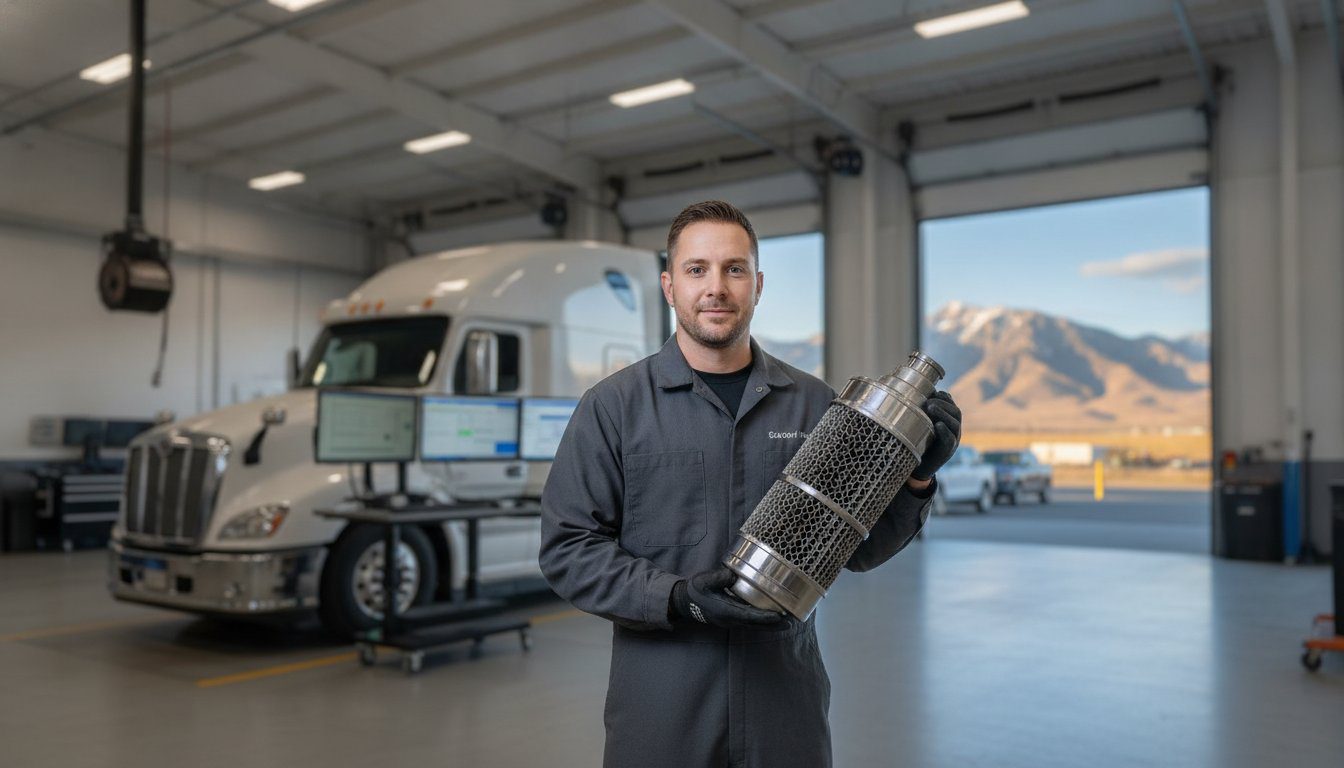
Diesel Particulate Filter Maintenance Tips: The 2026 Guide to DPF Longevity

Did you know that professional cleaning can restore up to 95% of your filter’s original flow capacity? For fleet owners in Springville and throughout Utah County, keeping a diesel particulate filter healthy is the difference between a profitable week and a week lost to unexpected downtime. At Diego’s Shop, we know that implementing the right diesel particulate filter maintenance tips is no longer just a recommendation; it’s a financial necessity.
We understand how frustrating it is when a truck enters limp mode or when frequent regenerations start eating into your fuel budget. You want your Peterbilt or Kenworth to stay on the road, not sitting in a shop facing a replacement bill that can reach $8,000. It’s about maintaining total control over your equipment’s performance and avoiding the stress of technical failures.
This guide will show you how to master the essential maintenance habits and professional cleaning schedules required to prevent DPF failure. We’ll preview the best practices for 2026 EPA compliance and explain how to improve your fuel economy through better engine chemistry. By the end, you’ll have a clear plan to extend your DPF service life and keep your fleet running at peak efficiency.
Key Takeaways
- Learn how the 2026 emissions standards impact your operation and why distinguishing between burnable soot and permanent ash is vital for filter health.
- Master essential diesel particulate filter maintenance tips, such as using only OEM-spec Low-SAPS oils to prevent premature clogging and engine derating.
- Discover how to optimize your fleet’s driving cycles to favor passive regeneration, which reduces fuel consumption and wear on your exhaust system.
- Identify how regular EGR system inspections can prevent “wet soot” from fouling your DPF and causing irreparable damage.
- Understand why professional “Bake and Blow” cleaning is the only reliable way to remove ash and avoid the high cost of a total DPF replacement.
Understanding Your Diesel Particulate Filter (DPF) and Why It Fails
A Diesel Particulate Filter (DPF) is a honeycomb ceramic filter designed to oxidize particulate matter and capture harmful emissions before they exit the tailpipe. It acts as a physical trap for two distinct types of debris: soot and ash. Soot is essentially unburnt fuel that can be oxidized during a heat cycle, while ash is an inorganic byproduct of engine oil additives that remains in the filter permanently. Understanding the difference between these two is the foundation of all effective diesel particulate filter maintenance tips.
For fleet operators along the Wasatch Front, staying compliant with 2026 emissions standards is now a primary business requirement. These regulations have made filter health more critical than ever. If your DPF fails or is tampered with, you face civil penalties that can start at $4,587 per violation. Beyond legal risks, a clogged filter triggers the “Limp Mode” trap. This is a safety protocol where the engine’s computer drastically reduces power to prevent internal damage. For a commercial operation in Utah County, this means your truck is sidelined until a professional technician can clear the fault.
The Anatomy of a Modern Diesel Emission System
Your DPF doesn’t work in isolation. It’s part of a complex ecosystem that includes the Exhaust Gas Recirculation (EGR) and Selective Catalytic Reduction (SCR) systems. Before exhaust reaches the DPF, it passes through the Diesel Oxidation Catalyst (DOC). This component breaks down carbon monoxide and helps generate the heat necessary for the soot-burning process. When these parts aren’t synchronized, the system fails. High backpressure is the primary consequence of a restricted filter. This pressure pushes back against the turbocharger, which can lead to premature bearing failure and expensive repairs. Following consistent diesel particulate filter maintenance tips helps ensure these components work in harmony.
Common Symptoms of a Failing DPF
Recognizing the early warning signs of a restricted filter can save your fleet from a total shutdown. At Diego’s Shop, we advise drivers to watch for these specific indicators:
- Frequent ‘Active Regen’ Requests: If your truck is constantly calling for a parked regeneration or performing active burns while driving, the filter is likely reaching its ash capacity.
- Decreased Performance: You’ll notice a significant drop in fuel economy and a lack of throttle responsiveness as the engine struggles against exhaust backpressure.
- Exhaust Odors and Smoke: The smell of unburnt diesel or visible smoke indicates that the oxidation process is no longer functioning correctly.
Ignoring these signs turns a routine preventive maintenance task into a catastrophic engine failure. Proper diesel particulate filter maintenance tips focus on early detection to keep your Peterbilt or Kenworth profitable. By catching these symptoms early, you protect the durability of your entire engine system.
The Difference Between Soot and Ash: Why Your Truck Can’t Clean Itself Forever
Many operators rely on the truck’s dashboard to tell them when a regeneration is needed. They assume the system is fully self-sustaining. This is a dangerous misconception. Your engine can burn off soot, which is organic carbon matter, but it’s powerless against ash. Ash consists of the metallic compounds left behind from engine oil and fuel additives. It’s permanent. As ash accumulates, it physically occupies the space intended for exhaust flow. These diesel particulate filter maintenance tips focus on managing this permanent buildup before it destroys the unit.
When ash fills the honeycomb channels, the backpressure increases significantly. The computer attempts to compensate by running more frequent active regenerations. This cycle creates excessive heat that can eventually lead to a cracked ceramic substrate. Once the filter cracks, it’s garbage. Modern emission controls are strictly regulated to curb air pollution, and a compromised filter will fail any inspection. You can’t software-patch your way out of a physically full filter.
The Role of Low-SAPS Engine Oil
Using the wrong engine oil is the fastest way to kill a DPF in 2026. You must use Low-SAPS (Sulfated Ash, Phosphorus, and Sulfur) oils. These are specifically formulated to minimize the inorganic material that becomes permanent ash. Look for CK-4 oil ratings on the bottle. This standard offers superior protection compared to older CJ-4 oils. If you have an older engine that consumes oil, the problem is even worse. Every drop of oil burned in the combustion chamber ends up as ash in your filter. Reliable fleet maintenance involves monitoring oil consumption to protect your exhaust components.
Fuel Quality and DPF Health
Fuel quality directly impacts how much soot your engine produces. Ultra-Low Sulfur Diesel (ULSD) is the industry standard for a reason. Higher sulfur levels or contaminated fuel lead to incomplete combustion. This creates a heavy soot load that forces the DPF to work overtime. If you use performance additives, ensure they’re labeled as DPF-safe. Using non-compliant chemicals can cause chemical glazing on the filter’s surface, which permanently blocks the pores. These diesel particulate filter maintenance tips only work if the fluids entering your engine meet the required specifications. High-quality fuel keeps the combustion process clean and extends the interval between professional cleanings.
Passive vs. Active Regeneration: Mastering the Self-Cleaning Cycle
Regeneration is the process of burning off the soot trapped in your filter. Understanding the two primary types of this cycle is central to effective diesel particulate filter maintenance tips. Passive regeneration occurs naturally when your engine works hard enough to generate high exhaust temperatures. This heat oxidizes the soot without requiring extra fuel or computer intervention. It’s the most efficient way to maintain your equipment. When passive heat isn’t enough, your truck’s ECU initiates an active regeneration. The system injects a small amount of diesel into the exhaust stream to artificially raise temperatures. According to this EPA technical bulletin on DPFs, maintaining these cycles is vital for preventing the backpressure issues discussed in earlier sections.
While your truck handles most cleaning automatically, some operators rely too heavily on a “forced regen.” This is a static, shop-level diagnostic tool used by technicians to clear a heavily loaded filter. You shouldn’t use it as a daily maintenance habit. It subjects your turbocharger and exhaust components to extreme heat without the benefit of cooling airflow. In Utah County, heavy stop-and-go traffic on I-15 often prevents your truck from reaching the temperatures needed for passive cleaning. This forces the system into more frequent active cycles, which increases fuel consumption and wear on the engine.
Optimizing Your Driving for Passive Regen
You can encourage passive cleaning by following the “Highway Run” rule. Try to maintain steady RPMs and a consistent engine load for at least 30 minutes. This allows the exhaust to stay hot enough to burn soot naturally. Short trips and excessive idling are the primary enemies of DPF longevity. These habits keep the engine cool and produce significantly more soot. In Utah, our high-altitude air density also plays a role. Thinner air can lead to a richer combustion mix, which creates more particulate matter for the filter to catch. Adjusting your driving habits to compensate for these local factors is a key part of diesel particulate filter maintenance tips.
Managing Active Regen Requests
Interruption is the biggest risk during an active cycle. If you shut down the engine while the system is injecting fuel for a burn, you risk fuel dilution in the oil and incomplete cleaning. Pay close attention to your dashboard icons. Most modern trucks use a 5-level warning system. Level 1 is a simple notification, but by Level 4, the engine will begin to derate. If your truck demands a “Parked Regen,” find a safe, well-ventilated area and let the process finish. Do not ignore these requests; doing so leads directly to the limp mode failures that sideline your fleet and increase your repair costs.
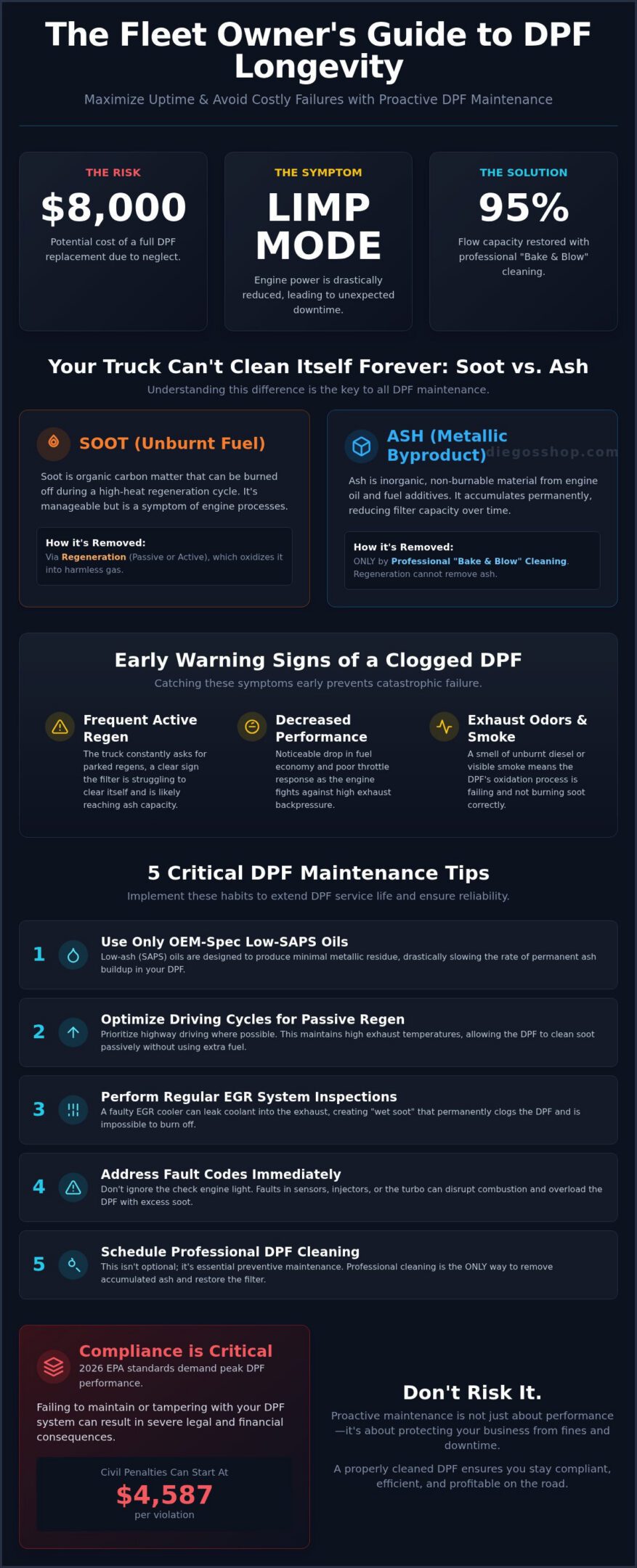
5 Critical Diesel Particulate Filter Maintenance Tips for Long-Term Reliability
Maintaining a reliable fleet requires a disciplined approach to preventive care. While modern trucks are advanced, they aren’t bulletproof. Following these five diesel particulate filter maintenance tips prevents the high costs of premature replacement and keeps your operation profitable.
- Stick to Strict Oil Intervals: Use only OEM-spec Low-SAPS oils. These lubricants are specifically designed to minimize the inorganic ash buildup that eventually chokes your filter.
- Inspect the EGR System: A malfunctioning EGR can cause “wet soot.” This sticky substance is much harder to burn off than dry soot and leads to rapid, permanent clogging.
- Monitor DEF Quality: Contaminated Diesel Exhaust Fluid can cause crystals to form in the system, which increases backpressure and stresses the DPF.
- Limit Idling Time: Prolonged idling, especially during cold Springville winters, prevents the engine from reaching the operating temperatures needed for a clean burn.
- Schedule Professional Cleaning: Don’t wait for a warning light. Most manufacturers recommend a deep pneumatic or thermal clean every 150,000 miles to remove permanent ash.
Utah-Specific Maintenance Considerations
Operating along the Wasatch Front presents unique challenges. Climbing mountain passes like Spanish Fork Canyon or Parley’s Summit puts a massive load on your engine. While this high load helps reach the exhaust temperatures needed for passive regeneration, the descent often cools the system too quickly. This thermal cycling is hard on the filter substrate. Additionally, winter fuel blends in Utah are often treated with anti-gel additives. These blends can slightly alter soot production, making your winter maintenance schedule even more critical. Avoid long idles to warm up; instead, use a short warm-up followed by gentle driving to reach operating temperature faster. These specific diesel particulate filter maintenance tips are essential for local fleets navigating our high-altitude environment.
EGR and Turbo Health: The Upstream Factor
The DPF is often a victim of failures occurring upstream in the engine. A leaking EGR cooler is a common culprit; it allows coolant to enter the exhaust stream, “poisoning” the DPF and creating a sludge that no regeneration can clear. Similarly, sticking turbocharger vanes lead to poor air-fuel ratios, which results in excessive black smoke and soot. If you suspect your engine isn’t breathing correctly, you need Expert Diesel Engine Repair to diagnose the root cause before it kills your exhaust system. At Diego’s Shop, we specialize in identifying these upstream issues to ensure your DPF lasts its full intended service life. For reliable fleet maintenance in Springville, trust our team to keep your trucks on the road.
When DIY Maintenance Isn’t Enough: Professional DPF Cleaning Services
Even the most disciplined approach to diesel particulate filter maintenance tips eventually meets the reality of permanent ash buildup. While you can manage soot through driving habits, the metallic ash from oil additives cannot be burnt off. When your filter reaches its physical capacity, professional cleaning is the only way to restore your engine’s breathing. The gold standard for this service is the “Bake and Blow” process. This method uses a specialized oven to loosen the ash through controlled thermal cycles, followed by pneumatic pulses that safely extract the debris without damaging the delicate ceramic substrate.
It’s vital to avoid “liquid cleaning” or pressure washing your DPF. Water can cause the ceramic honeycomb to swell or crack, and chemical solvents often leave behind residues that glaze the filter’s surface. At a professional facility, we use flow-bench testing to verify filter health. By measuring the backpressure before and after the service, we provide documented proof that the filter has been restored to 85-95% of its original flow capacity. If the flow-bench reveals a melted or cracked substrate, the filter is beyond saving and must be replaced to maintain 2026 EPA compliance.
The Benefits of Proactive Fleet DPF Service
Waiting for a “Limp Mode” warning is a reactive strategy that costs you money. Proactive cleaning reduces exhaust backpressure, which can improve your fuel economy by up to 5% compared to a heavily restricted system. More importantly, it prevents the “cascading failure” effect. When a DPF is clogged, the heat and pressure it generates often lead to the premature failure of turbocharger bearings and EGR valves. Following a comprehensive Fleet Maintenance Guide ensures you’re addressing these components before they cause a total breakdown on the road.
Diego’s Shop: Your Utah County DPF Specialists
At Diego’s Shop in Springville, we understand the specific demands placed on medium and heavy-duty fleets along the Wasatch Front. We don’t just clean filters; we perform a complete emission system diagnostic to ensure your engine is running at peak efficiency. Our team specializes in Peterbilt, Kenworth, and Isuzu systems, providing warrantied repair work that gives you total confidence in your fleet’s reliability. Don’t let a preventable exhaust issue sideline your business and lead to thousands in lost revenue. Schedule your preventive maintenance at Diego’s Shop today and experience the difference that expert, no-nonsense service makes for your longevity.
Protect Your Fleet and Your Bottom Line
Mastering the diesel particulate filter maintenance tips discussed in this guide is the most effective way to eliminate unexpected downtime and avoid the high cost of DPF replacement. By prioritizing high-quality Low-SAPS oils and optimizing your highway driving cycles, you ensure your Peterbilt, Kenworth, or Isuzu fleet remains compliant with 2026 standards. Remember that while your truck can burn off soot, only professional intervention can remove the permanent ash that chokes engine performance.
At Diego’s Shop in Springville, we provide the expert diagnostics and warrantied repair work needed to keep your medium and heavy-duty fleets running efficiently. We serve the entire Wasatch Front with a focus on durability and integrity. Don’t wait for a dashboard warning to compromise your schedule. Keep Your Fleet Moving—Schedule Professional Diesel Maintenance at Diego’s Shop.
Proper maintenance is an investment in your business’s future. Keep your engines breathing, and your trucks will keep your operation moving forward.
Frequently Asked Questions
How often should a DPF be professionally cleaned in 2026?
Most manufacturers recommend professional cleaning every 150,000 to 200,000 miles for long-haul trucks. However, vehicles with high idle time or frequent stop-and-go driving in Utah County often require service around 100,000 miles. This preventive step restores up to 95% of the filter’s original flow capacity. Regular cleaning is a core part of effective diesel particulate filter maintenance tips for long-term fleet reliability and 2026 compliance.
Can I drive my truck if the DPF light is on?
You can drive briefly to find a safe location, but you shouldn’t ignore the warning. A solid light indicates the filter is reaching capacity and requires an immediate active or parked regeneration. If the light begins to flash or the engine starts to derate, you must stop as soon as it is safe. Continuing to drive with a restricted filter leads to “Limp Mode” and permanent engine damage.
How much does a professional DPF cleaning cost versus a replacement?
Professional cleaning is a small fraction of the cost of a full replacement. While a new filter represents a major capital expense for any fleet, regular maintenance through professional cleaning allows you to extend the life of the existing unit by another 100,000 miles or more. This investment pays for itself by preventing the catastrophic engine damage and emergency downtime associated with a total system failure.
Will a DPF delete improve my truck’s reliability?
No, a DPF delete is illegal under the Clean Air Act and puts your business at significant risk. Violations can result in civil penalties starting at $4,587 per occurrence. While some claim it improves reliability, the legal and financial consequences of tampering with emission systems far outweigh any perceived gains. Professional cleaning is the only legal way to maintain performance while staying compliant with current federal standards.
What is the difference between a parked regen and an active regen?
An active regeneration happens automatically while you’re driving at highway speeds as the computer injects fuel to burn off soot. A parked regen, also known as a stationary regeneration, is a manual process initiated by the driver when the truck is stationary. You’ll need a parked regen if your duty cycle doesn’t allow for the high exhaust temperatures required during normal highway operation.
Can a bad fuel injector cause DPF failure?
Yes, a leaking or “lazy” fuel injector is a common cause of premature DPF failure. If an injector delivers too much fuel, it creates excessive soot that quickly overwhelms the filter’s capacity. This leads to frequent regeneration cycles and can eventually cause the filter to melt or crack from extreme heat. Monitoring your engine’s health is one of the most important diesel particulate filter maintenance tips for any fleet.
How do I know if my DPF is cracked or just dirty?
A dirty filter can be cleaned, but a cracked one requires replacement. You can often identify a cracked filter by checking for black soot inside the tailpipe, which should normally be clean. At Diego’s Shop, we use flow-bench testing and specialized diagnostics to verify the integrity of the ceramic substrate. If the internal structure is compromised, cleaning won’t fix the issue and the unit must be replaced.
Does cold weather in Utah affect how often my truck regens?
Cold weather in Springville and the Wasatch Front significantly impacts regeneration frequency. Low ambient temperatures prevent the engine from reaching operating heat quickly, which leads to increased soot production during the warm-up phase. This often forces the system into more frequent active regenerations to clear the buildup. Avoiding excessive idling during Utah winters helps minimize this soot loading and protects your filter’s longevity throughout the season.