

Heavy Duty Truck Preventive Maintenance Checklist: The 2026 Fleet Guide

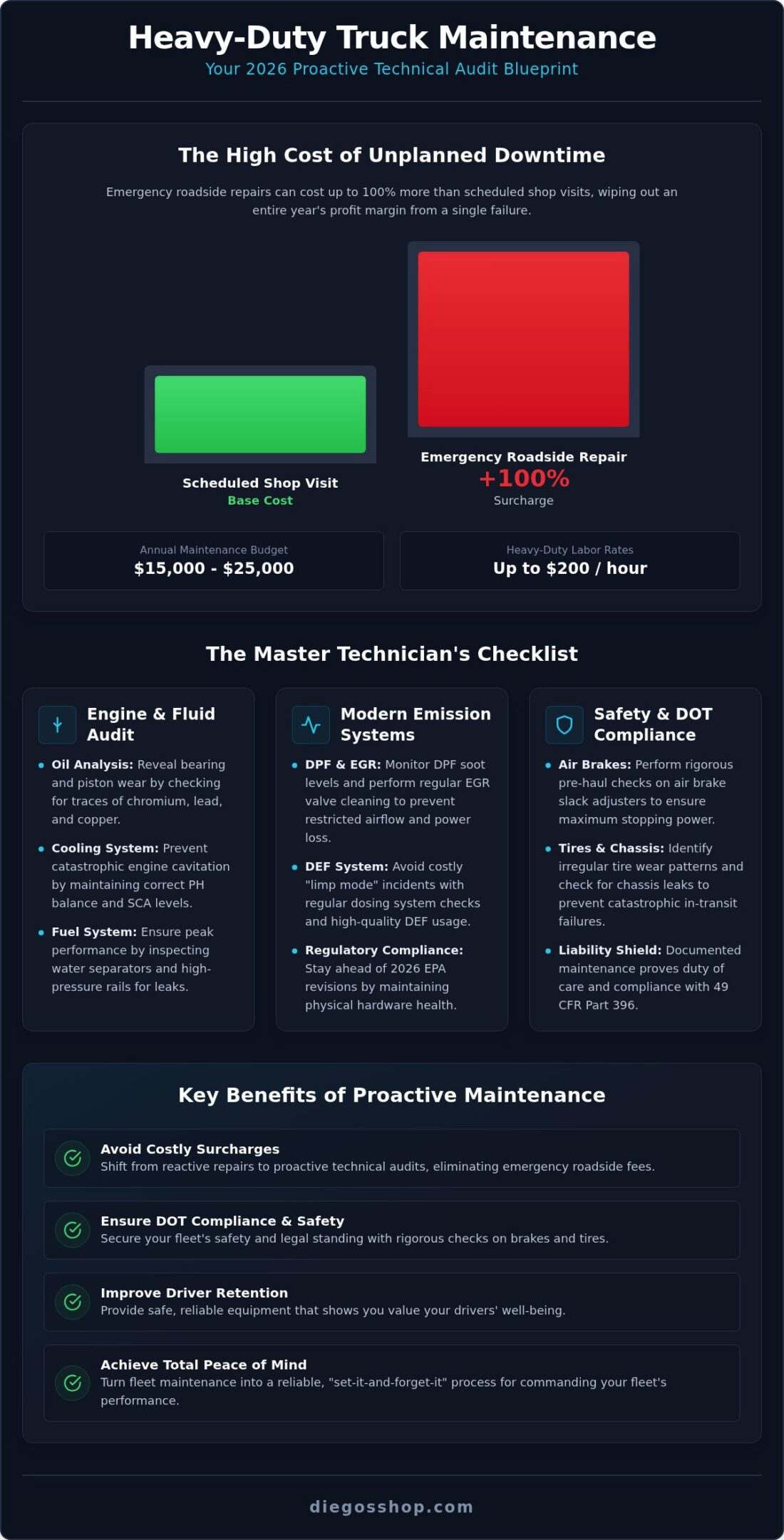
Did you know that an emergency roadside repair in 2026 can cost you up to 100% more than a scheduled shop visit? For a fleet owner, that isn’t just a bill; it’s a direct hit to your profitability and a source of unnecessary stress. You already know that every hour your rig spends on the shoulder is an hour of lost revenue. Between tightening FMCSA enforcement on ELDs and the rising cost of diesel repairs, the pressure to keep your fleet moving is constant. Using a comprehensive heavy duty truck preventive maintenance checklist is no longer just a good habit. It’s a technical audit required to safeguard your business.
We’ve developed this master technician-approved framework to help you protect your bottom line and eliminate the chaos of unplanned downtime. You’ll gain a reliable, “set-it-and-forget-it” maintenance schedule that reduces long-term repair costs and builds total confidence in your fleet’s performance. This guide previews the essential 2026 regulatory updates, specific inspection points for modern diesel emission systems, and the service protocols you need to stay ahead of the DOT. It’s time to stop reacting to breakdowns and start commanding your fleet’s reliability with professional precision.
Key Takeaways
- Shift from reactive repairs to proactive technical audits to avoid the significant surcharges associated with emergency roadside service.
- Implement a master-level heavy duty truck preventive maintenance checklist that prioritizes fluid PH balance and oil analysis to prevent catastrophic engine cavitation.
- Secure your fleet’s safety and DOT compliance by performing rigorous checks on air brake slack adjusters and tire wear patterns before every haul.
- Develop a customized 2026 maintenance schedule that accounts for Utah’s demanding mountain terrain and seasonal temperature shifts.
- Achieve total peace of mind with warrantied repair work and master-technician audits that turn fleet maintenance into a reliable, “set-it-and-forget-it” process.
Why a Heavy Duty Truck Preventive Maintenance Checklist is Non-Negotiable
Operating a Class 8 vehicle in 2026 without a rigorous heavy duty truck preventive maintenance checklist is a gamble with your fleet’s survival. The industry has shifted toward stricter enforcement and higher operational costs. Labor rates for heavy-duty repairs now reach up to $200 per hour in many regions, and parts availability remains a volatile variable. A structured checklist isn’t just a list of chores. It’s a technical audit designed to catch a minor sensor failure before it turns into a $15,000 in-frame engine overhaul. By moving beyond basic pre-trip inspections and into deep technical audits, you ensure your equipment consistently meets the strict standards of 49 CFR Part 396.
The True Cost of Unplanned Downtime
Revenue stops the moment a wheel stops turning. When a truck breaks down on the road, you aren’t just paying for the repair. You’re paying for the tow, the driver’s idle time, and the emergency roadside surcharge. These roadside fees typically run 50% to 100% higher than standard shop rates. For owner-operators budgeting between $15,000 and $25,000 annually for maintenance, one major unplanned failure can wipe out an entire year’s profit margin. Beyond the immediate invoice, delivery delays erode the trust you’ve built with your clients. Reliability is your most valuable currency in a competitive freight market.
Safety and Liability Management
Safety is a byproduct of discipline. A master-level maintenance framework identifies high-risk issues, such as air brake leaks or irregular tire wear, before they lead to a catastrophic failure in transit. Documented maintenance records provide a critical shield in legal scenarios. They prove you’ve met your duty of care and followed federal guidelines. This commitment to excellence also impacts your workforce. Drivers want to operate equipment that is safe and well-maintained. Reducing the stress of potential roadside DOT inspections through proactive care is one of the most effective ways to improve driver retention. It shows you value their safety as much as the cargo. Professional maintenance builds a culture of accountability that protects every person on the road.
The Master Diesel Engine and Fluid Checklist
Preventive maintenance is a technical audit of core diesel systems. It’s the difference between a truck that runs 500,000 miles and one that requires an in-frame overhaul before its third year. A professional heavy duty truck preventive maintenance checklist begins with oil and filter analysis. We don’t just look at the mileage; we look at the chemistry. Analyzing used oil for traces of chromium, lead, or copper can reveal bearing wear or piston ring degradation long before a catastrophic failure occurs. This data allows you to schedule repairs on your terms, rather than waiting for a rod to throw on the interstate.
Cooling system integrity is another pillar of engine longevity. Modern diesel engines are susceptible to liner pitting caused by cavitation. This occurs when tiny air bubbles implode against the cylinder liners, eventually eating through the metal. Maintaining the correct PH balance and concentration of Supplemental Coolant Additives (SCAs) prevents this erosion. Similarly, your fuel system requires constant vigilance. High-pressure common rail systems are incredibly sensitive to water and debris. Inspecting water separators and checking high-pressure rails for leaks or pressure drops ensures the engine receives clean fuel at the precise timing required for peak performance.
Monitoring Modern Emission Systems (DPF & EGR)
Emission control systems are often the primary cause of unplanned downtime. EGR valve cleaning is critical because carbon buildup can lead to restricted airflow and increased engine temperatures. You must monitor DPF soot levels and regeneration cycles closely. In July 2026, the EPA proposed revisions to help eliminate engine deratements caused by DEF system failures, but the physical health of the hardware remains your responsibility. High-quality DEF and regular dosing system checks are essential to keep your truck out of “limp mode.” When you need a specialized perspective on these complex components, fleet maintenance from a master technician provides the diagnostic depth required to keep your emission systems compliant and functional.
Fluid Health and Leak Detection
Silent leaks in the transmission or differential often go unnoticed until a component burns out. A thorough audit involves checking for seepage around seals and gaskets that could indicate a pressurized leak. Power steering fluid also requires attention; aeration or contamination can lead to steering pump failure or heavy steering, which compromises driver safety. We also check the air induction system and turbocharger for radial or axial play. A small air leak in the charge air cooler can cause the turbo to overspin, leading to a total failure that sends metal shards into the intake. Catching these issues early preserves the durability of your hardworking machinery.
Safety Systems: Brakes, Tires, and Chassis Integrity
Safety systems are the primary focus of any roadside DOT inspection. While an engine failure stops your truck, a safety system failure can lead to a catastrophic accident. A professional heavy duty truck preventive maintenance checklist must treat the chassis and braking systems with the same technical precision as the diesel engine. This involves more than a visual scan; it requires testing the mechanical limits of every component that keeps the vehicle stable and controllable under load. In 2026, a complete brake job on a single axle can cost between $800 and $2,500. Proactive maintenance ensures these costs are planned rather than forced upon you by a failed inspection or a mechanical emergency.
Air Brake and Wheel End Inspections
Testing the air brake system starts with the compressor and governor. We verify the air build-up time to ensure the system reaches operating pressure within regulatory limits. The governor must cut out at the correct PSI, usually between 120 and 135, to prevent over-pressurization. Beyond the air supply, we inspect the physical hardware. This includes checking brake drums and linings for heat cracks or excessive thinning. Slack adjusters are tested for functionality to ensure the brakes apply evenly across all wheels. Improperly adjusted brakes are a leading cause of out-of-service orders. They also increase the stopping distance of a fully loaded Class 8 vehicle, which is a massive liability risk.
The suspension system also demands a deep audit. We look for cracked leaf springs, worn kingpins, and loose tie rods. These components are under immense stress, especially when navigating Utah’s mountainous terrain. If you notice the truck pulling to one side or hear clunking during turns, it’s often time to search for leaf spring repair near me to restore chassis stability. Regular lubrication of all grease points on the chassis, including the fifth wheel and steering knuckles, prevents the metal-on-metal friction that leads to premature component failure.
Tire and Alignment Protocols
Tires are one of a fleet’s largest recurring expenses. Proper tire management directly impacts your fuel efficiency and overall safety. We check tread depth and pressure, but we also look for irregular wear patterns like cupping or feathering. These patterns are early warning signs of suspension wear or alignment issues. It’s critical to check for matched tire diameters on dual assemblies. If one tire is slightly smaller than its partner, it will “scuff” across the pavement, leading to rapid wear and increased heat. Maintaining proper alignment ensures the truck tracks straight, reducing the rolling resistance that eats into your fuel mileage. A stable chassis and healthy tires provide the foundation for a reliable, high-performing fleet.
Establishing Your 2026 Maintenance Schedule
Static schedules don’t work for dynamic fleets. A long-haul truck covering 120,000 miles per year requires a different approach than a vocational vehicle operating in Springville. Choosing between mileage, engine hours, or calendar-based intervals depends entirely on your specific duty cycle. For most Class 8 operations, a hybrid approach ensures that no component is overlooked. Integrating your heavy duty truck preventive maintenance checklist with digital fleet management software allows for real-time tracking. This ensures that service alerts trigger before a critical window closes, keeping your operations predictable and lean.
Adapting for the Wasatch Front Climate
Utah’s environment is notoriously harsh on heavy machinery. In Utah County, we experience extreme temperature swings that stress cooling systems and brittle electrical circuits. Winter road salts are particularly aggressive, attacking chassis components and wiring harnesses with corrosive force. Summer hauling through mountain passes requires rigorous cooling system stress tests to prevent overheating under heavy loads. You must adjust your service intervals to account for these seasonal shifts. Ignoring the impact of local terrain and weather leads to premature component failure and higher long-term costs.
The Service Level Framework
Successful fleets utilize a tiered service structure to manage shop time and budget efficiently. This framework allows for minor checks to happen frequently while deeper audits occur at strategic intervals.
- Level A (The Dry Service): Performed every 2,500 to 5,000 miles. This focuses on high-wear areas, safety inspections, and comprehensive chassis lubrication.
- Level B (The Wet Service): Typically scheduled every 15,000 to 25,000 miles. This includes full oil and filter changes along with a deep technical audit of the engine and drivetrain.
- Level C & D: These are extensive annual or semi-annually scheduled overhauls. They involve detailed inspections of the cooling system, drivetrain, and modern emission controls.
A structured schedule turns maintenance from a reactive headache into a manageable business expense. When you’re ready to stabilize your fleet’s performance and protect your bottom line, fleet maintenance from a specialized master technician provides the accountability you need. Professional scheduling is the foundation of a reliable operation. It’s how you maintain total control over your equipment’s durability and safety.
Expert Fleet Maintenance at Diego’s Shop
Diego’s Shop isn’t a generic service center. We’re a specialized alternative for fleet owners who value technical mastery and personal accountability. When you bring your Class 8 equipment to our Springville facility, you’re receiving a master-level audit that goes far beyond a standard oil change. Our heavy duty truck preventive maintenance checklist serves as a rigorous blueprint for your vehicle’s health. We utilize expert diagnostics to identify early signs of wear in Peterbilt, Kenworth, and Isuzu systems, ensuring every component meets our high standards for durability and performance.
Integrity is the foundation of our service. We provide warrantied repair work because we stand behind the precision of our technical skills. This guarantee offers fleet managers the stability they need to project long-term costs without the fear of recurring mechanical failures. We specialize in modern diesel emission control systems, utilizing advanced tools to catch subtle sensor drifts and dosing issues that generic shops often miss. Our diagnostics cover complex engine management parameters for a wide range of heavy-duty models. This level of detail ensures your fleet remains compliant with 2026 standards while maintaining peak fuel efficiency. We want you to focus on your deliveries, not your downtime.
Comprehensive Fleet Solutions in Utah County
We understand that a local dump truck in Springville faces different stresses than an OTR hauler crossing the Wasatch Front daily. That’s why we build tailored maintenance plans that reflect your specific duty cycle and environmental exposure. Our approach integrates the latest diagnostic data with decades of hands-on experience in diesel engine management. For a deeper look at how we structure these professional protocols, read our fleet maintenance guide. We treat every vehicle as a critical business asset. By ensuring each rig stays compliant with 49 CFR Part 396, we maximize its operational lifespan and your return on investment.
Schedule Your Next Audit
Managing a fleet is a high-stress role. We aim to reduce that friction through streamlined scheduling and clear, honest communication. Springville fleets trust Diego’s Shop because we execute every heavy duty truck preventive maintenance checklist with the technical depth required for modern diesel engines. We’re seasoned craftsmen who take pride in the durability of our work. Don’t wait for a roadside failure to force your hand. Book your heavy-duty PM service today and experience the peace of mind that comes from a professional audit. Your bottom line depends on your fleet’s reliability, and we’re here to protect it.
Secure Your Fleet’s Future with Proactive Technical Audits
Maintaining a commercial fleet in 2026 requires more than just changing oil. It demands a disciplined approach to technical audits that protect your ROI and keep your drivers safe on Utah’s demanding roads. By implementing a comprehensive heavy duty truck preventive maintenance checklist, you eliminate the stress of roadside DOT inspections and the high cost of emergency surcharges. You’ve seen how monitoring fluid chemistry and auditing air brake systems can prevent catastrophic failures before they start. Professional oversight is the only way to ensure your equipment survives the extreme conditions of the Wasatch Front.
Diego’s Shop provides the specialized diesel diagnostics and local expertise Springville fleets need to stay competitive. We don’t just check boxes; we perform master-level audits backed by warrantied repair work. This commitment to technical mastery ensures your equipment remains durable and compliant throughout the year. Don’t leave your bottom line to chance with a general shop. Schedule your professional fleet PM at Diego’s Shop today to establish a reliable, set-it-and-forget-it maintenance schedule. Your fleet is the backbone of your business, and we’re here to keep it moving with total precision.
Frequently Asked Questions
How often should a heavy-duty truck undergo preventive maintenance?
Most Class 8 trucks require basic service every 15,000 to 25,000 miles, though vocational vehicles operating in high-dust or mountain environments often need shorter intervals. Using a heavy duty truck preventive maintenance checklist every 5,000 miles for safety and lubrication ensures that small issues don’t escalate. Your specific duty cycle, whether long-haul or local delivery, determines the ideal frequency to maintain peak operational reliability.
What is the difference between an A-service and a B-service for trucks?
An A-service is a “dry” service focused on safety inspections, fluid top-offs, and chassis lubrication to keep components moving smoothly. A B-service is a “wet” service that includes everything in an A-service plus an oil and filter change and a deeper technical audit of the drivetrain. While A-services occur frequently, B-services are the foundation of long-term engine health and emission system management.
Can preventive maintenance help my truck pass a DOT inspection?
Yes, a rigorous maintenance program is the most effective way to ensure your vehicle meets the standards of 49 CFR Part 396 and passes roadside inspections. Inspections focus on high-risk areas like brake adjustment, tire tread depth, and lighting functionality. By catching these issues during a scheduled audit, you avoid the out-of-service orders and financial penalties that follow a failed roadside check.
What are the most common signs that a diesel engine needs immediate maintenance?
Increased exhaust smoke, unusual engine knocking, or a sudden drop in fuel economy are clear indicators of underlying mechanical stress. You should also watch for coolant temperature spikes or a “limp mode” trigger related to the emission system. Ignoring these signs leads to catastrophic failures. Immediate professional diagnostics can identify whether the issue is a simple sensor failure or a more serious internal component breakdown.
How does cold weather in Utah affect heavy-duty truck maintenance needs?
Extreme Utah winters cause fuel gelling, battery drain, and increased wear on rubber seals and air lines. Road salts used on the Wasatch Front are highly corrosive and can damage electrical harnesses and chassis components if they aren’t addressed. We recommend checking your engine block heater and testing coolant freeze points before the first frost. Regular undercarriage washes are also essential to prevent salt-related rust and corrosion.
Should I use OEM or aftermarket parts for my fleet’s preventive maintenance?
We recommend using high-quality OEM parts for critical engine and emission components to ensure total compatibility and durability. While some aftermarket parts offer cost savings, they often lack the precise tolerances required for modern high-pressure common rail systems. Using the right parts preserves your warranty and reduces the risk of premature failure. Our shop prioritizes components that meet or exceed original manufacturer specifications for every repair.
How can I track my fleet’s maintenance history effectively?
Digital fleet management software provides the most reliable way to track service dates, mileage intervals, and repair costs across multiple vehicles. This software can automate alerts based on your heavy duty truck preventive maintenance checklist, ensuring no service window is missed. Maintaining a clean digital paper trail is also vital for regulatory compliance and helps maximize the resale value of your equipment.
What happens if I skip a DPF or EGR service interval?
Skipping emission system service leads to excessive soot buildup, frequent regeneration cycles, and eventual engine deratements. A clogged DPF increases backpressure on the engine, which stresses the turbocharger and reduces fuel efficiency. In July 2026, the EPA proposed rules to address DEF system failures, but physical maintenance remains the owner’s responsibility. Neglecting these services often results in expensive component replacements and significant unplanned downtime.