
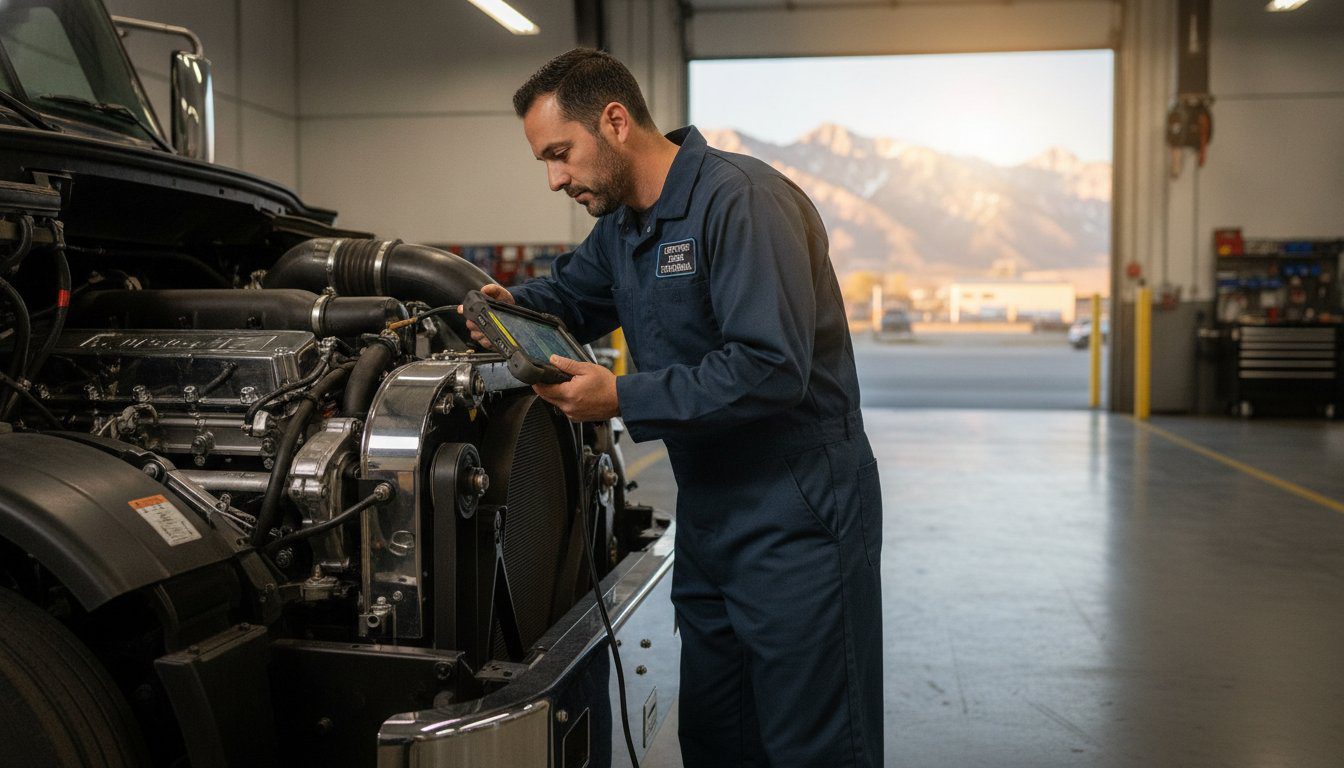
Certified Diesel Repair in Utah County: Protecting Your Heavy-Duty Investment

Entrusting a high-torque, heavy-duty engine to a generalist shop isn’t just a risk. It’s a gamble with your livelihood that often ends in unnecessary downtime and failed inspections. You understand that every hour your truck sits in a service bay is an hour of lost revenue. It’s frustrating to pay for technical work only to have the same diagnostic codes reappear because a shop lacked the specific tools for modern emissions systems.
Securing certified diesel repair in Utah County is the only way to safeguard your investment against the complexities of 2026 emissions standards and rigorous DOT requirements. Specialized mastery ensures your vehicle remains compliant with Utah’s latest heavy-duty registration fees while preventing the inaccurate diagnostics that plague generalist shops. This level of expertise isn’t just a luxury; it’s a necessity for maintaining the durability of your equipment.
In this article, you’ll discover why specialized certification is vital for long-term engine health and how to identify a shop that provides warrantied repair work. We’ll examine the critical differences between general mechanics and diesel specialists, ensuring your fleet stays on the road and your warranties stay intact.
Key Takeaways
- Learn why specialized training for high-compression diesel systems is the only way to ensure long-term engine durability and performance.
- Understand the technical requirements for maintaining DPF, EGR, and SCR systems to stay compliant with 2026 Utah County emissions standards.
- Use our 5-point checklist to verify that your provider of certified diesel repair in Utah County utilizes OEM-level diagnostic tools rather than generic scanners.
- Discover how specialized parts inventory and technical mastery drastically reduce the “Downtime Gap” compared to generalist repair shops.
- Learn how warrantied repair work provides the accountability and financial protection necessary for both residential owners and commercial fleet managers.
What is Certified Diesel Repair and Why Does it Matter?
Certified diesel repair is more than a simple mechanical checkup. It represents a specialized level of training focused on high-compression ignition systems and heavy-duty components. Unlike gasoline engines, diesel powerplants rely on extreme pressure and precise timing to function. Understanding the fundamentals of how diesel engines work is the first step in realizing why general automotive knowledge isn’t enough to maintain these machines. True certification means a technician has mastered the unique physics of diesel combustion and the complex electronics that manage it.
Many vehicle owners assume that a general ASE certification is sufficient for all repairs. While ASE credentials show a baseline of competence, they don’t always guarantee expertise in medium and heavy-duty truck systems. Specialized diesel credentials focus on the high-torque demands and specialized cooling requirements of workhorse engines. This distinction is critical when you’re dealing with a Peterbilt or a Ford PowerStroke. A specialist understands the nuances of these platforms, ensuring that every bolt is torqued to exact manufacturer specifications.
Modern diesel technology also requires a massive investment in diagnostic software. Generalist shops rarely own the OEM-level scanners needed to communicate with advanced engine control modules. Without this hardware, a mechanic is often just guessing, which leads to “parts cannon” repairs that waste your money. Certified expertise protects your manufacturer warranty and preserves the long-term resale value of your vehicle. Documented service from a specialist proves to future buyers that the engine was maintained with technical precision rather than shortcuts.
The Evolution of Diesel Certification
The industry has shifted dramatically from old mechanical injectors to high-pressure common rail (HPCR) systems. This transition changed the job of a technician forever. Today’s experts must be part computer scientist and part mechanical engineer to solve performance issues. Diesel certification is the bridge between traditional mechanics and modern digital engine management. It ensures your technician can navigate the millions of lines of code that now govern your engine’s output and efficiency.
Why Utah County Drivers Need Specialized Credentials
Operating a heavy-duty vehicle along the Wasatch Front presents unique challenges. Our high-altitude environment changes air-fuel ratios and puts additional strain on turbochargers. When you seek certified diesel repair in Utah County, you’re looking for someone who understands how these elevations affect your specific engine model. Local expertise means faster diagnostic accuracy and repairs that are tailored to the actual conditions your truck faces every day. For those who demand peak performance, choosing Expert Diesel Repair in Utah is the most reliable way to keep a fleet moving without interruption. We prioritize technical mastery to give you total control over your equipment’s reliability.
The Technical Mastery Required for Modern Diesel Systems
Modern diesel engines are marvels of engineering, but they’re also incredibly sensitive to poor maintenance. The implementation of 2026 diesel emissions standards has added layers of complexity that require more than just a standard wrench. Keeping up with these standards requires the precision found only in certified diesel repair in Utah County, where technicians are equipped to handle the increased diagnostic demands. To maintain peak performance, a technician must have a deep understanding of how these electronic systems interact with the engine’s core mechanical components.
The “Big Three” of diesel emissions—Diesel Particulate Filter (DPF), Exhaust Gas Recirculation (EGR), and Selective Catalytic Reduction (SCR)—are the primary components that keep your truck compliant. However, they’re also the most common failure points. A specialist doesn’t just clear error codes; they understand the chemical and mechanical balance needed to keep these systems functional. High-torque engines generate immense heat and pressure, meaning internal repairs require specific metallurgical knowledge. The alloys used in a heavy-duty block differ significantly from passenger vehicles, and even a millisecond of variance in fuel injection timing can tank your MPG and lead to excessive soot buildup.
Emissions Control: The #1 Source of Diesel Downtime
DPF regeneration and cleaning cycles are often misunderstood by generalist shops. If a filter isn’t reaching the proper temperature to burn off soot, it will eventually clog and force the engine into a costly “limp mode” state. Regular EGR service is equally important to prevent carbon buildup that causes significant power loss and internal wear. When diagnosing fuel system issues, specialized shops use flow-bench testing for injectors. This method provides a precise measurement of fuel delivery that simple visual checks cannot match, ensuring your engine runs lean and clean.
High-Altitude Performance and Cold Weather Care
Utah County’s mountain passes and thin air demand specific turbocharger boost optimizations to prevent premature failure. High-altitude operation accelerates the wear on diesel turbochargers without proper calibration because the compressor must work significantly harder to maintain boost levels in thin air. Essential winterization protocols are also non-negotiable for engines operating along the Wasatch Front. From testing fuel heaters to using specialized lubricants, these steps prevent fuel gelling and ensure reliable starts when temperatures drop. When choosing a repair shop, prioritize those who understand these regional environmental factors, ensuring your choice for certified diesel repair in Utah County is based on technical capability rather than proximity.
If you’re managing a commercial vehicle, investing in consistent fleet maintenance is the most reliable way to avoid these technical failures and keep your equipment earning.
Comparing Local Repair Options: Generalist vs. Specialized Diesel Shops
Choosing the right shop is the difference between a quick fix and a recurring nightmare. Many general automotive shops in the region claim to handle diesel engines, but they often lack the specialized equipment necessary for heavy-duty systems. These generalists typically rely on basic OBD-II scanners that fail to read the proprietary manufacturer codes used by brands like Peterbilt or Kenworth. When you choose certified diesel repair in Utah County, you’re hiring a technician who utilizes the same diagnostic hardware as the factory, ensuring that the root cause of a failure is identified on the first try.
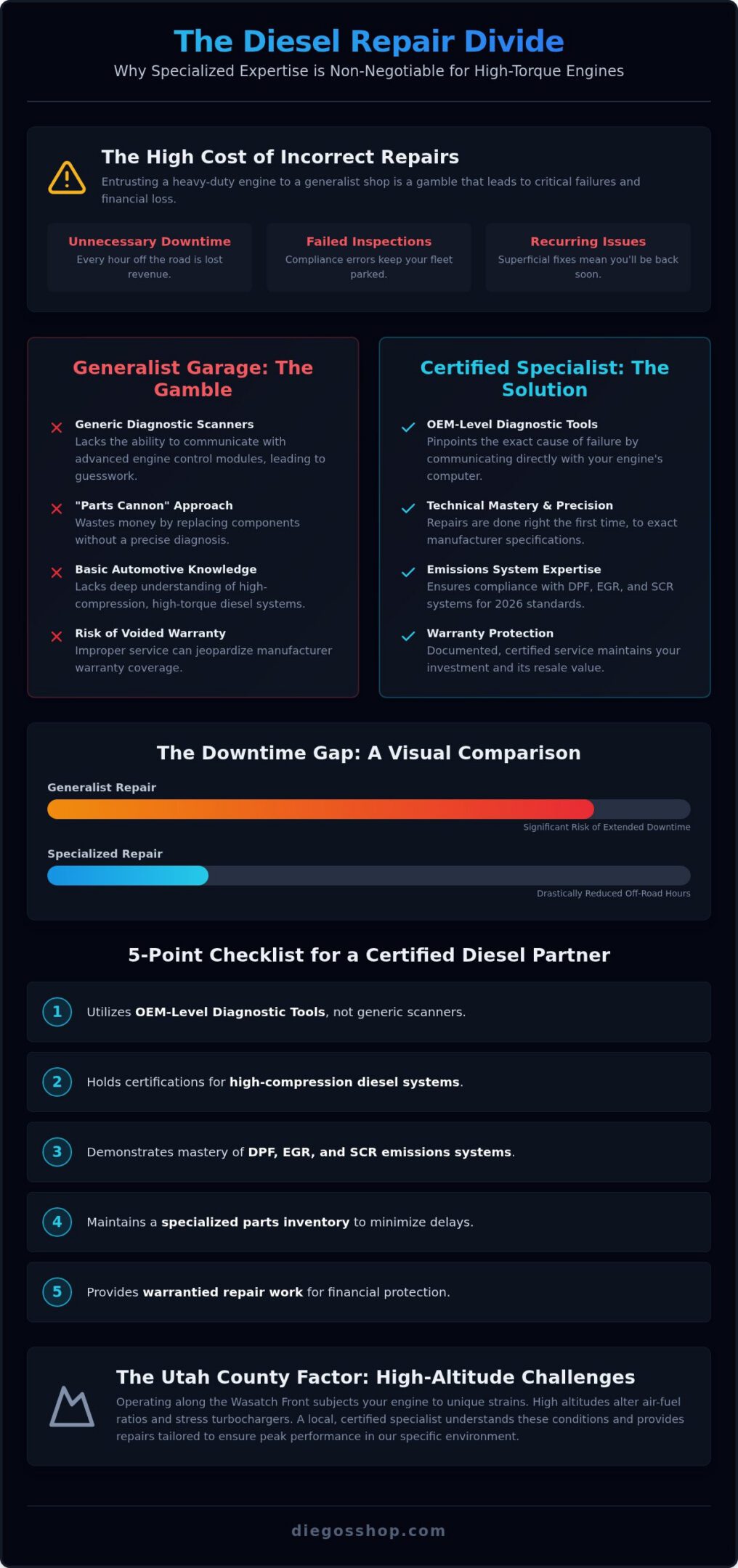
The “Downtime Gap” is a critical metric for any vehicle owner, especially those in the commercial sector. Generalist shops often have to order specialized diesel parts from outside vendors, adding days to your repair timeline. A dedicated specialist maintains an inventory of common high-wear items like injectors, sensors, and gaskets. While a specialist may have a higher hourly labor rate, the total bill is often lower because they don’t spend hours guessing or waiting for deliveries. Efficiency is the hallmark of a master craftsman.
Technical compliance is another area where generalists fall short. Specialized technicians stay updated on the latest EPA diesel standards to ensure your vehicle remains legal and efficient. Navigating these regulations requires a level of focus that a shop fixing sedans and minivans simply cannot provide. We focus exclusively on the high-torque, high-pressure world of diesel power.
The Specialist Advantage for Commercial Fleets
Commercial trucks require more than just a large parking lot. They need service bays designed for medium-duty and heavy-duty chassis that general shops can’t physically fit. Beyond the physical space, specialized shops offer dedicated Fleet Maintenance: A Complete Guide to prevent roadside failures before they happen. Priority scheduling and preventive protocols ensure that your trucks are earning, not sitting in a bay waiting for a turn behind a passenger car.
Warrantied Repair Work: The Ultimate Trust Builder
A “tail-light” warranty that expires the moment you drive away isn’t enough for long-haul or OTR applications. Specialized shops stand behind their work with comprehensive guarantees because they have total confidence in their technical skill. Whether you’re running a Cummins, Power Stroke, or Duramax, you deserve the peace of mind that comes from a shop that knows your specific engine platform inside and out. We provide the accountability you need to protect your investment for hundreds of thousands of miles. This commitment to durability is what separates a specialist from the rest of the pack.
Selecting a Diesel Partner in Utah County: A 5-Point Checklist
Finding a shop you can trust shouldn’t be a guessing game. When you’re searching for certified diesel repair in Utah County, you need a partner who demonstrates technical precision and personal accountability. A master craftsman doesn’t hide behind vague estimates; they provide concrete evidence of their capability. Before you trust a shop with your heavy-duty investment, use this checklist to verify their standards.
- Diagnostic Hardware: Verify that the shop utilizes OEM-level scanners such as Cummins Insite or Ford IDS. Generic OBD-II scanners often miss proprietary sub-codes that are critical for modern engine management.
- Technician Training: Ask for evidence of ongoing training for current-year engine models. Diesel technology moves fast, and a technician who isn’t updated on 2024 through 2026 platforms will struggle with complex electronic issues.
- Digital Transparency: Look for shops that provide detailed digital health reports. These should include photos of wear points and fluid conditions, ensuring you see exactly what the technician sees before approving any work.
- Fleet References: A reputable specialist will have a strong regional reputation. Ask for references from local fleet operators who rely on the shop for commercial-grade reliability.
- Weight Class Capacity: Ensure the facility has the specific equipment, such as heavy-duty lifts and pits, to handle your vehicle’s weight class. A shop designed for light-duty Fords may not have the infrastructure for a Class 8 Peterbilt.
Preparing for DOT Truck Inspections
A certified shop acts as your first line of defense against costly roadside violations. During a pre-inspection, a specialist looks for the exact markers that a DOT official will check, from brake stroke measurements to lighting and securement. This proactive approach ensures you can schedule Reliable DOT Truck Inspections in Utah County and pass with total confidence. Preventive maintenance is the only way to avoid the fines and forced downtime that come with a failed inspection. We focus on the details so your drivers stay on the road.
Questions to Ask Before You Drop the Keys
Don’t be afraid to interview your mechanic. Ask if they have specific experience with your engine and transmission combination, as a Cummins paired with an Allison requires different expertise than a Power Stroke. Inquire about their typical turnaround time for emissions-related diagnostics to ensure they can meet your operational needs. Finally, always ask: “What specific warranty do you offer on parts and labor for commercial-use vehicles operating under high-stress conditions?” If you want a partner who stands behind every bolt they turn, schedule your technical consultation with us today to keep your equipment in peak condition.
Diego’s Shop: Your Local Authority for Warrantied Diesel Excellence
Diego’s Shop isn’t just another repair facility. We’re a specialized hub built on the principles of technical mastery and personal accountability. When you choose us for certified diesel repair in Utah County, you aren’t just getting a mechanic; you’re getting a partner who understands the high stakes of heavy-duty operation. We’ve built our reputation in Springville by refusing to cut corners on complex engine platforms. Our shop is where technical skill meets a no-nonsense work ethic.
Our expertise covers a broad spectrum of diesel machinery, ensuring we speak the language of every client tier:
- Heavy-duty Class 8 trucks including Peterbilt and Kenworth platforms.
- Medium-duty commercial vehicles from Isuzu and other specialized manufacturers.
- Light-duty diesel pickups, with deep technical knowledge of Ford PowerStroke systems.
We treat every vehicle with the same level of precision. Whether you manage a single work truck or a full commercial fleet, our focus remains on the durability of the work performed. We don’t just fix symptoms; we solve the underlying mechanical and electronic issues that threaten your uptime.
Serving the Wasatch Front from Springville
Our strategic location in Springville serves as a vital regional hub for the entire Wasatch Front. We’ve positioned ourselves to provide quick, reliable access for fleets and owner-operators moving through the I-15 corridor. “Good enough” isn’t in our vocabulary. We know that a minor oversight in a high-pressure common rail system or a neglected emissions sensor can lead to a catastrophic failure on a mountain pass. We prioritize the technical details that generalist shops overlook to ensure your engine’s long-term durability.
Get Back on the Road with Confidence
Reliability is earned through consistent, high-quality service and honest communication. Our preventive maintenance programs are designed to catch wear before it evolves into a roadside breakdown. Every repair we perform is backed by our commitment to warrantied repair work, providing the financial peace of mind you need to operate with confidence. We take immense pride in our technical skill and the hardworking nature of the machinery we service.
Don’t let inaccurate diagnostics or slow repairs drain your revenue. You need a specialist who takes personal responsibility for your vehicle’s performance. Schedule Your Certified Diesel Service at Diego’s Shop today and experience the difference that master-level expertise makes for your heavy-duty investment. Professional service. Proven results. Reliability you can trust.
Take Total Control of Your Heavy-Duty Performance
Maintaining a heavy-duty engine is a commitment to the long-term health of your business. You’ve seen how specialized diagnostics and a master-craftsman approach prevent the “parts cannon” repairs common in generalist shops. By prioritizing technical mastery over quick fixes, you ensure your equipment stays compliant with evolving emissions standards and high-altitude demands. This proactive strategy is the most reliable way to minimize downtime and maximize the resale value of your vehicle.
Securing certified diesel repair in Utah County isn’t just about fixing what’s broken; it’s about building a foundation of reliability through warrantied repair work and preventive maintenance. At Diego’s Shop, we bring specialized expertise to Peterbilt, Kenworth, and Isuzu platforms, treating every engine with the precision it deserves. We take personal accountability for every bolt we turn, providing you with the peace of mind that comes from technical excellence and proven durability.
Don’t leave your livelihood to chance. Secure Your Fleet’s Future with Certified Diesel Repair at Diego’s Shop. We’re ready to help you keep your equipment on the road and your business moving forward with total confidence.
Frequently Asked Questions
What exactly does it mean for a diesel shop to be ‘certified’ in Utah County?
Certification means the shop has invested in the specific training and diagnostic hardware required for high-compression engines. For certified diesel repair in Utah County, this implies mastery of specialized standards or manufacturer-specific credentials. It separates generalists from specialists who understand the unique metallurgical and electronic needs of heavy-duty trucks. Without this, a mechanic is simply guessing at complex issues rather than solving them.
How often should I schedule preventive maintenance for my commercial diesel fleet?
Most commercial fleets require preventive maintenance every 10,000 to 15,000 miles, depending on the specific engine platform and duty cycle. If your trucks frequently haul heavy loads through Utah’s mountain passes, you should consider shorter intervals to prevent turbocharger and cooling system strain. Regular checks on fluid quality and filter integrity are essential for avoiding the “Downtime Gap.” Consistent maintenance is the most reliable way to protect your investment.
Can a general auto shop handle complex diesel emissions repairs like DPF or EGR?
Most general auto shops don’t have the technical infrastructure to handle DPF or EGR failures correctly. These systems require proprietary software to trigger regeneration cycles and specialized flow-bench testing for accurate diagnostics. Attempting a repair at a generalist shop often leads to misdiagnosis or temporary fixes that eventually result in a costly limp-mode event. True emissions mastery requires a specialist’s focus and specific equipment.
Does Diego’s Shop provide warranties for heavy-duty commercial truck repairs?
Yes, we stand behind our technical skill with warrantied repair work on all diesel platforms we service. We believe in personal accountability and the durability of our craftsmanship. Whether we’re servicing a light-duty Ford or a heavy-duty Kenworth, you receive a guarantee that protects your financial interests. This commitment ensures that your vehicle returns to the road in peak condition and stays there for the long haul.
What are the most common reasons for failing a DOT truck inspection in Utah?
Brake systems and lighting are the most frequent reasons for failing a DOT inspection in Utah. Inspectors also look closely at tire tread depth, steering components, and exhaust system integrity. Our pre-inspection protocols are designed to catch these issues before they lead to a violation. Passing with confidence requires a proactive approach to maintenance that addresses the specific wear points inspectors target during their roadside checks.
Do you specialize in specific diesel brands like Cummins, Power Stroke, or Duramax?
We specialize in a wide range of diesel engines, including Cummins, Power Stroke, and Duramax platforms. Our technical mastery extends to heavy-duty brands like Peterbilt, Kenworth, and Isuzu. By focusing on these specific manufacturers, we ensure that every repair meets exact factory specifications. We use OEM-level diagnostic tools to provide the same level of precision you’d expect from a dealer but with a master-craftsman’s touch.
Why is specialized diesel repair typically more expensive than standard gas engine service?
Specialized repair reflects the extreme pressures and technical complexity of diesel engines. The components are built for durability and high torque, making them more expensive to manufacture and replace. Additionally, the investment in certified diesel repair in Utah County includes the cost of sophisticated diagnostic software that general shops don’t own. You’re paying for the technical precision that prevents repeat failures and extends your engine’s overall longevity.