

Commercial Truck Preventive Maintenance Checklist: The 2026 Fleet Reliability Guide

With non-fuel operating costs hitting a record $1.779 per mile in 2026, a single missed sensor or a worn brake pad is no longer just a nuisance. It’s a direct hit to your bottom line. You’ve likely felt the frustration of a truck sidelined in Parley’s Canyon or the sting of a $19,000 fine for a falsified inspection report. Most fleet owners across the Wasatch Front are tired of reactive repairs that eat into profits and cause constant stress over DOT compliance. You need a system that works as hard as your drivers do.
This guide changes that by providing the exact commercial truck preventive maintenance checklist you need to master your service intervals and eliminate unplanned downtime. We’ll show you how to stabilize your maintenance costs and extend the lifespan of your heavy-duty diesel assets. You’ll get a clear breakdown of modern emission system care, Utah-specific safety requirements, and the precise inspection points that keep your fleet moving reliably through every season. It’s time to trade the uncertainty of emergency repairs for the peace of mind that comes with professional, disciplined maintenance.
Key Takeaways
- Shift your fleet from reactive repairs to a proactive reliability model to significantly reduce non-fuel operating costs and unplanned downtime.
- Master the specific inspection points on a commercial truck preventive maintenance checklist to catch small issues before they trigger DOT violations or roadside emergencies.
- Understand how the unique geography of the Wasatch Front, from high altitudes to steep canyon grades, accelerates wear on turbochargers and braking systems.
- Discover the value of integrating professional shop-level diagnostics to identify silent faults within modern diesel emission systems.
- Secure your fleet’s future with warrantied repair work that guarantees durability and keeps your heavy-duty trucks in total compliance.
Beyond the Basics: Building a Strategic Preventive Maintenance System
Many fleet managers treat maintenance as an interruption. It’s actually the heartbeat of a profitable operation. Shifting to a proactive reliability model means you’re no longer waiting for a dashboard warning light to tell you a truck is down. In 2026, the gap between profitable fleets and those struggling is defined by their approach to the commercial truck preventive maintenance checklist. A strategic system identifies wear patterns before they cause a catastrophic failure. It moves your operation from a state of constant fire-fighting to predictable, controlled performance.
The financial impact of this shift is measurable. A scheduled PM service is a predictable expense you can budget for. An emergency roadside call is a financial wildcard. Beyond the immediate towing and repair fees, you’re losing revenue every hour that truck isn’t moving. Professional maintenance ensures you stay ahead of strict vehicle inspection regulations, which helps you avoid the heavy fines associated with modern safety and emissions standards. In a year where non-fuel operating costs have hit record highs, efficiency is your best defense.
Generic checklists often fail because they don’t account for the intricacies of heavy-duty diesel engines. A Peterbilt’s cooling system or a Kenworth’s aftertreatment sensors require specific attention that a “one-size-fits-all” paper form misses. You need a system built for durability and technical accuracy, which includes sourcing reliable parts from experts like GSM Internacional for your heavy machinery. This requires a deep understanding of how your specific equipment handles the stress of daily operation.
Defining Service Intervals by Duty Cycle
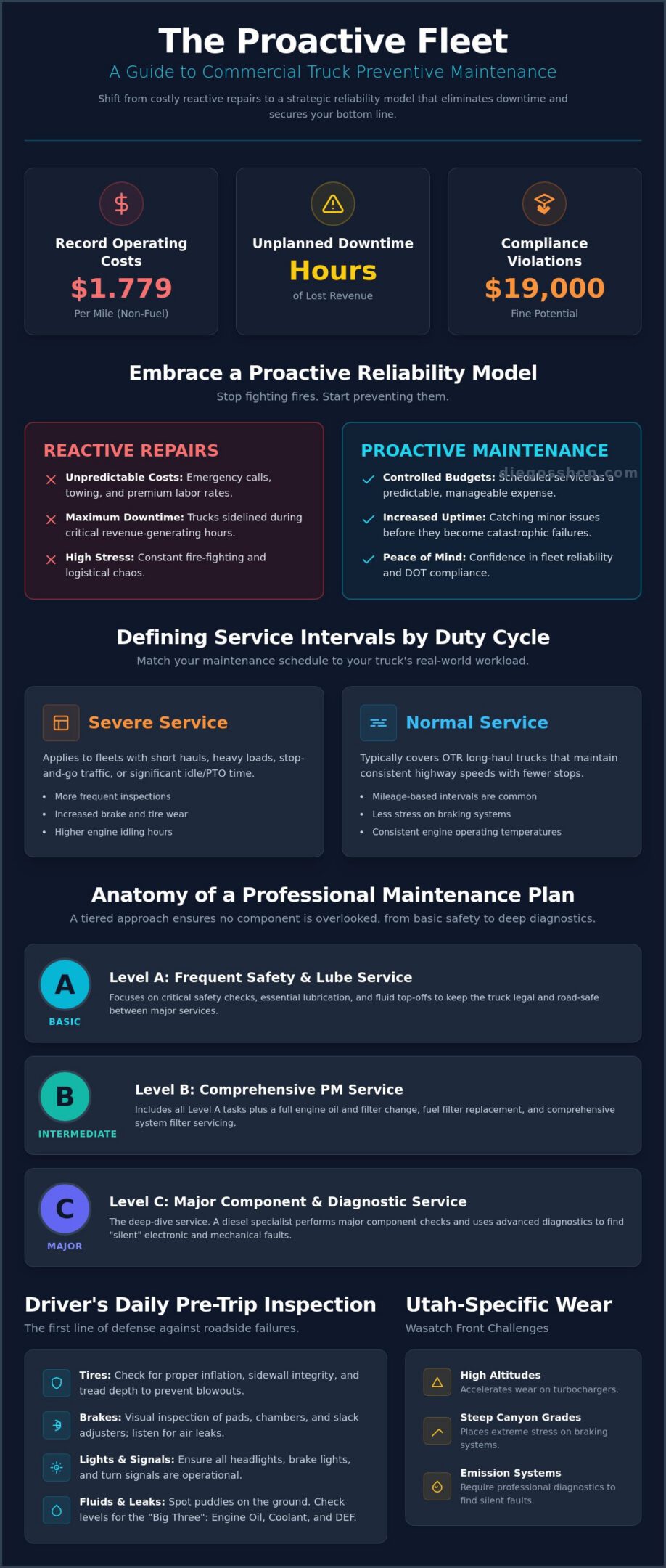
Your maintenance schedule shouldn’t be a guess. It must be dictated by how you use your trucks. Severe Service applies to fleets doing short-hauls, carrying heavy loads, or navigating stop-and-go city traffic. These trucks need more frequent inspections due to increased idling and brake wear. Normal Service typically covers OTR long-haul trucks that maintain consistent highway speeds. While mileage is a common trigger, using engine hours often provides a more accurate picture of wear, especially for trucks that spend significant time idling or operating PTO equipment.
The Anatomy of a Professional Maintenance Plan
A professional plan is structured in tiers to ensure no component is overlooked. Level A (Basic) services are frequent. They focus on safety checks, essential lubrication, and fluid top-offs to keep the truck legal and safe. Level B (Intermediate) includes everything in Level A plus oil changes and a comprehensive replacement of all system filters. Level C (Major) is the deep-dive. This is where a diesel specialist performs major component servicing and uses advanced diagnostics to find the “silent” faults that a simple walk-around will never catch. This tiered approach ensures your fleet remains compliant and reliable.
Essential Daily and Pre-Trip Inspection Protocols
Your drivers are the first line of defense in your maintenance ecosystem. They see, hear, and feel the equipment every day, making them uniquely positioned to catch issues before they escalate into expensive roadside failures. A disciplined 5-minute pre-trip routine isn’t just a regulatory hurdle; it’s a strategic shield for your revenue. When your team follows a consistent commercial truck preventive maintenance checklist, they identify the small symptoms of wear that lead to major engine or safety failures. Consistency here is the difference between a productive day on the road and an afternoon spent waiting for a tow truck.
Visual inspections start from the ground up. Spotting a fresh puddle on the shop floor provides immediate clues about the health of your diesel engine. By following TMC Recommended Practices, fleets can standardize these daily checks to ensure nothing is missed. Tire health is another critical area where drivers must look beyond simple tread depth. Checking for proper inflation and sidewall integrity prevents heat build-up, which is a leading cause of blowouts on heavy-duty assets. If your drivers report recurring issues during these walk-arounds, it’s time to bring the asset into Diego’s Shop for a professional assessment.
Fluid Levels and Leak Identification
Modern diesel engines rely on the “Big Three” fluids: engine oil, coolant, and Diesel Exhaust Fluid (DEF). Drivers should be trained to differentiate between different types of leaks. An oil leak is typically dark and viscous, while coolant is often bright and has a sweet smell. Hydraulic leaks from power steering systems are thinner and usually reddish or clear. Puddling under the steering box indicates an immediate safety risk that requires the vehicle to be grounded until a specialist can verify the steering gear’s integrity. Keeping these fluids at optimal levels is essential for modern diesel engine management.
Safety Systems and Lighting Verification
A full walk-around must include a verification of all signal, brake, and marker lights. Inoperable lighting is one of the most common reasons for a DOT stop, which can trigger a more invasive inspection of the entire vehicle. Beyond bulbs, drivers should check that all reflective tape is clean and visible and that mudflaps are securely mounted and meet height requirements. Staying compliant with Reliable DOT Truck Inspections in Utah County starts with these daily habits. When the driver and the shop work in tandem, your fleet remains durable and safe for every mile across the Wasatch Front.
System-Specific Deep Dives: Engine, Emissions, and Brakes
Moving from the driver’s seat to the service bay requires a shift in perspective. While the pre-trip walk-around identifies immediate threats, the shop-level inspection uncovers the hidden wear that leads to major component failure. A professional commercial truck preventive maintenance checklist must serve as a roadmap for these technical deep dives. In 2026, the complexity of modern diesel systems means that simply checking for leaks isn’t enough. You need a protocol that addresses the high-tech heart of the vehicle to ensure long-term durability.
The drivetrain and suspension are the backbone of your truck’s reliability. Identifying hairline cracks in leaf springs or excessive play in U-joints prevents catastrophic failures on the highway. Modern diesel diagnostics involve more than just reading fault codes. A code identifies a symptom, but a master craftsman finds the root cause. This level of technical scrutiny ensures your fleet remains on the road and your maintenance costs stay predictable.
Modern Diesel Emission Control (DPF/EGR) Maintenance
Modern diesel emission controls, specifically the DPF and EGR systems, are the leading cause of unplanned downtime in newer fleets. If you aren’t monitoring soot levels and regen frequency, you’re inviting “face-plugging” and expensive derate events. Regular EGR valve cleaning is essential for maintaining both fuel efficiency and engine power. For those operating in the colder climates of the Wasatch Front, DEF quality and tank heater functionality are non-negotiable for winter reliability. You can find more detailed protocols in the CCDET Preventive Maintenance Guide, which provides a technical foundation for these specialized systems.
Braking Systems and Air Supply Integrity
Braking systems and air supply integrity demand absolute precision during every service interval. Beyond checking pad thickness and drum condition, technicians must verify that slack adjusters are functioning within legal tolerances. The air dryer cartridge is a small component with a massive job; it’s the primary defense against moisture in the lines, which leads to frozen valves and brake failure during Utah winters. To ensure system safety, a stationary vehicle with the engine off and brakes applied should never exceed a maximum allowable air pressure drop of 3 psi per minute for a single vehicle or 4 psi for a combination unit. Using a comprehensive commercial truck preventive maintenance checklist helps technicians catch these subtle air system leaks before they compromise safety.
Utah-Specific Maintenance: Navigating the Wasatch Front Terrain
Operating a fleet along the Wasatch Front demands a level of mechanical discipline that flat-land operations simply don’t require. Your commercial truck preventive maintenance checklist isn’t truly complete unless it accounts for the brutal reality of Utah’s unique geography. Between the steep, punishing grades of Spanish Fork Canyon and the thin air of high-altitude mountain passes, your diesel assets are under constant stress. These conditions accelerate wear on critical components that might last twice as long in other regions. Ignoring these variables is a shortcut to expensive roadside repairs and lost revenue.
The steep descent through Spanish Fork Canyon generates massive heat in braking systems, which can lead to glazed pads or warped drums if they aren’t inspected with precision. Simultaneously, high-altitude operation forces diesel turbochargers to spin at higher RPMs to compensate for the lack of oxygen. This increases the thermal load on the engine and tests the limits of your lubrication. If you’re noticing a drop in power or increased exhaust temperatures on mountain grades, it’s time to invest in Expert Diesel Repair in Utah to verify your boost pressures and engine health before a minor leak becomes a major failure.
Winterization and Salt Corrosion Protection
Utah road salt is a chemical attack on your truck’s longevity. It’s particularly destructive to electrical harnesses and air lines, where it causes hidden corrosion that leads to “ghost” electrical faults and sudden air leaks. In Springville and the surrounding areas, cold starts demand peak amperage from your battery bank. We recommend a strict load test for every battery before the first freeze. Additionally, choosing the right fuel additives is essential for preventing gelling when temperatures drop below zero on the high plateau. Underbody protection and regular wash cycles should be a standard part of your winter protocol to preserve the integrity of your chassis. While maintaining the exterior is vital, ensuring your drivers have clean uniforms and gear from Prescott’s Laundry is another important part of supporting a professional and efficient fleet operation.
Cooling System Resilience for Mountain Grades
Utah’s extreme summer heat combined with heavy loads creates a “worst-case scenario” for your cooling system. We perform rigorous pressure tests on radiator caps and verify fan clutch engagement to ensure your truck can handle a 6 percent grade without derating. Testing coolant pH is also vital. In high-stress diesel engines, improper pH levels lead to liner cavitation, which can ruin an engine block from the inside out. We also inspect every belt and hose for heat-induced cracking that could lead to a sudden loss of coolant. To ensure your fleet is ready for the next climb, schedule your preventive maintenance service in Springville today.
Operationalizing Your Checklist with Diego’s Shop
A commercial truck preventive maintenance checklist is a powerful strategic asset, but it’s only as effective as the technician executing the inspection. While your drivers serve as the first line of defense during daily walk-arounds, complex Level B and Level C maintenance requires the specialized eye of a diesel master craftsman. Partnering with a dedicated specialist ensures that the deep-dive portions of your maintenance cycle aren’t just paperwork exercises. At Diego’s Shop, we transform these checklists into a rigorous defense system for your fleet, focusing on the technical accuracy required to keep heavy-duty assets running across the Wasatch Front.
We understand that every fleet has a different duty cycle. A truck hauling gravel out of a pit in Spanish Fork faces different stresses than a long-haul tractor-trailer. We work with Springville-based fleets to build custom maintenance plans that prioritize high-wear components based on actual usage. This tailored approach is the cornerstone of effective Fleet Maintenance: A Complete Guide to Preventing Downtime. By aligning our shop services with your operational needs, we ensure your vehicles spend more time on the road and less time in the bay.
Integrating Professional Diagnostics into Your Schedule
Modern diesel engines are essentially mobile computers. Relying on a generic code reader from a parts store is a mistake that often leads to misdiagnosis. Professional-grade diagnostics allow us to look deeper than just active fault codes; we monitor engine health trends over time to spot “silent” failures before they trigger a derate. We use advanced scanning tools specifically designed for brands like Peterbilt, Kenworth, Isuzu, and Ford to verify sensor accuracy and emission system performance. To minimize disruption to your revenue, we offer flexible scheduling that allows your trucks to get the care they need without missing a scheduled route.
Warrantied Repairs: The Ultimate Peace of Mind
The final step in any preventive maintenance strategy is the assurance that the work performed will hold up under pressure. We take a master craftsman approach to every repair, ensuring that every bolt is torqued to factory specifications and every component meets our strict durability standards. This commitment to quality is why we provide warrantied repair work on every job. It removes the uncertainty from your maintenance budget and guarantees that your fleet remains in total compliance with DOT safety standards. Our goal is to provide the dependability you need to grow your business without the stress of mechanical failure. Schedule your fleet maintenance at Diego’s Shop today and experience the peace of mind that comes with professional, warrantied service.
Secure Your Fleet’s Future on the Wasatch Front
Success in the heavy-duty trucking industry is built on reliability. By moving beyond basic inspections and adopting a strategic commercial truck preventive maintenance checklist, you protect your assets from the punishing grades of Spanish Fork Canyon and the corrosive effects of Utah road salt. You’ve seen how proactive care and professional diagnostics eliminate the stress of unplanned downtime while keeping your operations in total DOT compliance. It’s about maintaining total control over your costs and your schedule.
Diego’s Shop provides the specialized expertise in medium and heavy-duty diesel engines that your fleet deserves. Conveniently located in Springville, we offer warrantied repair work that guarantees the durability of every service we perform. We take pride in our technical skill and the peace of mind we provide to fleet owners across the region. Keep your fleet on the road with professional maintenance at Diego’s Shop. Your trucks are built to work hard; we’re here to ensure they never stop.
Frequently Asked Questions
How often should a commercial truck have a preventive maintenance inspection?
Most commercial trucks require a preventive maintenance inspection every 10,000 to 15,000 miles or approximately 300 engine hours. However, your specific interval depends on your duty cycle. Severe service fleets operating in stop-and-go traffic or hauling heavy loads across mountain grades should schedule inspections more frequently. Consistent intervals are the most effective way to identify wear in the braking and cooling systems before they cause a breakdown.
What are the most common items on a DOT truck maintenance checklist?
A standard DOT truck maintenance checklist focuses on safety-critical systems like brakes, tires, lighting, and steering components. Inspectors look for audible air leaks, proper brake adjustment, and adequate tire tread depth. They also verify the functionality of all signal and marker lights. Ensuring these items are addressed during every service interval helps your fleet pass roadside inspections and avoids the heavy fines associated with safety violations.
Can preventive maintenance really reduce my overall fleet repair costs?
Yes, implementing a commercial truck preventive maintenance checklist significantly reduces total fleet repair costs by preventing catastrophic component failures. Scheduled maintenance allows you to fix small issues, like a worn belt or a minor coolant leak, before they lead to an expensive engine overhaul or an emergency roadside tow. Over time, proactive fleets enjoy more predictable maintenance budgets and higher vehicle resale values compared to those running a reactive model.
What is the difference between a Level A and Level B service for diesel trucks?
Level A service is a basic safety inspection that includes lubrication and fluid top-offs to keep the truck operational. Level B is an intermediate service that incorporates everything in Level A plus a full oil change and replacement of all primary filters. Level B also involves a more technical inspection of the drivetrain and emission systems. While Level A keeps you legal, Level B is where the actual durability of the diesel engine is maintained through professional-grade care.
How does cold weather in Utah affect diesel engine maintenance?
Cold Utah winters demand peak performance from your battery bank and fuel system. Sub-zero temperatures can cause diesel fuel to gel, requiring specific additives to maintain flow. Additionally, the road salt used along the Wasatch Front accelerates corrosion on electrical harnesses and exposed air lines. We recommend load-testing batteries and inspecting underbody components for salt damage during every winter service to ensure your fleet remains reliable during the coldest months of the year.
Should I use OEM or aftermarket parts for my truck’s preventive maintenance?
We generally recommend OEM parts for critical engine and emission system components to ensure total compatibility and durability. While some aftermarket parts offer lower upfront costs, they often lack the precise tolerances required for modern diesel engine management. Using high-quality parts is essential for maintaining the validity of warrantied repair work. For non-critical items like mudflaps or some exterior lighting, high-grade aftermarket options can be a cost-effective alternative without compromising safety.
What are the signs that my DPF system needs professional service?
Frequent active regenerations or a noticeable loss of engine power are the primary signs that your DPF system needs professional attention. If your truck is stuck in a constant regen cycle or if you see a dashboard warning for high soot levels, the filter may be face-plugged. Ignoring these symptoms can lead to an engine derate or permanent damage to the expensive SCR catalyst. Professional diagnostics can verify sensor accuracy and determine if a manual cleaning is required.
How can I track maintenance for a small fleet without expensive software?
Small fleets can effectively track maintenance using simple digital spreadsheets or dedicated logbooks if they stay disciplined. The key is to record every service date, mileage, and specific repair performed on each asset. This data allows you to spot recurring issues and stay ahead of your next service interval. Even without expensive software, maintaining a clear paper or digital trail is vital for proving DOT compliance and managing the long-term health of your diesel trucks.