
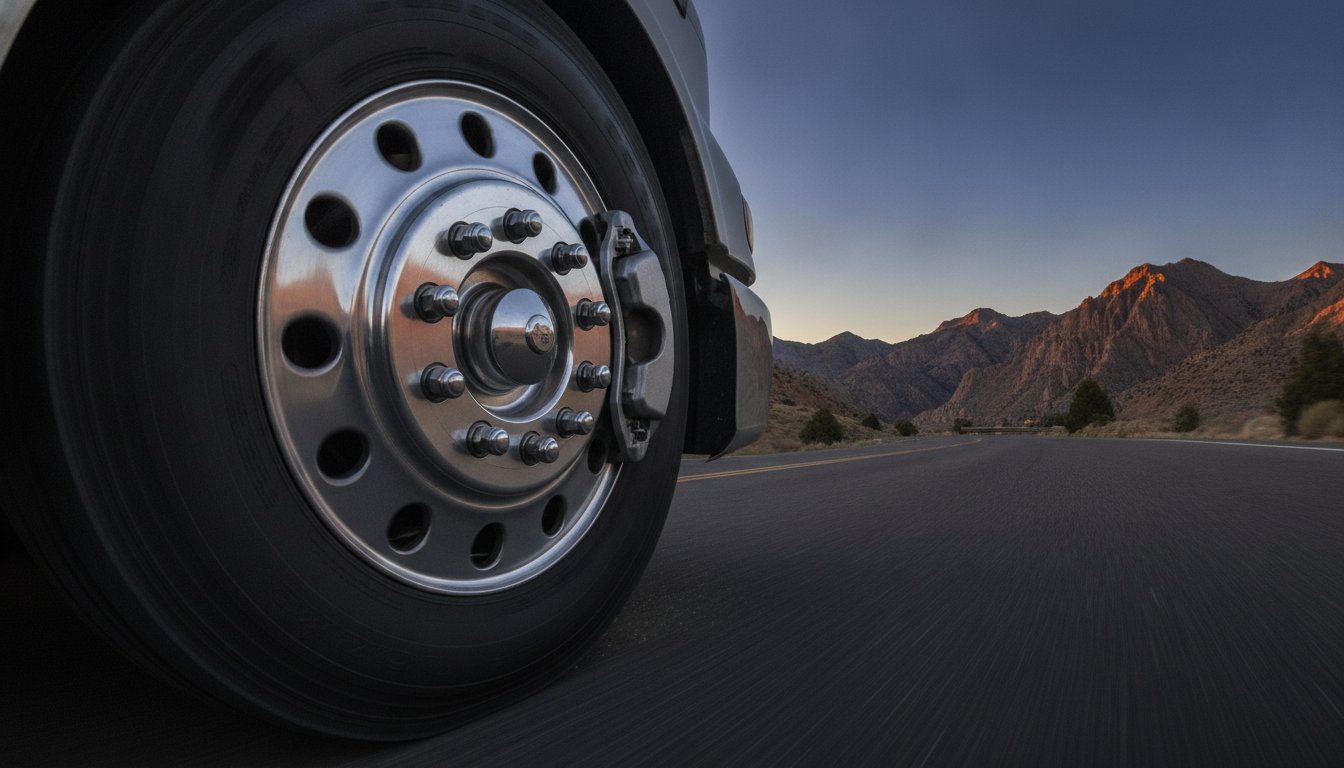
Commercial Truck Brake Repair in Utah County: Heavy-Duty Safety and Performance

Imagine a driver cresting the summit of Spanish Fork Canyon with 80,000 pounds behind them, only to feel the sickening fade of overheating drums. This scenario is the nightmare every fleet manager works to prevent through precision commercial truck brake repair utah county. When you’re hauling heavy loads across the Wasatch Front, your braking system is the most critical safety feature on the vehicle. It requires the attention of a specialist who understands the literal weight of the job and the technical demands of our local terrain.
You already know that brake-related violations are the primary reason for out-of-service orders, leading to expensive downtime and missed deadlines. This guide will help you master the essentials of heavy-duty brake maintenance and explain why Diego’s Shop is the trusted partner for fleet safety. We will preview the 2026 FMCSA regulation updates, specific technical requirements for Utah’s steep grades, and how warrantied repair work keeps your long-term costs under control. Trusting your fleet to a seasoned expert ensures your trucks stay compliant and, more importantly, stay safe on the road.
Key Takeaways
- Understand why specialized thermal management is critical for maintaining stopping power in heavy-duty pneumatic and hydraulic systems.
- Learn to identify early warning signs of brake failure, from audible wear indicators to physical feedback like pedal vibrations and pulling.
- See how professional commercial truck brake repair utah county leverages advanced diagnostics to resolve complex electronic faults in ABS and EBS systems.
- Prepare your fleet to pass DOT inspections by addressing the most common brake-related issues that lead to costly “Out of Service” orders.
Understanding Commercial Brake Systems: Why Specialized Service Matters
Commercial braking systems are sophisticated pneumatic or hydraulic networks designed to manage forces that would disintegrate a standard passenger vehicle. Most heavy-duty trucks rely on compressed air to actuate the stopping mechanism. Understanding how air brakes work is fundamental to maintaining fleet safety across long hauls. These systems are under constant stress and are often integrated with the vehicle’s powertrain. Reliable performance often requires a holistic approach where brake maintenance is paired with diesel engine repair. This is because the air compressor, which is the heart of the braking system, is powered directly by the engine. If the engine’s drive systems fail, your ability to maintain air pressure vanishes.
The Physics of Stopping a Loaded Commercial Fleet
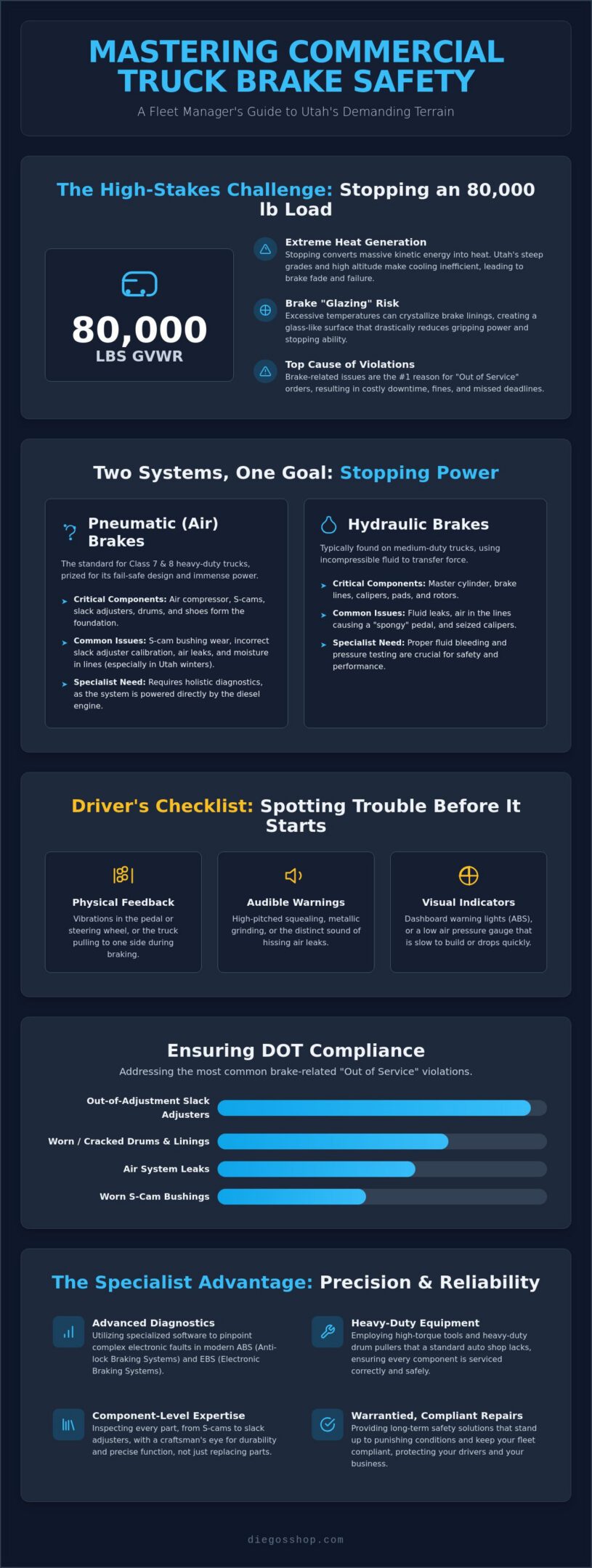
Stopping a vehicle with an 80,000lb Gross Vehicle Weight Rating (GVWR) is an exercise in massive energy conversion. Kinetic energy must be transformed into heat through friction. In Utah’s high-altitude environment, thinner air makes cooling these components significantly more difficult than at sea level. When drivers descend steep grades like those found throughout Utah County, excessive heat can lead to “glazing.” This occurs when the brake lining material crystallizes from extreme temperatures, creating a smooth, glass-like surface that loses its ability to grip the drum. Precision commercial truck brake repair utah county focuses on ensuring the system can dissipate this heat effectively to prevent brake fade during critical descents.
Commercial vs. Residential: The Diesel Specialist Advantage
A standard automotive shop lacks the infrastructure to handle the scale of a Class 8 truck. Heavy-duty drum pullers, high-torque impact tools, and specialized diagnostic software for anti-lock braking systems are essential for a professional fix. We approach every job with the mindset of a seasoned master craftsman who understands that there is no room for error. This specialized expertise is why we focus on warrantied repair work. We know that for fleet managers, liability is a primary concern. A failure on the road is more than a mechanical setback; it is a threat to your driver and your company’s reputation.
Choosing a specialist ensures that every component, from the S-cams to the slack adjusters, is inspected with an eye for durability. We don’t just replace parts. We verify that the entire pneumatic network is airtight and responsive. This level of technical control is what separates a quick fix from a long-term safety solution. Our goal is to provide commercial truck brake repair utah county that stands up to the punishing demands of the Wasatch Front.
Air Brake vs. Hydraulic: Specialized Solutions for Your Truck
Commercial vehicles don’t follow a one-size-fits-all approach to stopping power. When you require commercial truck brake repair utah county, the first step is identifying whether your chassis uses a pneumatic or hydraulic system. Class 7 and 8 heavy-duty trucks almost exclusively utilize air brakes due to their fail-safe nature and ability to handle immense weight. Medium-duty trucks, however, often rely on hydraulic pressure. Each system faces unique environmental challenges in Utah, from the bone-chilling canyon winters to the high-heat climbs of the summer months. Proactive fleet maintenance is the only way to ensure these distinct components remain responsive under pressure.
Maintaining the Air Brake Foundation
The “foundation” of an air brake system consists of the drums, shoes, and S-cams. The S-cam is a critical shaft that turns to push the brake shoes against the drum. Over time, S-cam bushings wear down, which can lead to delayed timing and uneven shoe wear. If the bushings are loose, the shoes won’t hit the drum squarely. This reduces your stopping power instantly. Adhering to DOT brake inspection requirements means verifying that your slack adjusters are properly calibrated. An out-of-adjustment slack adjuster is one of the most common reasons for a failed roadside inspection. We also meticulously check drums for “heat checking,” which are small cracks that form when the metal expands and contracts too rapidly during heavy braking.
In Utah, air dryer maintenance is a seasonal necessity. Compressed air naturally creates moisture. If your air dryer filter is saturated, that water enters your brake lines. During a Utah County winter, this moisture freezes, blocking air flow and potentially locking your brakes while you’re in traffic. We replace these filters and purge the tanks to keep your lines clear and your valves functional.
Medium-Duty Hydraulic Systems
Medium-duty trucks, such as those built on Isuzu, Ford, or Chevy commercial chassis, operate differently. These systems use a master cylinder to send pressurized fluid to the calipers. Many diesel-powered medium-duty trucks utilize a “hydro-boost” system, which uses pressure from the power steering pump rather than engine vacuum to assist the brakes. This provides a much firmer pedal feel and more reliable stopping for loaded box trucks.
The biggest threat to these systems is fluid contamination. Brake fluid is hygroscopic, meaning it absorbs water from the air. This water causes internal corrosion in the master cylinder and calipers, eventually leading to a “spongy” pedal or a complete loss of pressure. Regular fluid flushes are vital to keep these internal components moving freely. If you notice your pedal traveling closer to the floor than usual, scheduling a technical review can prevent a catastrophic hydraulic failure on the road. Precision and accountability are the hallmarks of our service for every truck tier.
Signs Your Truck Needs Brake Repair: A Driver’s Checklist
Drivers are the first line of defense in fleet safety. Recognizing the early warning signs of mechanical failure allows for proactive commercial truck brake repair utah county before a minor issue triggers a DOT violation or a roadside emergency. Your senses are your best diagnostic tools during a shift. Paying attention to how the vehicle sounds, feels, and responds under load can save thousands in emergency towing fees. Precision maintenance starts with the driver’s ability to communicate specific symptoms to the shop.
Listen for the sharp “chirp” of wear indicators or the deep, rhythmic grinding of metal-on-metal contact. Physical feedback like a vibrating pedal or the truck pulling to one side often points to warped drums or uneven shoe adjustment. Air system health is equally vital. If your pressure gauges take too long to reach 120 psi or if the low-pressure buzzer sounds frequently, your pneumatic system is compromised. Visually, look for “heat checking” cracks in the drums or friction material that has worn thinner than a quarter-inch. Brake fade is the loss of stopping power due to heat.
The Pre-Trip Inspection: Catching Issues Before the Road
A thorough pre-trip inspection catches the vast majority of brake issues before they reach the highway. Perform a 90-second air leak down test by holding the brake pedal with the engine off. If the pressure drops more than 3 psi for a straight truck or 4 psi for a tractor-trailer, you have a leak that requires immediate attention. Check your pushrod travel to ensure the slack adjusters are keeping the shoes within legal limits. Finally, look for oil or grease on the linings. This usually indicates a failed wheel seal. Federal regulations regarding the qualifications of brake inspectors ensure that only trained professionals should perform the actual repairs once these issues are identified during your commercial truck brake repair utah county service.
On the Road Warning Signs
Warning signs often amplify when you are under a full load. If you smell a pungent, acrid “burning” scent while descending a canyon grade, pull over safely at the next available turnout. This scent indicates your linings are overheating and nearing the point of total failure. In medium-duty trucks with hydraulic systems, a “hard” brake pedal that is difficult to press suggests a failure in the hydro-boost or vacuum assist. If the steering wheel shakes only when you apply the brakes, you likely have an out-of-round drum or a warped rotor. These symptoms demand a technical evaluation to restore the reliable stopping power your job requires. We take pride in diagnosing these issues correctly the first time.
The Diego’s Shop Approach: Precision Brake Inspections
Safe stopping power begins with a technical protocol that leaves nothing to chance. At Diego’s Shop, we don’t just glance at your pads and send you on your way. We execute a comprehensive multi-point inspection on every fleet vehicle that enters our bays. This systematic approach ensures that every component, from the air lines to the foundation hardware, meets our strict standards for durability. By integrating these checks into a broader Preventive Maintenance plan, we eliminate the guesswork that leads to roadside failures. Our goal is to provide the most thorough commercial truck brake repair utah county has to offer, rooted in a culture of integrity and accountability.
Modern braking systems are deeply intertwined with the vehicle’s electronic architecture. We utilize advanced diesel diagnostics services to interface with your truck’s onboard computers. This allows us to see beyond the mechanical surface and identify electronic faults that could compromise your safety systems. Every bolt we torque and every adjustment we make is performed with the precision of a master craftsman. We treat your equipment with the respect it deserves, knowing that your livelihood depends on the reliability of our work.
Advanced Diagnostics for Modern ABS Systems
Modern heavy-duty trucks are sophisticated machines that rely on Anti-lock Braking Systems (ABS) and Electronic Braking Systems (EBS) to maintain stability. When these systems fail, they often trigger “limp mode” or safety shutdowns that can strand a driver. Our technicians specialize in troubleshooting wheel speed sensors and modulator valves to pinpoint the exact source of a fault. We ensure clear communication between the tractor and trailer braking systems, which is vital for preventing jackknife scenarios. Clearing active fault codes is only half the job; we find the root cause to prevent the light from coming back on. If your ABS warning light is active, contact us for a diagnostic review to get your truck back to full operational capacity.
Warrantied Repairs for Peace of Mind
We understand that fleet managers need more than just a repair; they need a guarantee. Our warrantied repair work is the gold standard for drivers passing through Springville and the wider Wasatch Front. We only use high-quality, durable parts that match the hardworking nature of the machinery we service. There is no room for cut-rate components when you are hauling heavy loads. The Diego’s Shop name represents personal accountability. When we sign off on a repair, we are putting our reputation on the line alongside your safety. We stand behind every repair with the confidence that comes from years of hands-on expertise. Quality service is our signature promise.
Ensuring DOT Compliance and Safety in Utah County
Compliance is the final hurdle that determines whether your fleet stays on the road or sits in a weigh station parking lot. In Utah County, the Utah Highway Patrol (UHP) maintains a rigorous presence along the I-15 corridor. Failing to maintain your braking system doesn’t just risk safety; it invites heavy fines and immediate “Out of Service” (OOS) orders. Professional commercial truck brake repair utah county is your best defense against these disruptions. By ensuring every component is within federal tolerances, you protect your schedule and your bottom line. Our technicians understand the specific criteria used during dot truck inspections near me, allowing us to catch violations before a trooper does.
Proactive maintenance reduces the total cost of ownership by preventing the compounding damage caused by neglected parts. A small air leak or a slightly out-of-adjustment slack adjuster can quickly escalate into a failed inspection or, worse, a mechanical failure on a steep grade. We provide the technical documentation and high-level service needed to keep your maintenance logs current and your trucks legally compliant. This level of preparation removes the stress of roadside inspections and keeps your drivers focused on the road ahead.
Navigating Utah’s Strict DOT Brake Standards
Understanding the “20% rule” is vital for any fleet manager. If 20% or more of the service brakes on a vehicle have a defect, such as being out of adjustment or having cracked linings, that vehicle is legally OOS. We perform rigorous checks to ensure your truck never approaches that threshold. Documented maintenance logs are your primary evidence of safety during an audit. We help you maintain these records through consistent, scheduled commercial truck brake repair utah county. Our goal is to ensure that when a UHP officer steps under your trailer, they find a system that is perfectly maintained and fully compliant.
The Local Expert for Springville and Beyond
Our Springville location is strategically positioned near I-15 to provide convenient access for fleets operating in Provo, Orem, and Spanish Fork. We support a diverse range of local industries, from construction teams running heavy dump trucks to OTR long-haulers passing through the Wasatch Front. We understand the unique technical demands placed on vehicles in this region. Whether you’re dealing with the stop-and-go traffic of the urban corridor or the heavy braking required for Spanish Fork Canyon, we have the expertise to keep your equipment performing at its peak.
Trust the master craftsmen at Diego’s Shop to handle your next service with the precision and accountability your business deserves. We don’t just fix trucks; we provide the peace of mind that comes from knowing your fleet is safe and compliant. Quality service is our signature promise.
Secure Your Fleet’s Performance on the Wasatch Front
We have detailed the technical complexity of heavy-duty braking systems and the absolute necessity of maintaining thermal management on Utah’s unforgiving terrain. You now understand the critical differences between air and hydraulic systems and how to identify early signs of wear before they trigger a roadside emergency. Maintaining a rigorous pre-trip inspection routine and staying ahead of DOT regulations are the most effective ways to protect your drivers and your business reputation.
Reliable commercial truck brake repair utah county is the cornerstone of a safe and profitable fleet operation. At Diego’s Shop, we bring specialized expertise in heavy-duty air brake systems and provide warrantied repair work on all diesel services to give you total peace of mind. Our facility is conveniently located in Springville to serve all of Utah County with the precision and accountability your machinery demands. Don’t wait for a warning light or a failed inspection to take action.
Schedule Your Commercial Brake Inspection at Diego’s Shop today to ensure your trucks remain compliant and powerful on every grade. We take pride in keeping your fleet moving safely and efficiently. Your safety is our signature promise.
Frequently Asked Questions
How often should commercial truck brakes be inspected in Utah?
Federal law requires a comprehensive DOT inspection at least once every 12 months for vehicles over 10,001 lbs. However, for effective commercial truck brake repair utah county, we recommend a professional technical review every 10,000 to 15,000 miles. Utah’s unique high-altitude environment and steep canyon grades place extreme stress on friction materials, making frequent preventive checks essential for fleet safety.
What is the most common cause of commercial brake failure on I-15?
Overheating and subsequent brake fade are the most frequent causes of failure, particularly along heavy traffic corridors and steep descents. When brakes exceed their thermal capacity, the friction material loses its ability to grip the drum or rotor. This is often exacerbated by air leaks or improperly adjusted slack adjusters that prevent the system from applying uniform pressure across all axles.
Can I replace just the brake pads, or do I need to turn the drums too?
You should always have the drums inspected for heat checking, scoring, or out-of-round conditions before replacing friction material. While it’s possible to replace only the shoes, installing new pads on a damaged or heat-warped drum leads to premature wear and reduced stopping power. We generally recommend resurfacing or replacing drums to ensure a flat mating surface for maximum technical performance.
What is the “Out of Service” criteria for commercial brakes during a DOT inspection?
A vehicle is placed out of service if 20% or more of its service brakes possess a defect. Common triggers for an OOS order include audible air leaks, pushrod travel exceeding legal limits, or friction material worn thinner than one-quarter inch. Even a single lining contaminated with oil or grease can result in a violation during a roadside Utah Highway Patrol inspection.
How long does a standard commercial brake job take at Diego’s Shop?
A standard brake service on a single axle typically takes between two and four hours depending on the specific hardware and system type. This timeframe allows for a complete teardown, cleaning of the S-cam assembly, component replacement, and a final calibration of the slack adjusters. We focus on executing a precise repair the first time to minimize your fleet’s downtime and ensure reliability.
Does Diego’s Shop provide warranties on commercial brake repairs?
Yes, we provide warrantied repair work on all our commercial truck brake repair utah county services to ensure your peace of mind. We stand behind our technical skill and the durability of the high-quality parts we install on every vehicle. This level of personal accountability is a core part of our identity as master craftsmen. Quality service is our signature promise.
What is the difference between S-cam brakes and disc brakes for heavy trucks?
S-cam brakes use a rotating camshaft to push brake shoes outward against a drum, while air disc brakes use a caliper to squeeze pads against a rotor. S-cam systems are the traditional industry standard due to their durability and lower initial cost. Air disc brakes offer superior heat dissipation and shorter stopping distances but require different diagnostic tools and maintenance protocols to remain effective.
Is it worth upgrading to air disc brakes for my Utah-based fleet?
Upgrading to air disc brakes is often a strategic choice for fleets that frequently navigate steep canyon grades like Spanish Fork or Parley’s Canyon. Disc brakes are significantly more resistant to brake fade and provide more consistent stopping power during long, high-heat descents. While the initial investment is higher, the improvement in driver safety and the reduction in maintenance intervals often lower the total cost of ownership.