
7 Critical Signs Your Diesel Needs a Mechanic Before a Breakdown Occurs

Did you know that for a vocational fleet, a single day of unexpected downtime can cost your business up to $2,000 in lost revenue? It’s a staggering figure that highlights the high stakes of diesel engine health. Most operators know their machinery well, but it’s easy to overlook a subtle change in sound or a flickering sensor when you’re focused on the next job. You’ve likely felt that specific stress when a dashboard light appears, wondering if it’s a simple fix or the start of a $25,000 engine overhaul.
We understand that your equipment is your livelihood. Learning the specific signs your diesel needs a mechanic is the most effective way to protect your investment and maintain total control over your schedule. This article provides the clarity you need to distinguish between routine maintenance and urgent repairs that require professional attention. We’ll examine seven critical symptoms, including unusual exhaust smoke and performance drops, so you can keep your fleet running reliably through the demanding Utah winter. By catching these issues early, you ensure your engine remains as hardworking and dependable as the day you bought it.
Key Takeaways
- Interpret exhaust smoke colors to identify air-fuel imbalances or injector issues before they lead to engine failure.
- Differentiate between standard operational noise and critical mechanical sounds like rod knocks or boost leaks.
- Spot the early signs your diesel needs a mechanic to avoid the frustration of hard starts and the limitations of limp mode.
- Prepare your fleet for Utah’s unique environmental stresses, from high-altitude hauling to winter fuel gelling.
- Learn why professional diagnostics provide the accountability and durability required for heavy-duty commercial equipment.
Decoding Diesel Exhaust: What the Smoke is Telling You
A high-performing diesel engine should operate with virtually invisible exhaust. While older models might puff a small amount of smoke under a heavy load, modern systems are designed to be clean. When you start seeing distinct colors coming from the tailpipe, your engine is communicating its internal health. Ignoring these visual cues is a gamble that often leads to expensive downtime. Identifying these changes early is one of the primary signs your diesel needs a mechanic to intervene before a minor component failure compromises the entire block.
Black Smoke and Fuel Inefficiency
Black smoke is the most common sight on the road. It almost always indicates an air-fuel ratio imbalance. Essentially, your engine is starving for air or being drowned in fuel. This often stems from a restricted air intake, such as a heavily clogged filter, or a failing turbocharger that can’t provide sufficient boost. When the turbocharger loses efficiency, the unburned fuel turns into heavy soot.
This isn’t just a performance issue. It’s a direct threat to your aftertreatment system. Excessive soot quickly overwhelms the Diesel Particulate Filter (DPF). Industry data shows that a neglected DPF can require professional cleaning as early as 150,000 miles. A well-maintained system can last up to 500,000 miles. Replacing a ruined DPF can cost between $3,000 and $8,000, making early diagnostics essential for your bottom line.
Blue and White Smoke: The High-Stakes Signals
Blue smoke is a definitive sign that engine oil is entering the combustion chamber. This typically happens when valve stem seals or piston rings have worn down. This allows oil to bypass the seals and burn along with the fuel. Burning oil doesn’t just increase your fluid consumption. It coats internal components in ash and can lead to a runaway engine scenario in extreme cases. It’s a signal that your engine’s internal integrity is failing.
White smoke is more complex. It usually signals either unburned raw fuel or a coolant leak. If the smoke smells like diesel, your injectors may have timing issues. It could also mean your cylinders lack the compression needed for complete combustion. If the smoke has a sweet smell and lingers, you likely have a head gasket failure or a cracked cylinder head. This allows coolant into the chamber, which can hydrolock the engine if left unaddressed.
In the Utah climate, context matters. You might see white vapor on a freezing morning in Salt Lake City. This is often just condensation and is perfectly normal. However, if that smoke persists after the engine reaches operating temperature, it’s a disaster waiting to happen. Whether it’s a fuel timing issue or an internal leak, these are high-stakes signals that require immediate professional attention. Catching these signs your diesel needs a mechanic early protects your investment and keeps your fleet on the road.
Unusual Noises: When the “Diesel Clatter” Becomes a Problem
Experienced operators develop an ear for their equipment. You know the healthy, rhythmic thrum of a diesel engine at work. However, when that familiar sound shifts into something sharp, erratic, or abrasive, it’s one of the most reliable signs your diesel needs a mechanic. Sound is often the first warning of internal friction or pressure loss. Ignoring these changes can lead to catastrophic failure, turning a manageable repair into a total engine replacement.
The “Diesel Knock” vs. Mechanical Failure
Distinguishing between different types of knocking is critical for protecting your engine block. A sharp, metallic tapping often indicates a faulty fuel injector. When an injector fails to atomize fuel correctly, it creates an uneven burn. Combustion knock is a timing issue where fuel ignites at the wrong moment, rather than a structural failure of the engine components. While serious, this is generally a fuel system repair rather than a full rebuild.
Mechanical “rod knock” is a far more dangerous sound. This is a deep, heavy thudding that originates from the lower part of the engine. It suggests that a connecting rod bearing has failed, allowing the rod to strike the crankshaft. If you hear this, shut the engine down immediately. Continuing to run an engine with rod knock will likely result in a “thrown rod,” which punches a hole through the side of the block. Proactive fleet maintenance allows technicians to check oil samples for the metal shavings that precede these mechanical failures.
Hissing and Whistling: Turbo and Intake Issues
A healthy turbocharger produces a faint, consistent whine as it spools up. If that sound turns into a loud whistle or a persistent hiss under load, you likely have a boost leak. This occurs when air escapes from the intercooler, hoses, or intake manifold. A boost leak forces the turbo to work harder to maintain pressure, which drastically reduces horsepower and fuel efficiency. Over time, this extra strain will cause the turbocharger to fail prematurely.
You should also listen for “turbo bark,” a sudden chirping sound that happens when you lift off the throttle quickly. This is caused by high-pressure air rushing back toward the compressor wheel. It puts immense stress on the turbo shaft and can lead to snapped components. Additionally, a ticking sound near the engine head often indicates an exhaust manifold leak. This doesn’t just hurt performance; it can allow dangerous carbon monoxide to enter the cabin air supply. Identifying these sounds early ensures your equipment stays hardworking and dependable on the road.
Beyond the engine, keep an ear out for squealing and grinding. A sharp squeal usually points to a failing accessory belt tensioner or water pump bearing. Grinding is a critical warning for the drivetrain. It often signals that a transmission gear or wheel bearing is near total failure. Addressing these noises immediately is the best way to maintain total control over your repair costs.
Performance Drops: Hard Starts and Limp Mode
A diesel engine is a precision instrument designed for high torque and consistent output. When that output falters, it isn’t just a nuisance; it’s a warning. Sudden performance drops often serve as the final signs your diesel needs a mechanic before a complete roadside failure occurs. Whether the engine struggles to fire in the morning or abruptly loses power on the highway, these symptoms indicate that the internal balance of air, fuel, and compression has been compromised.
The Science of the Diesel Hard Start
Unlike gasoline engines that rely on spark plugs, diesels depend on high compression and heat to ignite the fuel. If your engine cranks excessively before starting, it’s one of the clear signs your diesel needs a mechanic to inspect the compression levels. Worn fuel injectors often leak internally, preventing the high-pressure common rail from reaching the threshold required to fire. In colder environments, failing glow plugs or faulty relay modules can make ignition nearly impossible. If you find yourself cycling the key multiple times just to get the engine to turn over, your fuel system is already under significant stress.
Understanding Modern Limp Mode
Limp mode is a protective state triggered by the Engine Control Module (ECM). When the computer detects a parameter that could cause catastrophic damage, it drastically reduces power and restricts speed. This is most commonly triggered by issues within the emission system, such as:
- High DPF soot levels requiring manual regeneration
- Poor Diesel Exhaust Fluid (DEF) quality or low levels
- Sticking Exhaust Gas Recirculation (EGR) valves
While it’s frustrating to be capped at low speeds, this software intervention is designed to save your engine from a permanent breakdown. Implementing a consistent strategy for fleet maintenance is the most effective way to avoid these triggers and keep your trucks out of the shop.
Beyond electronic restrictions, physical obstructions like clogged fuel filters can cause fuel pump cavitation. This occurs when the pump tries to pull fuel through a blockage, creating air bubbles that erode internal components. Similarly, an erratic idle usually points to a failing fuel pressure regulator or a sensor sending incorrect data to the ECM. These fluctuations are not normal. They are indicators that your engine requires a professional diagnostic to restore its original power and reliability.

Utah Specific Challenges: Mountain Hauling and Cold Weather
Utah’s terrain serves as a rigorous proving ground for heavy-duty diesel engines. The combination of high-altitude operation and extreme temperature swings creates mechanical stresses that you won’t find in flatter, coastal regions. Operating along the Wasatch Front requires more than just a standard service schedule. It demands an understanding of how our environment accelerates wear on critical components. Recognizing the signs your diesel needs a mechanic in this specific context is vital for anyone hauling heavy loads through our mountain passes.
Mountain Hauling and Turbo Stress
High-altitude hauling is particularly taxing on your turbocharger system. As you climb toward the Point of the Mountain or traverse the Wasatch range, the air becomes thinner. To maintain the necessary boost pressure, your turbocharger must spin significantly faster than it would at sea level. This increased rotational speed generates immense heat and places extra strain on the turbo bearings and seals. If you notice a drop in power or an unusual whine while under load, your turbo is likely struggling to compensate for the altitude.
Cooling system integrity is another non-negotiable factor for Utah drivers. Hauling a full load up Spanish Fork Canyon requires 100% cooling efficiency. Any minor leak or a partially clogged radiator will quickly result in overheating under these steep grades. You should also pay close attention to your engine braking (Jake Brake) performance during descents. If your engine braking feels inconsistent or produces a new rhythmic tapping, it’s a safety-critical sign your diesel needs a mechanic to inspect the top-end components. For reliable performance on every grade, schedule your preventive maintenance before your next major haul.
Winter Diesel Health in Springville
When temperatures in Springville and across Utah County drop below freezing, fuel gelling becomes a primary concern. Diesel fuel contains paraffin wax which can solidify in extreme cold, clogging your fuel filters and starving the engine. You’ll recognize this by a sudden loss of power or a “no-start” condition on a frigid morning. While most local stations provide a “winter blend,” this fuel still requires a fully functional fuel heater to prevent wax buildup in the lines.
Winter reliability also depends on your electrical system and block heaters. Cold weather places a massive load on batteries, often revealing hidden weaknesses in the charging system. If your engine turns over slowly or requires multiple cycles of the block heater to fire, your starting system is on the verge of failure. Maintaining these systems ensures your fleet remains hardworking and dependable regardless of the forecast. Don’t wait for a blizzard to discover a failing heater or a weak battery. Addressing these issues early provides the peace of mind you need for winter operation.
Taking Action: Professional Diagnostics at Diego’s Shop
Recognizing the signs your diesel needs a mechanic is only the first step toward protecting your investment. The second, and more critical step, is choosing a partner who understands the complexity of modern heavy-duty engines. Many owners rely on cheap, handheld scanners to clear codes, but these tools only scratch the surface. They often provide a generic symptom rather than identifying the root cause of a failure. Real diesel engine repair requires a deeper level of technical accountability and specialized equipment.
Beyond the Scan Tool: Expert Diagnostics
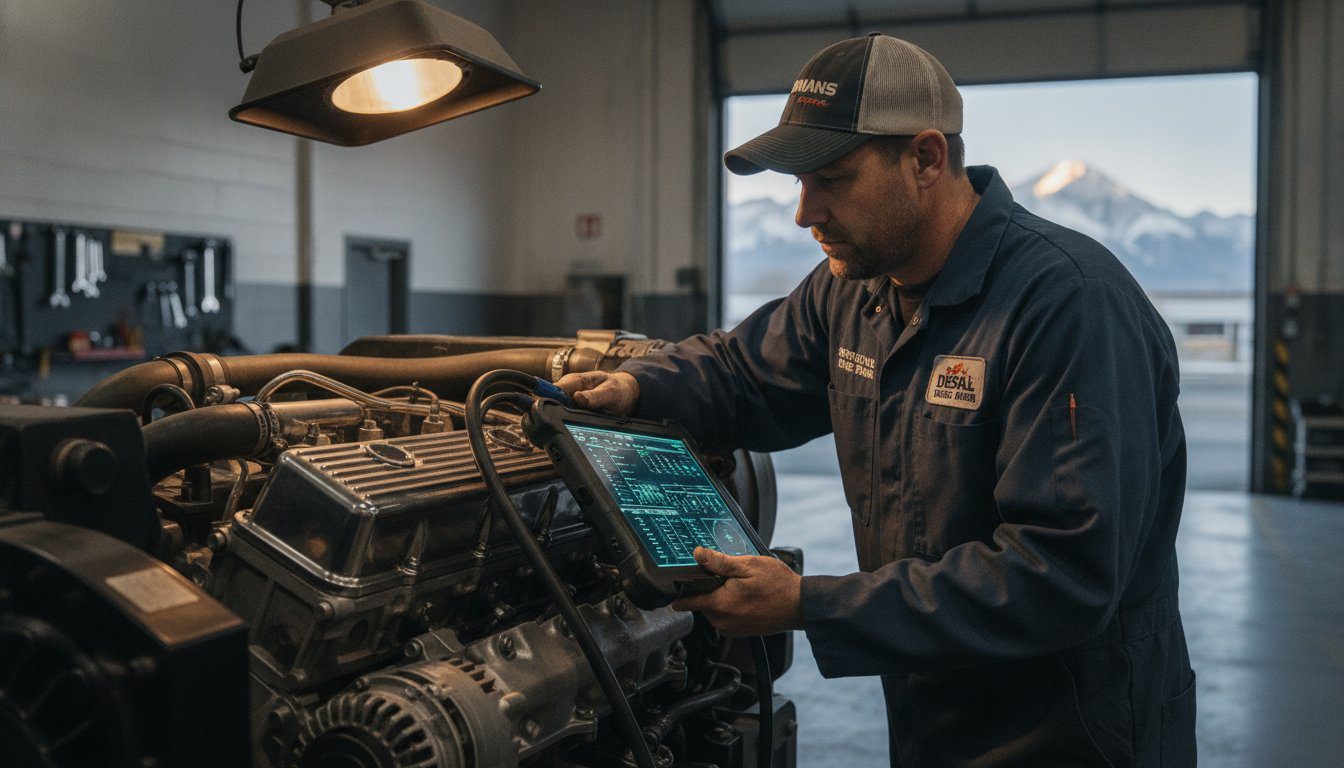
At Diego’s Shop, we utilize factory-level diagnostic software designed specifically for Peterbilt, Kenworth, and Ford Powerstroke engines. This technology allows us to see exactly how your aftertreatment, fuel, and turbo systems are interacting in real time. However, software is only half the battle. Our approach combines high-tech data with the physical inspection of a seasoned master craftsman. We look for the subtle leaks, worn brackets, and heat-stressed components that a computer might miss. This dual-layered process is why we are the expert diesel repair Utah choice for serious operators who cannot afford a misdiagnosis.
Protecting Your Fleet with Diego’s Shop
For commercial fleet operators, every minute in the bay is a minute off the road. Our preventive maintenance protocols are designed to identify the signs your diesel needs a mechanic during scheduled service rather than on the side of I-15. By catching wear early, we help you avoid the catastrophic engine rebuilds that can cost upwards of $25,000. We don’t just patch problems; we provide durable solutions that keep your equipment in peak condition.
We provide warrantied repair work that gives you peace of mind and long-term reliability. When we service a vehicle, we stand behind it with the integrity of a local business that values your trust. Our commitment to Springville and Utah County diesel owners is simple: we provide the expertise of a large-scale facility with the personal accountability of a master craftsman. We maintain total control over the repair process to ensure your truck is as hardworking as you are. Book your diagnostic service at Diego’s Shop today.
Maintain Total Control Over Your Diesel’s Performance
Your engine communicates its health through smoke patterns, unusual noises, and performance shifts. Ignoring these signals leads to expensive downtime and avoidable structural damage. Whether you are dealing with black smoke or a sudden loss of power during a mountain haul, identifying the early signs your diesel needs a mechanic is the only way to maintain total control over your operational costs. Proactive attention prevents a minor sensor issue from turning into a major engine overhaul.
We provide the specialized technical expertise required to keep your equipment hardworking and dependable in the unique Utah climate. Our shop utilizes advanced diagnostic tools to service light, medium, and heavy-duty fleets throughout Springville and the Wasatch Front. We stand behind our craftsmanship with warrantied repair work on all diesel engine services, ensuring your truck remains on the road where it belongs. Our master craftsmen treat your equipment with the respect and accountability it deserves.
Don’t wait for a catastrophic roadside failure to address a growing mechanical issue. Schedule Your Expert Diesel Diagnostic at Diego’s Shop today. Our team is ready to provide the hands-on expertise and honest results that keep your business moving forward with confidence.
Frequently Asked Questions
Is it normal for a diesel engine to smoke a little on startup?
A brief puff of white vapor is normal on a cold morning, but persistent smoke is a sign of trouble. This usually indicates an issue with fuel atomization or internal cylinder heat. If the smoke lasts longer than a few seconds, it is one of the signs your diesel needs a mechanic. This often points to failing glow plugs or a leaking injector that requires professional attention.
How do I know if my diesel knocking is serious?
Serious knocking is typically metallic and rhythmic, indicating internal mechanical failure. You can tell a knock is dangerous if it is a deep, heavy thud coming from the lower engine block. This rod knock suggests that a bearing has failed. Sharp, rhythmic tapping at the top of the engine is usually a fuel timing issue. Both sounds are critical indicators that you should seek a professional diagnosis immediately.
What causes a diesel engine to lose power suddenly?
Sudden power loss usually stems from a fuel system restriction or a lost boost connection. A clogged fuel filter can abruptly starve the engine of the pressure it needs to maintain speed. Similarly, a ruptured intercooler hose will cause an immediate drop in performance. These issues require a systematic diagnostic approach to identify whether the failure is mechanical or electronic rather than just clearing codes.
Can I drive my truck if it is in Limp Mode?
You can drive in Limp Mode for a short distance, but only to reach a safe location or a repair shop. The computer restricts your speed specifically to prevent permanent damage to the engine or expensive aftertreatment components. Ignoring this warning and continuing your route can lead to a complete engine shutdown. It is a protective state that demands a professional diagnostic as soon as possible.
Why does my diesel truck take so long to start in the winter?
Diesel engines take longer to start in winter because cold temperatures thicken oil and cause fuel to gel. Freezing weather makes it much harder for the pump to move fuel and for the cylinders to reach ignition temperature. Additionally, cold weather reduces battery output, which is why a healthy charging system and block heater are vital for starting a diesel during a Utah winter.
What are the first signs of a failing diesel fuel injector?
A rough idle and a sudden drop in fuel economy are the most common signs of a failing injector. You might also hear a sharp tapping sound, which is one of the signs your diesel needs a mechanic to check the fuel system. When injectors leak or fail to atomize fuel, they cause misfires and increased exhaust smoke that can eventually ruin your emission system.
How often should I have my diesel engine professionally inspected?
You should have your diesel engine professionally inspected every 15,000 miles or at least twice a year. If your fleet handles heavy mountain hauls or operates in extreme dust, you may need more frequent checkups. Regular intervals allow a master craftsman to spot minor leaks or wear patterns before they escalate into a catastrophic roadside breakdown that costs you time and money.
What does black exhaust smoke mean for my fuel economy?
Black exhaust smoke means your engine is wasting fuel and operating with poor efficiency. It indicates that your engine is receiving more fuel than it can burn, often due to a clogged air filter or a failing turbocharger. This unburned fuel doesn’t just hurt your bottom line; it also creates heavy soot that clogs your Diesel Particulate Filter and leads to expensive maintenance requirements.