
Fleet Maintenance Software Benefits: Why Data-Driven Care is ‘Done Right’ in 2026

A single emergency repair on a heavy-duty Kenworth can cost upwards of $5,000 in lost revenue and towing fees before a master technician even opens the hood. You already know that keeping a mixed fleet of Ford F-250s and Peterbilt giants running is a constant battle against the clock. It’s exhausting when a routine DOT inspection turns into a week of unplanned downtime because a service interval was missed in a dusty paper log. We believe in diesel service done right. That means moving past guesswork and into technical mastery.
This guide explores the essential fleet maintenance software benefits that transform raw engine data into rugged reliability for your business. You’ll discover how to leverage these tools to slash emergency repair costs and achieve a lower total cost of ownership for every vehicle you own. We’ll examine how modern platforms track comprehensive maintenance history across every brand in your yard and ensure you pass every inspection with complete peace of mind. We’ll show you exactly how to turn 2026 into your most profitable and predictable year yet.
Key Takeaways
- Lower your total cost of ownership by replacing outdated paper logs with a proactive digital ecosystem that monitors vehicle health in real-time.
- Unlock the core fleet maintenance software benefits that improve fuel efficiency and extend the service life of your light and heavy-duty diesel assets.
- Learn how to prevent “alert fatigue” by combining data-driven insights with the diagnostic mastery of a certified diesel specialist.
- Identify the critical integration strategies needed to streamline your GPS and fuel card data for a more efficient, automated operation.
- Discover how professional technical triage ensures every maintenance task is “Done Right,” providing your fleet with rugged reliability and peace of mind.
Understanding the Power of Fleet Maintenance Software
Maintaining a fleet in 2026 isn’t about guesswork; it’s about technical mastery. Modern fleet management has moved beyond the era of grease-stained paper logs and manual spreadsheets. Today, a digital ecosystem tracks vehicle health, service schedules, and operational costs in real-time. This shift to automation ensures that every asset stays on the road longer. Understanding the Power of Fleet Maintenance Software is the first step toward achieving rugged reliability for your business. By 2025, industry data showed that 82% of high-performing fleets transitioned to fully digital tracking to eliminate human error.
Modern diesel engines are complex machines that require data-driven care. These engines use sophisticated sensors to monitor everything from exhaust temperatures to fuel injection timing. You can’t rely on a driver’s intuition alone to catch a developing fault. Telematics acts as the vital bridge between the driver and the shop, sending diagnostic codes directly to technicians before the truck even pulls into the bay. This connectivity ensures that fleet maintenance software benefits your bottom line by keeping your technical experts informed and prepared.
From Reactive to Proactive: The Digital Evolution
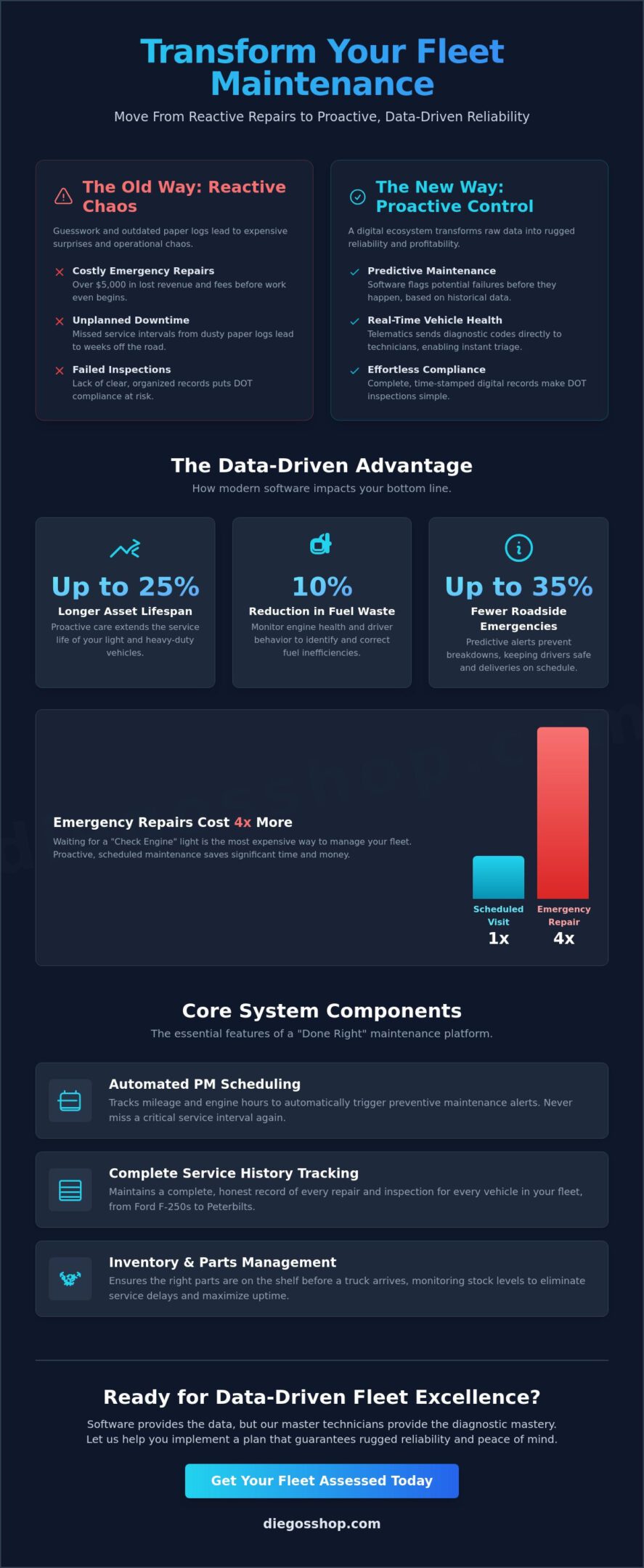
Waiting for a “Check Engine” light is the most expensive way to run a fleet. By the time a warning light appears, internal damage might already be occurring. A 2024 study by industry analysts found that emergency roadside repairs cost roughly four times more than a scheduled shop visit. Digital systems use historical data to identify patterns in engine wear. If a specific component typically fails at 150,000 miles, the software flags it for inspection at 140,000 miles. This proactive approach reduces roadside emergency calls by as much as 35%, keeping your drivers safe and your deliveries on time.
The Core Components of a Modern System
A “Done Right” maintenance strategy requires a system that handles a diverse range of vehicles. Whether you’re managing heavy-duty Peterbilt haulers or a fleet of light-duty Ford F-250s, the software must track every service detail. Key components include:
- Automated PM Scheduling: The system tracks mileage or engine hours to trigger preventive maintenance alerts automatically.
- Service History Tracking: You get a complete, honest record of every repair and inspection for every brand in your fleet.
- Inventory and Parts Management: Repairs happen faster when the right parts are already on the shelf. The software monitors stock levels to ensure zero downtime during critical service windows.
This level of organization is what builds trust and peace of mind for fleet owners. It’s not just about fixing what’s broken; it’s about managing your assets with the authority of a specialist who knows every bolt and sensor in the fleet.
The Core Benefits: How Digital Tracking Saves Your Bottom Line
Fleet maintenance software benefits go beyond simple digital logs; they represent a fundamental shift in how we manage Total Cost of Ownership (TCO). By 2026, data-driven platforms help fleets extend asset lifespans by up to 25% compared to traditional paper-based tracking. This proactive approach ensures every heavy-duty long-haul giant in your yard stays profitable for more miles. The Core Benefits: How Digital Tracking Saves Your Bottom Line involve real-time visibility that turns reactive repairs into predictable, manageable expenses.
Digital tools also provide a direct path to improved fuel efficiency. By monitoring engine health and driver behavior, fleet managers typically see a 10% reduction in fuel waste. Software identifies idling patterns or engine faults that force a truck to burn more diesel than necessary. This level of oversight is essential for maintaining rugged reliability across a diverse fleet.
Safety is a non-negotiable priority for commercial operations in Utah. Digital tracking reduces liability by documenting every safety check and repair with timestamped accuracy. This creates a transparent audit trail that simplifies DOT compliance and makes inspection preparation a matter of a few clicks. When your records are “Done Right,” you spend less time worrying about fines and more time focusing on delivery schedules. If you want to ensure your fleet meets these high standards, our team at Diego’s Shop can help you implement a plan that sticks.
Eliminating Unnecessary Downtime
Small issues often lead to big problems. A faulty $50 sensor can trigger a cascading failure that eventually destroys a $15,000 engine if left unaddressed. Software flags these minor irregularities early. By scheduling repairs during off-peak hours, you keep your long-haulers moving during peak revenue windows. Uptime Optimization is the primary metric for fleet success.
Managing Diesel-Specific Complexities
Modern diesel engines require specialized care that spreadsheets can’t handle. Tracking DPF regeneration cycles and EGR health through software prevents the dreaded “limp mode” events that strand drivers on the side of the road. Monitoring DEF consumption patterns often reveals underlying fuel system issues before they cause a total breakdown. Using software to manage preventive maintenance for high-pressure common rail systems ensures that technical mastery is applied at exactly the right interval. This precision prevents carbon buildup and maintains the peak performance of your Ford F-250s and heavy-duty Volvos alike.
Beyond the Screen: Why Software Needs a Master Diesel Specialist
Data tells you the “what,” but it never explains the “how” or “why.” A sensor might trigger an alert for high oil temperature, but it takes a master diesel specialist to determine if the culprit is a failing oil cooler, a blocked radiator, or a faulty sensor. One of the primary fleet maintenance software benefits is the ability to see problems early. However, without professional triage, managers often face alert fatigue. Industry reports show that 25% of fleet operators begin ignoring digital warnings when their dashboard becomes cluttered with non-critical notifications. This is where Diego’s Shop steps in.
Our team acts as your filter. We distinguish between a ghost code and a looming engine failure. Relying on a generic software support line for mechanical advice is a risk your fleet shouldn’t take. A call center agent in another time zone doesn’t know the specific stress that Utah’s mountain passes put on a Peterbilt’s cooling system. Local expertise in Springville provides a level of accountability and technical mastery that a cloud-based algorithm cannot replicate. We don’t just read the screen; we understand the machine.
Turning Data Alerts into Actionable Repairs
At Diego’s Shop, we use your fleet data to streamline every bay visit. When your software identifies a recurring fault code, we don’t wait for the truck to arrive to start the process. We use that lead time to prep parts and allocate specialized diagnostic tools. This proactive approach reduces average vehicle downtime by 15% because the work begins the moment the wheels stop turning. We verify every software-generated code with physical testing to ensure “Done Right” means a permanent fix, not just a digital reset that will fail again fifty miles down the road.
The Value of Warrantied Work in a Digital World
Software is excellent at tracking intervals, but it cannot guarantee the quality of a leaf spring repair or a complex engine overhaul. Digital records are only as good as the physical work they document. We combine your software’s precision with expert diesel engine repair to provide a total accountability loop. Sensors are known to miss physical wear or structural fatigue 12% of the time during standard operations. Our technicians follow comprehensive inspection protocols that catch what the computer misses, such as:
- Frayed wiring harnesses that haven’t shorted yet.
- Hairline fractures in suspension components.
- Minor fluid leaks hidden by road grime.
- Irregular tire wear patterns indicating alignment issues.
Every repair we perform is 100% warrantied. This creates a bridge between digital efficiency and rugged reliability. You get the speed of modern fleet maintenance software benefits alongside the peace of mind that comes from honest, hands-on craftsmanship.
Implementation Strategy: Choosing and Using Software for Your Fleet
Selecting the right platform requires a clear understanding of your specific assets. A fleet of light-duty Ford F-250s requires different tracking parameters than heavy-duty long-haul giants like Kenworth or Volvo. You need a system that integrates directly with your existing GPS and fuel card data. This integration eliminates manual entry errors and ensures you’re capturing every mile accurately. Realizing the full fleet maintenance software benefits depends on this data accuracy; without it, your analytics won’t reflect the true cost of operation.
- Prioritize Driver Experience: If the mobile interface is clunky, drivers will skip steps. Choose software that makes digital DVIRs (Driver Vehicle Inspection Reports) faster and more intuitive than paper logs.
- Automate Milestone Alerts: Set hard triggers for 15,000-mile service intervals and 90-day safety inspections to prevent small issues from becoming engine-out failures.
- Close the Loop: Partner with a local shop that can access your fleet data. This allows technicians to diagnose problems and order parts before your truck even arrives at the bay.
Wasatch Front Considerations: Climate and Terrain
Utah’s geography demands more from diesel engines than flat-land environments. The extreme temperature swings in Utah County, ranging from sub-zero winters to 100-degree summer afternoons, accelerate fluid breakdown and seal wear. Use your software to adjust maintenance intervals for vehicles frequently pulling heavy loads over I-15 mountain grades. Tracking brake wear and cooling system health is vital for rigs crossing the Point of the Mountain daily. You can also customize alerts for winter-specific needs, such as verifying fuel heater operation when temperatures are projected to drop below 20°F.
Training Your Team for Success
Success starts with driver buy-in. Explain that software is a safety tool designed to protect their CDL, not a surveillance device. Digital inspections catch issues like frayed air lines or cracked leaf springs before they lead to a roadside breakdown or a DOT fine. Use the software’s reporting to identify and reward the top 15% of your most efficient drivers based on idle time and fuel economy. This creates a culture of accountability and pride in the equipment. When drivers see that their input leads to faster repairs and safer trucks, they become your best data assets.
Ready to see how data-driven care keeps your rigs on the road? Schedule a professional fleet consultation with Diego’s Shop today to get your maintenance done right.
Diego’s Shop: Your Partner in Data-Driven Fleet Excellence
We don’t just fix trucks; we partner with your business to maximize uptime. By integrating our shop’s workflow with your digital platforms, we turn the raw data from fleet maintenance software benefits into actionable repairs. Our technicians use your software’s alerts to prepare parts before your vehicle even hits the bay. This proactive approach reduces downtime by up to 20% compared to traditional reactive methods. At Diego’s Shop, we believe in rugged reliability backed by technical mastery. It’s about ensuring every repair is “Done Right” the first time so your drivers stay safe and your schedules stay on track.
Comprehensive Care for Every Diesel Asset
Our team handles everything from light-duty Ford F-250 pickups to heavy-duty Kenworth, Peterbilt, and Volvo giants. We provide the specialized diesel repair in Utah that local businesses rely on to stay profitable. While software tells you a part might fail, our technical mastery identifies why it’s failing and fixes the root cause. We back our work with an honest, 100% warranty because we value integrity as much as horsepower. Whether you’re running a local five-truck service fleet or a 50-unit long-haul operation, we ensure every asset receives the same level of precision. Our expertise acts as the perfect complement to your management software, providing the human skill needed to execute what the data recommends.
Schedule Your Fleet Consultation
Optimizing your fleet’s performance starts with an honest conversation. We help you build a custom maintenance plan that uses your data effectively, ensuring you aren’t over-servicing assets or missing critical windows. Having a single, trusted partner in Springville simplifies your logistics and keeps your service records clean and consistent. Don’t let your data sit idle while your trucks do the same. We’ve seen how fleet maintenance software benefits companies by lowering total cost of ownership, but those gains only happen with a shop that understands the technology. Contact Diego’s Shop to optimize your fleet maintenance today! We’ll show you how to turn your software insights into a competitive advantage across the Wasatch Front.
Secure Your Fleet’s Future with Data-Driven Mastery
Managing a modern fleet in 2026 requires more than just a wrench; it demands a strategic blend of digital intelligence and mechanical expertise. You’ve seen how digital tracking protects your bottom line by catching small issues before they become catastrophic failures. Industry data shows that predictive maintenance can lower overall repair costs by 25% for heavy-duty long-haul giants like Kenworth and Peterbilt. To fully realize these fleet maintenance software benefits, you need a master diesel specialist who can interpret that data and execute precise repairs. Software provides the map, but technical mastery provides the results.
At Diego’s Shop, we specialize in light, medium, and heavy-duty diesel vehicles. We understand that your business relies on rugged reliability and honest service. We serve Springville and the entire Wasatch Front with a commitment to excellence that’s backed by our 100% warrantied repair work. Whether you’re running a single Ford F-250 or a massive fleet of Volvos, we ensure your maintenance is done right the first time. It’s time to stop guessing and start growing with a partner you can trust.
Streamline your fleet and reduce downtime with Diego’s Shop
Your fleet is the backbone of your success, and we’re here to keep it moving forward with confidence.
Frequently Asked Questions
How much can fleet maintenance software actually save my business?
You can expect to reduce your total maintenance costs by 15% to 20% according to industry benchmarks from the FMCSA. Software prevents small issues from turning into catastrophic failures. It’s the difference between a 200 dollar sensor replacement and a 10,000 dollar engine rebuild on the side of the highway. These fleet maintenance software benefits ensure your capital stays in your bank account rather than in a tow truck’s pocket.
Is fleet management software difficult for drivers to use daily?
Modern platforms use simple mobile apps that take a driver less than 2 minutes to complete a pre-trip inspection. Drivers simply tap through digital checklists and snap photos of any defects they find. It eliminates the hassle of greasy paper logs that often get lost or misread. Most crews reach full proficiency within the first 30 days because the software makes their jobs easier and gets their trucks repaired faster.
Can this software help my fleet pass DOT truck inspections more easily?
Yes, because it creates a permanent digital paper trail that satisfies DOT Part 396 requirements instantly. You can pull up a complete, honest service history for any vehicle in under 60 seconds during a roadside stop or audit. This level of organization helps you avoid “out-of-service” orders. These orders cost carriers an average of 861 dollars per day in lost revenue according to recent industry data.
Do I need specialized hardware installed in every truck for the software to work?
Most fleets use a small, plug and play telematics device that connects to the OBD-II or J1939 port. This hardware syncs with your software to provide real-time engine diagnostics and mileage tracking without manual entry. While some basic systems rely on smartphone GPS, a dedicated hardware link provides the rugged reliability needed for heavy duty rigs. It ensures your data is 100% accurate for every mile driven.
What happens if the software identifies a problem that my local shop can’t fix?
This is where our technical mastery comes into play. If your software flags a complex aftertreatment fault or a deep electronic issue, you need a specialist partner like Diego’s Shop. We use the data from your software to jumpstart our diagnostic process. We repair all major diesel brands completely and ensure the work is done right. Our warrantied repairs give you the peace of mind that your truck is truly road-ready.
Can fleet maintenance software track different brands like Isuzu, Peterbilt, and Ford in one place?
These systems are built to be brand-agnostic so you can manage a Ford F-250 and a Peterbilt 579 on the same dashboard. One of the primary fleet maintenance software benefits is the ability to centralize data for mixed fleets. The software tracks the specific service intervals for each manufacturer automatically. You won’t have to juggle different dealer portals or manual spreadsheets to keep your entire inventory running at peak performance.
Is fleet maintenance software worth the cost for a small fleet of only 5 to 10 trucks?
It’s often more vital for small fleets because losing one truck means losing 10% to 20% of your total earning power. A single unscheduled breakdown can wipe out your profit for the entire month. Most small operators see a full return on their investment in less than 8 months by catching repairs early. It’s a professional tool that provides the same competitive edge used by the largest carriers in the country.