
5 Essential Diesel Engine Maintenance Tips for Longevity

Your diesel engine is the heart of your truck and your livelihood. The thought of an unexpected breakdown-and the staggering repair bills and costly downtime that follow-is a major source of stress for any owner. But what if you could gain the confidence that comes from knowing your engine is built to last? The key isn’t complicated technical knowledge; it’s a commitment to consistent, proven care. That’s why understanding a few essential diesel engine maintenance tips is one of the smartest investments you can make to protect your vehicle.
In this guide, we cut through the confusion to deliver five straightforward practices that will help you get the most out of your engine. By following these steps, you will learn how to prevent minor issues from becoming major failures, improve overall performance and fuel efficiency, and ensure the rugged reliability you depend on for years to come. Consider this your definitive roadmap to saving money and keeping your diesel running strong, the way it was meant to.
Key Takeaways
- Regularly changing your oil, fuel, and coolant filters is the most critical step in protecting your engine from internal damage.
- A diesel engine needs massive amounts of clean air; learn how to maintain the air intake and modern emissions systems to prevent critical power loss.
- Simple daily checks and smart driving habits are powerful diesel engine maintenance tips that can prevent catastrophic failures and extend the life of your vehicle.
- Understand which maintenance tasks you can handle and when it’s essential to partner with a certified diesel specialist for comprehensive service.
The Foundation: Mastering Your Diesel’s Fluids & Filters
Think of your diesel engine’s fluids as its lifeblood. From engine oil and fuel to coolant, these liquids are essential for cooling, lubricating, and powering your vehicle. Unlike gasoline engines, the way how diesel engines work involves immense pressure and extremely tight tolerances, making them highly susceptible to damage from contaminants. Mastering your fluid and filter service schedule is one of the most critical diesel engine maintenance tips for ensuring rugged reliability and avoiding costly repairs down the road.
Following these foundational practices is not just about following a manual; it’s about providing your engine with the clean, high-quality fluids it needs to deliver the power and dependability you count on. It’s a non-negotiable foundation for longevity.
Engine Oil: More Than Just Lubrication
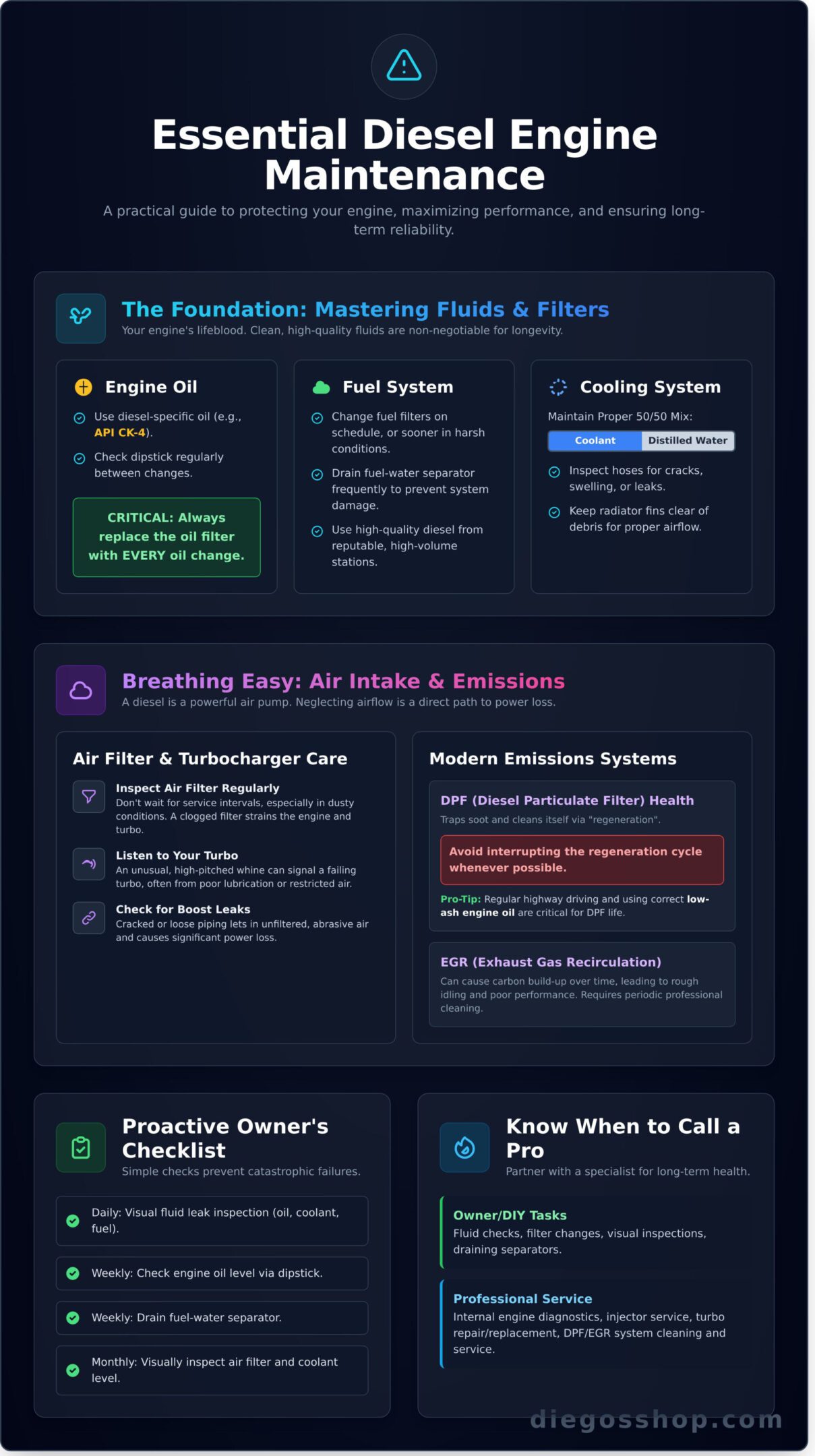
Your diesel requires more than standard motor oil; it needs a formulation designed for high-compression, high-soot environments. Always use a diesel-specific oil meeting your manufacturer’s specification, such as API CK-4. Adhere strictly to the recommended oil change interval and always replace the oil filter with every service. Between changes, make it a habit to check your dipstick regularly to ensure the level is correct. This simple check is your first line of defense against internal engine damage.
Fuel System: Clean Fuel is Power
Clean fuel is paramount for a modern diesel’s high-pressure fuel system. Water is the primary enemy, capable of causing catastrophic damage to injectors and pumps. We recommend changing your fuel filters precisely on schedule-or sooner in harsh conditions. Make a habit of draining your fuel-water separator frequently, especially in humid climates. Finally, protect your investment by using high-quality diesel from reputable, high-volume fueling stations to minimize the risk of contamination.
Cooling System: Preventing Overheating
A diesel engine generates immense heat, and its cooling system works hard to keep temperatures in check. Ensure you maintain the proper 50/50 mix of approved coolant and distilled water for optimal freeze and boil-over protection. Regularly inspect all coolant hoses for cracks, swelling, or leaks, and keep the radiator fins clear of bugs and debris to allow for proper airflow. An annual coolant health and freeze-point test provides peace of mind and prevents unexpected overheating.
Breathing Easy: Air Intake and Modern Emissions Systems
A diesel engine is essentially a powerful air pump, requiring massive volumes of clean air to generate its signature torque. But modern diesels are more than just raw power; they are equipped with sophisticated emissions systems that also need proper care. Neglecting the flow of air in-and exhaust out-is a direct path to lost power, poor fuel economy, and frustrating check engine lights. Understanding how these components work is one of the most crucial diesel engine maintenance tips for any owner.
Air Filter and Turbocharger Care
Your engine’s air filter is the first line of defense against dust, dirt, and debris. A clogged filter forces the engine and turbocharger to work harder, increasing strain and heat. We recommend a proactive approach to air system health:
- Inspect Your Air Filter Regularly: Don’t wait for the recommended service interval if you operate in dusty or demanding conditions. A visual check can prevent serious issues.
- Listen to Your Turbo: An unusual, high-pitched whining sound during acceleration can signal a failing turbo, often caused by poor lubrication or a restricted air supply.
- Check for Leaks: Cracked or loose piping between the air filter and the engine can let in unfiltered air, which is abrasive to internal components. These “boost leaks” also cause a significant loss of power.
Diesel Particulate Filter (DPF) Health
The DPF traps soot from the exhaust, and it must periodically clean itself through a process called regeneration, or “regen.” During an active regen, the system uses extra fuel to burn off the trapped soot at extremely high temperatures. To keep this system healthy, you should understand that a comprehensive heavy equipment maintenance guide always emphasizes DPF care. Avoid interrupting the regen cycle when possible, as frequent incomplete cycles can lead to a permanently clogged filter. Regular highway driving helps the system run passive regens more effectively, and using the correct low-ash engine oil is critical to extending DPF life.
EGR and DEF Systems
Two other key emissions components require your attention. The Exhaust Gas Recirculation (EGR) system reduces emissions by routing some exhaust back into the engine, but this process can cause carbon to build up, leading to rough idling and poor performance. Separately, the Diesel Exhaust Fluid (DEF) system sprays a urea-based solution into the exhaust to neutralize harmful pollutants. Always use high-quality DEF from a sealed container and never let the tank run empty, as this can trigger a “limp mode” or even prevent your vehicle from starting.
Proactive Inspections: The Owner’s Daily & Weekly Checklist
As a diesel owner, you are the first and most important line of defense against catastrophic failure. While professional service is essential, the simple act of paying attention to your vehicle can save you thousands of dollars in repairs by catching small issues before they become major problems. Developing a routine of looking, listening, and feeling is one of the most effective diesel engine maintenance tips you can practice.
This simple habit takes only a few minutes but provides invaluable insight into your engine’s health, ensuring its rugged reliability for years to come.
The Daily Walk-Around
Before you start your engine for the day, take 60 seconds to perform a quick visual inspection. This brief check can alert you to immediate safety or performance issues.
- Look for leaks: Check for any drips or puddles of fluid (oil, coolant, fuel) under the truck.
- Inspect tires: Glance at all tires to ensure they are properly inflated and look for any obvious damage, such as cuts or bulges.
- Verify lights: Quickly check that your headlights, brake lights, and turn signals are all functioning correctly.
- Check gauges: When you start the engine, watch your dashboard gauges. Ensure they settle into their normal operating ranges and that no warning lights remain illuminated.
The Weekly Under-Hood Check
Once a week, preferably when the engine is cold, take five minutes to pop the hood. This deeper look is a cornerstone of preventative diesel engine maintenance and helps you spot developing problems.
- Check fluids: Verify your engine oil and coolant levels are within the proper range. Low levels are a clear sign of a leak or consumption issue that needs attention.
- Inspect belts: Look at the serpentine belt for any signs of cracking, fraying, or a glazed, shiny appearance, which indicates wear.
- Scan for leaks: Look for any wet spots, grime buildup, or drips on the engine itself, around hoses, and near gaskets.
- Check battery terminals: Ensure the battery terminals are clean, free of corrosion, and securely tightened.
Listen for Trouble
Your ears are one of your most valuable diagnostic tools. A diesel engine has a distinct, powerful sound, and any deviation from that norm is worth investigating. Pay close attention to new or unusual noises, changes in exhaust sound, or the color of the exhaust smoke. Squealing belts, grinding sounds, or new knocking noises are direct warnings that something is wrong.
Don’t ignore these signals. An unusual sound is your engine’s way of asking for help. Hear something unusual? Get it diagnosed by experts.
Driving Habits That Protect Your Diesel Engine
Your diesel engine is built for rugged power and endurance, but its ultimate lifespan is directly tied to how you operate it. Many drivers treat their diesel like a standard gasoline engine, a mistake that can lead to premature wear and costly repairs. Adopting a few key driving habits is one of the most effective diesel engine maintenance tips we can offer. These simple practices protect vital components like your turbocharger, reduce internal wear, and even improve your overall fuel economy.
Proper Warm-Up and Cool-Down
A diesel engine’s internal components, especially the turbocharger, are highly sensitive to temperature and lubrication. A cold engine needs time to prepare for the work ahead, and a hot engine needs a moment to cool down safely.
- Allow a brief warm-up: After starting your engine, let it idle for 30 to 60 seconds. This allows the oil to circulate fully before you start driving.
- Drive gently at first: Avoid heavy acceleration or high RPMs until your engine’s temperature gauge has reached its normal operating range. This ensures the oil is at the correct viscosity to protect internal parts.
- Don’t skip the cool-down: After a long drive or heavy towing, let the engine idle for 60 to 90 seconds before shutting it down. This critical step circulates oil through the turbocharger, allowing it to cool gradually and preventing oil from burning onto its sensitive components-a condition known as “oil coking.”
Avoiding Excessive Idling
While it might seem harmless, letting your diesel engine idle for extended periods is counterproductive. Modern diesels are designed to run efficiently under load, not at a standstill. Prolonged idling prevents the engine from reaching its optimal operating temperature, which leads to incomplete fuel combustion. This can cause significant problems over time, including:
- Carbon buildup on fuel injectors, piston rings, and EGR valves.
- Accelerated clogging of the Diesel Particulate Filter (DPF), forcing more frequent and fuel-intensive regeneration cycles.
As a trusted rule, if you anticipate being stationary for more than five minutes, it’s better for your engine’s health and your wallet to shut it down. These smart driving habits are crucial diesel engine maintenance tips that put you in control of your vehicle’s longevity. If you have any questions about your engine’s performance, the certified technicians at Diego’s Shop provide honest, reliable diagnostics and service.
Partnering with a Specialist for a Long-Term Plan
While regular owner inspections are the foundation of a healthy engine, the most critical step for ensuring true longevity is partnering with a certified diesel specialist. Following professional diesel engine maintenance tips requires an expert eye. A trusted shop moves beyond simple upkeep, creating a proactive strategy to prevent major failures, minimize downtime, and protect your investment for the long haul.
Why a Diesel Specialist Matters
A general mechanic may handle basic oil changes, but modern diesel engines are highly complex systems. A true specialist has the deep, model-specific knowledge required for comprehensive care. They understand the intricate relationships between turbochargers, high-pressure fuel injectors, and emissions systems like DPF and DEF. This expertise is non-negotiable for accurate diagnosis and repair.
- Advanced Diagnostics: Specialists invest in OEM-level diagnostic tools that can pinpoint electronic and mechanical issues a standard scanner will miss.
- Pattern Recognition: An experienced diesel technician knows the common failure points on a 6.7L Power Stroke versus a 5.9L Cummins and can perform preventive service.
- Specialized Skill: They possess the technical mastery to service high-pressure fuel systems and complex emissions controls correctly the first time.
For truck owners who want to handle some diagnostics themselves, having access to the right equipment is crucial. E-commerce stores specializing in this area, such as Topdon Norge AS, offer a range of automotive diagnostic equipment suitable for both enthusiasts and professionals.
Building Your Maintenance Schedule
A one-size-fits-all maintenance plan doesn’t work for diesel trucks. The best approach is to work directly with your technician to create a custom schedule based on your specific use. A truck used for heavy towing in extreme temperatures requires more frequent fluid analysis and drivetrain inspections than one used for unloaded highway commuting. Keeping detailed records of all service performed not only helps you track your engine’s health but also significantly increases its resale value by proving a history of meticulous care.
Getting Service ‘Done Right’
Finding the right partner is key. Look for a shop that stands behind its work with a clear warranty. A confident, reliable shop will be transparent about their experience with your specific truck model and will take the time to educate you on their findings, not just sell you a list of services. This commitment to honest, warrantied work is the difference between a simple transaction and a long-term partnership in vehicle health. When you’re ready to implement a professional maintenance strategy, we’re here to help. Schedule your preventive maintenance with Diego’s Shop today.
Your Partner in Diesel Longevity and Reliability
Mastering your diesel’s longevity comes down to a consistent, proactive approach. By staying on top of critical fluid and filter changes, performing regular visual inspections, and understanding your modern emissions system, you build a foundation of rugged reliability. These essential diesel engine maintenance tips, combined with mindful driving habits, empower you to prevent costly, unexpected repairs and keep your vehicle on the road where it belongs.
But even the most diligent owner needs a trusted partner for the complex diagnostics and repairs that keep a diesel running at peak performance. For fleets and individual owners throughout Utah County, Diego’s Shop is that partner. Our team of certified diesel mechanics delivers comprehensive service built on technical mastery and honest work. We stand behind our promise of getting it done right with 100% warrantied repair work, giving you complete peace of mind on every job.
For professional maintenance done right, schedule a service with Diego’s Shop. Take control of your engine’s health today and drive with confidence for the miles ahead.
Frequently Asked Questions
How often should you change the fuel filter on a diesel truck?
We recommend replacing the fuel filter every 10,000 to 25,000 miles, though your vehicle manufacturer’s guidelines are the best authority. If you frequently tow heavy loads or operate in dusty conditions, more frequent changes may be necessary. A clean fuel filter is crucial for protecting your high-pressure fuel system and injectors from damaging contaminants, ensuring your engine runs with consistent power and efficiency. It is a foundational part of reliable diesel performance.
Are diesel fuel additives really necessary or helpful?
Yes, quality diesel fuel additives are a valuable tool for modern engines. They serve several key functions: restoring lubricity to protect the fuel pump and injectors, cleaning the entire fuel system to maintain performance, and preventing fuel from gelling in cold temperatures. While not a replacement for scheduled maintenance, using a reputable additive is a smart, proactive measure to support your engine’s health, especially when using ultra-low-sulfur diesel (ULSD).
What is the single most important maintenance task for a diesel engine?
Without question, the most critical maintenance task is performing regular oil changes with the correct diesel-rated oil. Diesel engines generate immense heat and pressure, and their oil must handle high levels of soot. Following a consistent oil change schedule ensures proper lubrication, cools critical components, and cleans the engine’s interior. Of all the possible diesel engine maintenance tips, adhering to your oil change interval is the number one way to guarantee rugged reliability.
What are the early warning signs of diesel engine problems?
Key warning signs include any change in exhaust smoke, such as excessive black, white, or blue smoke. Also, pay attention to a sudden loss of power, reduced fuel economy, or difficulty starting. New or unusual engine noises like knocking, ticking, or hissing are clear indicators that something is wrong. If you notice any of these symptoms or your check engine light comes on, it is essential to have your vehicle diagnosed by a professional immediately.
Can I use regular motor oil in a diesel engine in an emergency?
Using regular gasoline motor oil in a diesel engine is strongly discouraged. Diesel engines require oil with a specific formulation and additive package to handle the high pressures and soot levels they produce. Standard oil lacks these properties and will lead to rapid wear and potential engine damage. In a true, short-term emergency to avoid seizure, it may be a last resort, but you must schedule a complete oil and filter change immediately afterward.
Why is my diesel truck blowing white or black smoke?
Black smoke is a sign of incomplete combustion, typically caused by a faulty injector, a clogged air filter, or a turbocharger issue. It means too much fuel is being burned relative to the amount of air. White smoke is often more serious, indicating that unburned fuel or coolant is passing through the engine. This can be caused by incorrect injector timing, low compression, or a compromised head gasket. Both require a professional diagnosis to prevent severe engine damage.