

7 Key Signs Your Truck Needs Professional Diesel Diagnostics Services

That sinking feeling when your diesel truck isn’t performing at its peak is something no owner wants to experience. Whether it’s a sudden loss of power, a strange new noise, or an unnerving warning light on your dashboard, these issues create uncertainty and a legitimate fear of costly downtime. Ignoring these subtle hints can be a gamble with your engine’s health and your bottom line. This is precisely why understanding when to seek professional diesel diagnostics services is crucial for every truck owner.
This guide is designed to empower you with the knowledge to act confidently. We will break down the seven key signs that your diesel engine is calling for an expert inspection. By learning to recognize these critical warnings, you can move from worry to action, ensuring you get an honest, accurate diagnosis and a clear repair plan before a small problem escalates into a major, budget-breaking failure. Let’s get your truck’s health assessed the right way.
Key Takeaways
- Learn to interpret dashboard warning lights as direct messages from your engine, allowing you to address problems before they become catastrophic failures.
- Recognize subtle changes in your truck’s performance-like power loss or poor fuel economy-as early indicators of deeper engine trouble.
- Trust your senses, as unusual smoke, sounds, or smells are often clear signs that you need professional diesel diagnostics services to pinpoint the root cause.
- Discover why proactive diagnostics is a smart investment that prevents the significant expense of roadside breakdowns and major component repairs.
What Are Diesel Diagnostics? (And Why It’s More Than a Code Reader)
Think of professional diesel diagnostics services as a comprehensive health check-up for your truck’s complex computer systems. It’s not just about plugging in a tool and reading a code; it’s a detailed process of interpreting data to find the root cause of a problem. Modern diesel engines are managed by sophisticated computers that oversee everything from fuel injection to emissions control. These systems use a standardized communication protocol known as On-board diagnostics (OBD) to report issues. However, understanding what those reports truly mean is where professional expertise becomes essential.
The Limit of a Basic Code Reader
A basic handheld scanner you can buy at an auto parts store only scratches the surface. It might pull a generic fault code, but these codes often tell you what system is reporting a fault, not why. For example, a code might point to an oxygen sensor, leading you to replace a perfectly good part when the real issue is a vacuum leak or a fuel injector problem. This guesswork leads to wasted time, unnecessary expense, and a problem that still isn’t fixed.
The Power of Professional Diagnostic Tools
Our comprehensive diagnostic equipment goes far beyond basic code reading. These advanced tools allow our certified technicians to:
- Access All Vehicle Modules: We communicate directly with the Engine Control Module (ECM), Transmission Control Module (TCM), ABS, and other critical systems, not just the basic engine computer.
- View Live Data Streams: We can monitor dozens of parameters in real-time as the engine runs, observing how components like turbos, injectors, and sensors are performing under actual operating conditions.
- Perform System-Specific Tests: Our tools can command the vehicle to perform specific actions, such as an injector cutout test or a forced DPF regeneration, to confirm a diagnosis with pinpoint accuracy.
This level of detailed insight is the difference between guessing and knowing. It allows us to diagnose issues correctly the first time, ensuring every repair is precise, effective, and warrantied. True diesel diagnostics is about connecting the data to deep mechanical knowledge-a skill that no simple code reader can replicate.
Sign #1: Dashboard Warning Lights You Can’t Ignore
Your diesel vehicle’s dashboard is its primary communication system. When a warning light illuminates, your engine is sending a direct message that something is wrong. Ignoring these alerts is one of the most common and costly mistakes a driver can make, often turning a minor issue into a catastrophic failure. Prompt and accurate interpretation of these signals is the first step in any reliable diesel diagnostics service.
Never assume a warning light will just go away. Addressing the underlying problem with a professional diagnosis protects your investment and ensures your vehicle remains dependable on the road.
The Check Engine Light (CEL)
The Check Engine Light is a universal signal that your engine’s computer has detected a fault. However, its urgency varies:
- Solid CEL: This indicates a non-critical fault. While the vehicle is likely safe to drive, you should schedule a diagnostic check as soon as possible. Common causes range from a loose fuel cap to sensor failures or fuel injector issues.
- Flashing CEL: This signals a severe problem, such as a major engine misfire, that could quickly damage expensive components like the catalytic converter. Pull over safely and shut off the engine immediately.
Diesel Particulate Filter (DPF) & Regeneration Lights
Modern diesel engines use a Diesel Particulate Filter (DPF) to capture and remove soot from the exhaust. When the DPF light comes on, it means the filter is becoming full and needs to perform a “regeneration” cycle to burn off the trapped particles. Ignoring this or interrupting the cycle can lead to a completely clogged DPF, resulting in significant power loss and a very expensive repair.
Low Power or ‘Limp Mode’ Alerts
‘Limp mode’ is a self-preservation feature where your vehicle’s computer intentionally reduces engine power and limits speed. It activates when it detects a serious fault that could cause catastrophic damage. This is not a minor inconvenience; it is your engine’s last-ditch effort to protect itself. Driving any significant distance in limp mode is strongly discouraged. This condition demands immediate, professional diesel diagnostics services to identify and fix the root cause.
Simply clearing a code with a handheld scanner does not fix the problem. It erases crucial diagnostic data that technicians need to perform an accurate repair. Finding a trustworthy technician to properly diagnose the issue is a critical next step, and this official Federal Trade Commission auto repair guide provides excellent advice on selecting a qualified shop and understanding your rights.
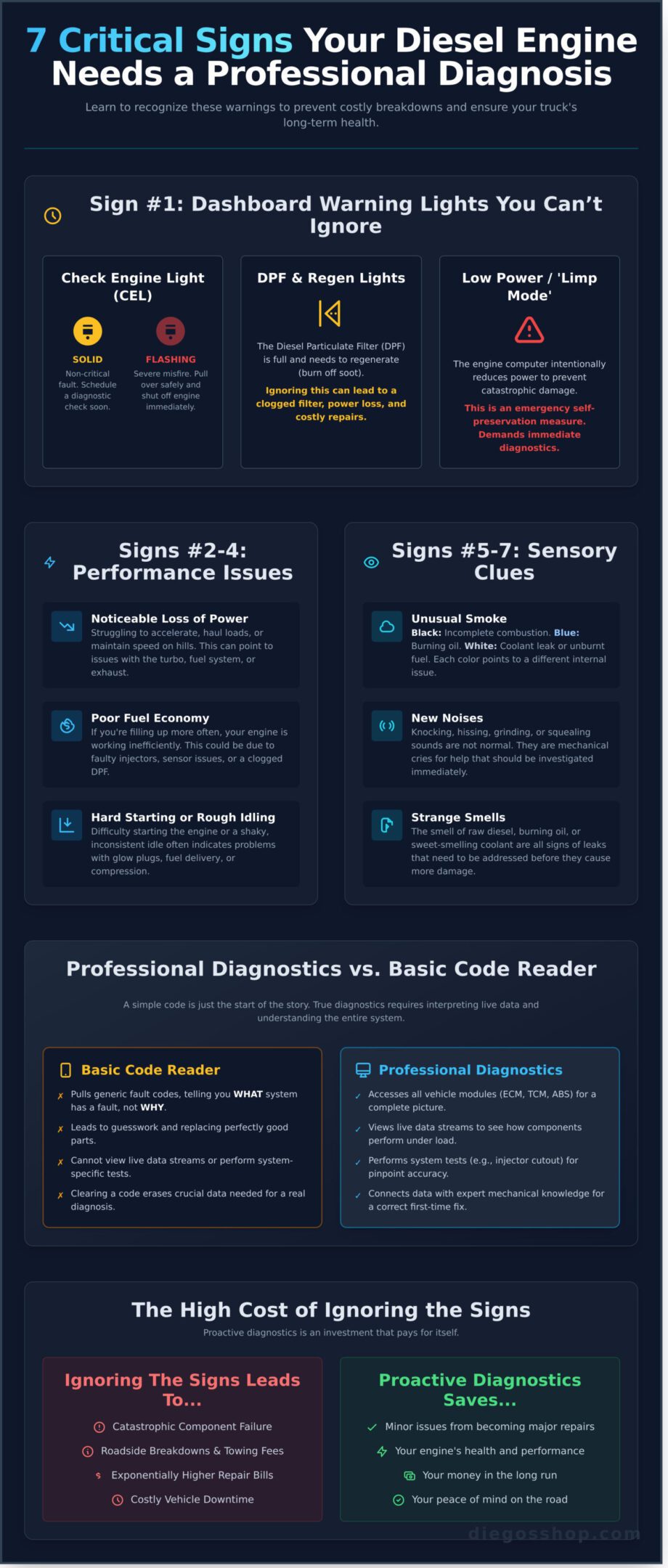
Signs #2-4: Performance Issues That Signal a Deeper Problem
Beyond the dashboard warning lights, your diesel engine communicates problems through changes in its performance. As a driver or fleet manager, you are the first line of defense. Noticing these subtle shifts in how the truck drives is key to catching issues before they lead to costly downtime. These performance issues are not just annoyances; they are direct indicators of inefficiency that increase your operating costs and signal the need for professional diesel diagnostics services.
Noticeable Decrease in Fuel Economy (MPG)
One of the most measurable signs of trouble is a sudden, unexplained drop in fuel efficiency. Your truck’s MPG is a direct reflection of its health. When it plummets, it means the engine is working harder and burning more fuel to produce the same amount of power. This is often caused by underlying component failures.
- Faulty Fuel Injectors: An improper spray pattern or leaking injector wastes fuel.
- Clogged Filters: Restricted air or fuel flow forces the engine to compensate, burning excess diesel.
- Sensor Malfunctions: Modern diesel engines rely on precise data. As outlined by Heavy-duty engine OBD standards, sensors constantly monitor performance, and a single bad reading can disrupt the delicate fuel-to-air balance.
Viewing diagnostics as an investment in fuel savings is crucial. A quick diagnosis can restore your MPG and pay for itself over just a few trips.
Loss of Power, Hesitation, or Poor Acceleration
If your truck feels sluggish, struggles to get up to speed, or hesitates when you press the accelerator, don’t ignore it. This loss of power is a classic symptom of a problem within the fuel, air intake, or turbocharger systems. A truck that can’t perform under load-especially when merging onto a highway or climbing a grade-is a significant safety risk for you and everyone else on the road. Pinpointing the cause requires expert analysis to ensure your truck has the power it needs to operate safely and effectively.
Rough Idling, Stalling, or Hard Starts
Your engine should idle smoothly and start reliably. If you notice excessive vibration, shuddering, or a chugging sound while stopped, you’re experiencing a rough idle. This, along with unexpected stalling or difficulty starting, points to potential issues with fuel delivery, engine timing, or internal compression. Differentiating between a hard start when the engine is cold (often glow plugs) versus when it’s hot (potentially a fuel pressure problem) is something our diesel diagnostics services are designed to do. We get to the root cause to ensure your engine runs right, every time.
Signs #5-7: Sensory Clues from Smoke, Sounds, and Smells
Your diesel engine is a complex machine, but you don’t always need a computer to know something is wrong. Your own senses-sight, sound, and smell-are powerful diagnostic tools. Paying attention to changes in your vehicle’s smoke, noises, and odors can provide clear, early warnings of developing problems. While these clues point you in the right direction, they are best confirmed by professional diesel diagnostics services to ensure an accurate and complete repair.
Analyzing Your Exhaust Smoke (Black, White, or Blue)
The color of your exhaust is a direct message from your engine. Different colors point to specific internal issues, and ignoring them can lead to significant component failure. Here’s a simple breakdown:
- Black Smoke: This is a classic sign of incomplete combustion, meaning the engine is getting too much fuel or not enough air. Common culprits include faulty fuel injectors, a clogged air filter, or a failing turbocharger.
- White Smoke: If the smoke is thick and persistent, it often indicates that coolant is leaking into the cylinders and being burned-a serious issue potentially caused by a blown head gasket or cracked cylinder head. Lighter white smoke on startup can sometimes be unburnt fuel.
- Blue/Gray Smoke: This color almost always means the engine is burning oil. The cause could be worn piston rings, failing valve seals, or a bad turbo seal allowing oil to enter the combustion chamber.
Unusual Engine Noises (Knocking, Hissing, Squealing)
Any new sound from your engine bay warrants immediate investigation. Your diesel engine has a normal operating rhythm, and deviations from that rhythm are a clear signal of trouble.
- Knocking or Pinging: A deep, metallic knocking sound can indicate severe internal engine problems, such as bearing failure. A lighter pinging noise might be related to fuel injection timing or poor fuel quality.
- Hissing: A hissing sound, especially under acceleration, often points to a vacuum leak or a boost leak from a cracked hose or loose connection in the turbocharger system.
- Squealing: A high-pitched squeal is typically caused by a worn or loose serpentine belt, but it can also signal a failing pulley bearing, water pump, or alternator.
Strong Fuel or Exhaust Odors
Unusual smells are often the most urgent warnings, as they can indicate dangerous leaks that put you and your vehicle at risk. Never ignore these odors.
- Raw Diesel Fuel: The smell of unburnt diesel fuel around your truck is a tell-tale sign of a fuel leak from a line, filter, or injector. This is a significant fire hazard and must be addressed immediately.
- Exhaust Fumes in the Cab: If you smell exhaust inside the vehicle, you likely have a leak in the exhaust manifold or piping. This is extremely dangerous due to the risk of carbon monoxide poisoning.
- A Sweet Smell: A distinct, sweet odor is the signature of an antifreeze leak. Coolant is vital for regulating engine temperature, and a leak can quickly lead to overheating and catastrophic engine damage.
Noticing these signs? Don’t guess what the problem is. Get an expert opinion at Diego’s Shop. Our certified technicians have the mastery and equipment to diagnose the issue correctly and get it Done Right.
The High Cost of Ignoring the Signs: Why Proactive Diagnostics Saves Money
For fleet managers and owner-operators, every decision impacts the bottom line. It’s easy to view a diagnostic check as just another expense, but that’s a critical mistake. The real cost isn’t in the service; it’s in the catastrophic expense of ignoring a problem until it forces your truck off the road. Proactive diagnostics are a fundamental part of preventive maintenance-an investment that protects your assets, your schedule, and your profitability.
How a Small Sensor Failure Can Lead to Engine Damage
Consider a single, faulty Exhaust Gas Temperature (EGT) sensor. This small part sends incorrect data to your engine’s computer, which can disrupt the Diesel Particulate Filter (DPF) regeneration cycle. The result? A clogged DPF, excessive backpressure, and eventually, severe engine damage. A sensor replacement is a minor repair. A forced DPF replacement can cost thousands of dollars, and a full engine rebuild can sideline your truck with a five-figure invoice. Timely diagnostics catch the sensor, not the system failure.
The True Cost of Downtime for Your Business
When a truck is down unexpectedly, the costs multiply quickly. It’s more than just the repair bill. The true cost of a single day of downtime includes:
- Lost Revenue: A commercial truck can generate over $1,000 per day.
- Driver Wages: You’re still paying your driver, even if the wheels aren’t turning.
- Late Fees & Penalties: Missed deadlines can lead to contract penalties and a damaged reputation.
Professional diesel diagnostics services turn unscheduled disasters into scheduled maintenance, maximizing your uptime and keeping your business profitable.
Ensuring DOT Compliance and Roadside Safety
A glowing check engine light isn’t just an annoyance-it’s a potential DOT violation waiting to happen. Many engine and emissions-related fault codes can lead to a failed roadside inspection, putting your truck out of service and incurring fines. A healthy, properly diagnosed engine is a safe and compliant engine. It provides peace of mind for your drivers on the road and for managers who are responsible for the fleet’s safety record. Getting it diagnosed and repaired correctly ensures you stay on the road, safely and legally.
Don’t wait for a small issue to become a major liability. Investing in expert diesel diagnostics services is the most reliable way to protect your equipment and your business. At Diego’s Shop, we get it Done Right. Schedule your comprehensive diagnostic check today.
Your Trusted Partner for Accurate Diesel Diagnostics
Your diesel truck communicates its needs through clear signals. Whether it’s an illuminated check engine light, a sudden loss of power, or strange new sounds, these are not symptoms to ignore. Overlooking these signs often leads to more significant damage and costly, time-consuming repairs down the road. The key to maintaining your vehicle’s health and performance is recognizing when it’s time for professional attention.
Choosing professional diesel diagnostics services is the most reliable way to protect your investment. At Diego’s Shop, our certified, experienced diesel technicians use advanced, dealer-level diagnostic tools to accurately identify the root cause of any issue. We provide honest answers and solutions you can trust, backing all our repair work with a 100% warranty. Don’t let uncertainty leave you stranded.
Don’t Guess, Get Answers. Schedule Your Expert Diagnostic Service Today. Keep your truck performing reliably for every mile ahead.
Frequently Asked Questions About Diesel Diagnostics
How is professional diagnostics different from my handheld code reader?
A handheld code reader provides a generic trouble code, which is only the starting point. Our professional diesel diagnostics services use advanced, manufacturer-specific software to see the complete picture. Our certified technicians analyze live data streams, perform functional tests, and use their expertise to pinpoint the root cause of the issue. This comprehensive approach ensures an accurate repair and prevents replacing parts that aren’t broken, getting the job Done Right the first time.
How long does a full diesel diagnostic service typically take?
A standard diagnostic check typically takes one to two hours. This allows our technicians enough time to run a full system scan, analyze the initial data, and verify the fault. If the problem is intermittent or requires more complex electrical or mechanical testing, it may take longer. We believe in honest communication and will provide you with a clear time estimate after our initial assessment is complete so you know exactly what to expect.
Can a diagnostic test predict future problems before they happen?
Yes, it can. A comprehensive diagnostic test does more than just read active fault codes. Our technicians analyze performance data from key components like injectors, turbos, and emissions systems. By identifying trends and parts operating outside of optimal parameters, we can often spot a component that is beginning to fail. This proactive approach helps you address potential issues before they lead to a major breakdown, saving you time and money down the road.
What is the average cost for a professional diesel diagnostic service in Utah?
In Utah, the initial cost for a professional diesel diagnostic is typically based on one hour of shop labor, which can range from $120 to $180. The final cost depends on the complexity of the problem. A straightforward issue can be identified quickly, while an intermittent electrical fault may require more in-depth testing. We provide a clear, upfront estimate for the diagnostic process before we begin any work, ensuring there are no surprises.
If you diagnose a problem, am I obligated to get the repair done at your shop?
Absolutely not. You are never obligated to complete repairs with us. You are paying for our expert diagnostic service, which provides a precise and honest assessment of your vehicle’s condition. We will give you a detailed report of our findings and a transparent, no-pressure estimate for the required repairs. We are confident in the quality of our warrantied work, but the final decision is always yours to make.
My check engine light turned off by itself. Should I still get it checked?
Yes, you should. Even if the light is no longer on, the vehicle’s computer has stored a fault code related to the event. The problem that triggered the light could be intermittent or an early sign of a component failure. Ignoring it can lead to reduced fuel efficiency, more significant damage, or an unexpected breakdown. A quick diagnostic check allows us to identify the stored code and ensure your diesel engine remains reliable.