
International ProStar Steering Binding: A Mechanic’s Diagnostic Guide

A steering wheel that fights you on every turn isn’t just an inconvenience-it’s a critical safety issue that parks your truck and your income. Every hour your rig is down is money lost, and the uncertainty of not knowing the cause only adds to the stress. Is it a simple fix or a major, costly repair? A wrong guess can lead to wasted time and unnecessary parts, but ignoring the problem is not an option.
This is a common sign of international prostar steering binding, and getting the diagnosis right the first time is essential. At Diego’s Shop, we believe in doing things right. This comprehensive guide will walk you through the most common causes, from steering shaft u-joints to the power steering pump and gear box. We’ll provide a trusted, step-by-step diagnostic process so you can identify the root of the problem, make a confident decision about the repair, and get back on the road safely and quickly.
Key Takeaways
- Identify the top four mechanical issues that are the most common culprits behind a binding steering wheel on an International ProStar.
- Learn a safe, step-by-step diagnostic process to accurately pinpoint the source of your international prostar steering binding before starting any repairs.
- Use our mechanic’s checklist to safely inspect your steering system, helping you narrow down the problem quickly and efficiently.
- Understand the critical difference between simple maintenance and complex steering repairs that require a certified diesel technician.
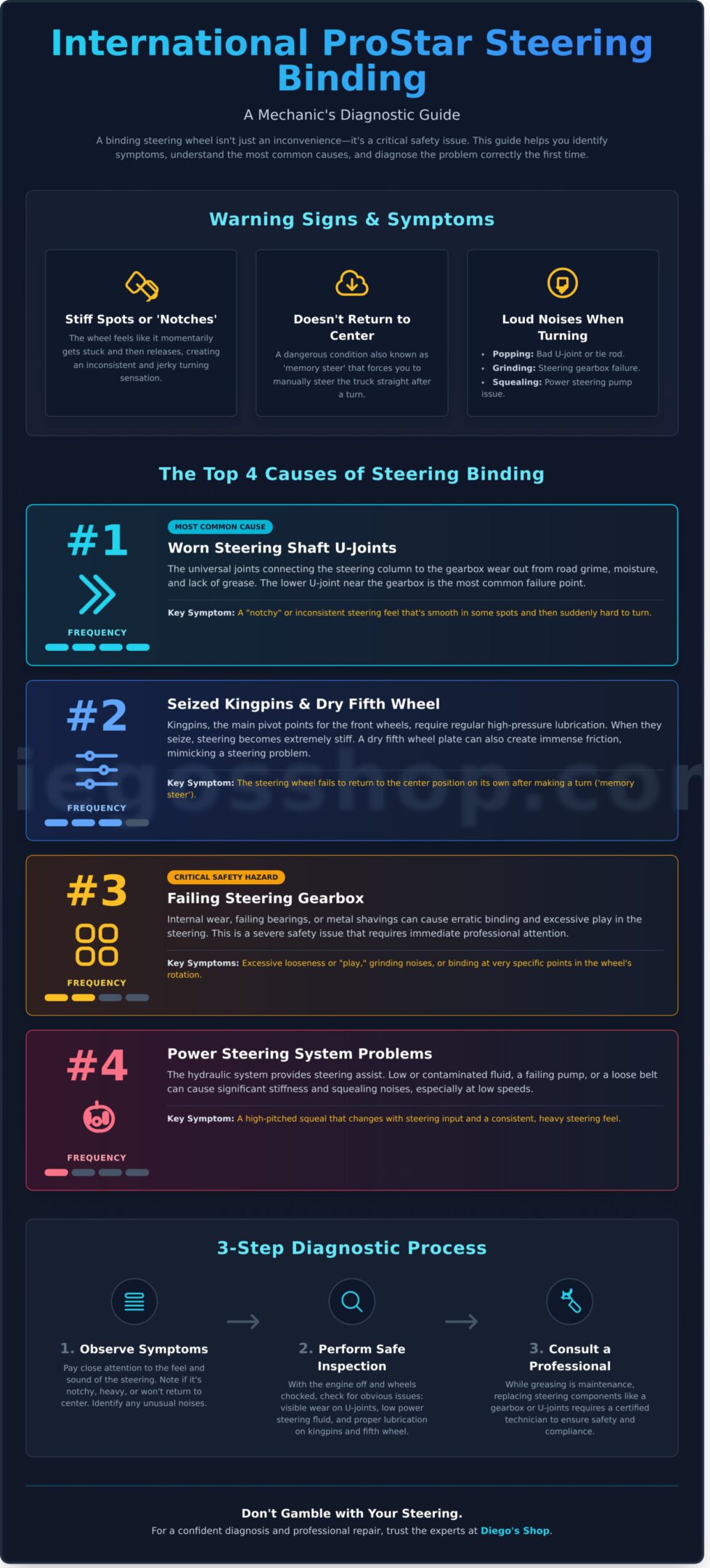
First, What Are the Symptoms of Steering Binding in a ProStar?
As a professional driver, you know that any issue with your steering is a serious safety concern that demands immediate attention. The term ‘binding’ can describe several different problems, but they all point to a component in your steering system that is failing. Properly identifying the specific symptom is the first step in diagnosing the root cause of international prostar steering binding and getting it fixed right.
Ignoring these warning signs can lead to a catastrophic failure on the road. Pay close attention to how your truck feels and sounds, and compare your experience to these common symptoms.
Stiff Spots or ‘Notches’ When Turning
One of the most common complaints is feeling a stiff or tight spot as you turn the steering wheel. It might feel like the wheel momentarily gets stuck and then releases, creating a ‘notchy’ sensation. This symptom often points directly to a worn or seized universal joint (U-joint) in the steering shaft. The binding can be more noticeable at certain steering angles or when trying to turn the wheel while the truck is stationary.
The Steering Wheel Doesn’t Return to Center
After completing a turn, does your steering wheel fail to return to its straight-ahead position on its own? This dangerous condition, often called ‘memory steer,’ forces you to manually steer the truck straight again. This is a classic sign of seized kingpins or excessively tight ball joints that are creating too much friction for the steering to self-center. This not only causes driver fatigue but also creates a significant risk of overcorrecting.
Loud Popping, Grinding, or Squealing Noises
Unusual noises are a clear signal that a component is under extreme stress or has failed. To diagnose the problem, listen carefully to the type of sound you hear:
- Popping or Clunking: A sharp popping sound when turning is often caused by a bad steering shaft U-joint or worn tie rod ends.
- Grinding: A constant grinding or groaning noise that changes with steering input usually indicates a problem inside the steering gearbox itself, such as failing gears or bearings.
- Squealing: A high-pitched squeal typically points to the power steering system. It could be a loose belt or, more seriously, a failing power steering pump that is struggling to provide hydraulic pressure. Understanding the basics of how power steering systems work can help you recognize when the pump is the source of the issue.
The Top 4 Causes of International ProStar Steering Binding
When you’re dealing with steering that feels stiff, catches, or binds, a proper diagnosis is the first step toward a reliable repair. While several components can contribute, our experience shows that international prostar steering binding issues almost always trace back to one of four main systems. Understanding these potential causes, ordered from most to least common, will help you identify the problem and get it fixed right.
Cause #1: Worn Steering Shaft U-Joints
The steering shaft’s universal joints (U-joints) are the critical links that connect your steering wheel input to the steering gearbox. Over time, exposure to road grime, moisture, and a lack of grease causes these joints to wear out and begin to seize. The lower U-joint, located near the gearbox, is the most common failure point. This is the most frequent cause of a “notchy” or inconsistent steering feel, where the wheel is smooth in some spots and then suddenly hard to turn.
Cause #2: Seized Kingpins and Dry Fifth Wheel
Kingpins are the heavy-duty pivot pins that your front steer wheels turn on. They carry an immense load and require regular, high-pressure lubrication. When kingpins are not greased properly, they can bind up, making the steering extremely stiff, especially at low speeds. A classic symptom of seized kingpins is the steering wheel’s failure to return to center on its own after a turn. It’s also important to check your fifth wheel plate; a dry, unlubricated plate can create so much friction that it mimics a severe steering problem.
Cause #3: Failing Steering Gearbox
The steering gearbox is a complex component that multiplies the force from the steering wheel to move the front tires. Internal wear and tear can create tight spots within the gear mechanism, or metal shavings can contaminate the internal fluid, causing erratic binding. A failing gearbox is more than an inconvenience; it’s a critical safety hazard that may not comply with federal regulations like the FMCSA steering system safety standards. Symptoms often include:
- Excessive looseness or “play” in the wheel
- Grinding noises during turns
- Steering that binds at specific points in its rotation
Cause #4: Power Steering System Problems
The hydraulic power steering system provides the assistance needed to turn the wheels easily. Problems here can cause significant stiffness. Common issues include low or contaminated power steering fluid, which reduces hydraulic pressure. A failing power steering pump can lead to intermittent binding and is often accompanied by a distinct whining noise that changes with engine RPM. Furthermore, a clogged filter or a collapsed internal hose can restrict fluid flow, resulting in inconsistent and unpredictable steering effort.
How to Safely Diagnose the Problem: A Step-by-Step Checklist
Before you attempt any diagnosis, safety must be your top priority. Always park your truck on level ground, engage the parking brake, and chock the wheels. For any checks involving moving parts, use a trusted spotter. This professional checklist is designed to help you methodically identify common culprits behind international prostar steering binding before you call a shop. However, if you’re not completely comfortable performing these checks, it’s always best to call our experts for a diagnosis. Your safety and your truck’s reliability are paramount.
Step 1: The Engine-Off Steering Test
This simple test helps isolate mechanical issues in the steering column and shaft, separate from the hydraulic system. With the engine off, have a helper sit in the cab and turn the steering wheel from lock to lock. Your job is to be outside, carefully watching the steering shaft U-joints. Look and listen for any popping sounds, hesitation, or jerky, rough movements. Smooth, consistent operation is what you want to see; any binding here points directly to a worn or seized U-joint.
Step 2: Check Power Steering Fluid
Your power steering fluid is the lifeblood of the system, and its condition can reveal significant problems. Open the reservoir and perform a quick inspection:
- Level: First, ensure the fluid is at the correct “full” mark. Low fluid can introduce air into the system, causing poor performance and noise.
- Condition: The fluid should be a clear red or amber color. If it appears milky (indicating water contamination) or dark and burnt, it has lost its protective properties and needs to be flushed.
- Contaminants: Look closely for shiny metal flakes in the fluid. This is a serious red flag indicating internal wear in the power steering pump or gearbox, a common cause of steering issues.
Step 3: Inspect for Grease and Lubrication Points
A lack of grease is one of the most frequent and preventable causes of international prostar steering binding. Proper lubrication is non-negotiable for heavy-duty components. Visually inspect the kingpins, drag link, and tie rod ends. You should see evidence of fresh grease being pushed out from the seals, which shows the joints are being properly serviced. Don’t forget to check the fifth wheel plate; a dry plate can create significant drag, which often mimics a steering system problem.
Repair Solutions: When to Call a Professional Diesel Shop
Understanding the difference between routine maintenance and a major repair is crucial for every truck owner. While some tasks are part of your pre-trip inspection, addressing the root cause of international prostar steering binding requires a level of expertise and equipment found only in a professional diesel shop. Attempting a complex steering repair without the right training is a significant risk to your safety and the reliability of your rig.
What You Can Do: Lubrication and Fluid Top-Offs
Consistent preventive maintenance is your first line of defense. Greasing all chassis points, including U-joints and tie rod ends, is essential for smooth operation. Checking and topping off your power steering fluid can also provide a temporary solution if a leak is slow. However, these actions are maintenance, not repairs. They will not fix a worn-out steering gear, a seized U-joint, or other mechanical failures that cause binding and play in the wheel.
Why Steering Repairs Need a Certified Mechanic
When a mechanical component fails, professional intervention is non-negotiable. A certified diesel mechanic brings the necessary tools and diagnostic experience to get the job done right and ensure your truck is safe for the road. Here’s why this work demands an expert:
- Specialized Equipment: Replacing steering components like U-joints or a steering box requires hydraulic presses, specialized pullers, and torque wrenches calibrated for heavy-duty applications.
- Comprehensive Alignment: Any significant steering or suspension work demands a professional front-end alignment afterward. Skipping this step leads to premature tire wear, unsafe handling, and driver fatigue.
- Accurate Diagnosis: An experienced technician can pinpoint the exact cause of the problem, identifying related worn parts like kingpins or tie rods that an untrained eye might miss. This prevents a return trip for a related failure down the road.
The Diego’s Shop Promise: Done Right, The First Time
At Diego’s Shop, we understand that uptime is everything. Our ASE-certified mechanics have diagnosed and resolved steering issues on hundreds of International ProStars. We combine technical mastery with high-quality, warrantied parts to deliver repairs that last, giving you confidence and peace of mind on every haul.
Don’t let steering problems compromise your safety or your schedule. If you’re in Utah County, schedule your steering inspection today. We’ll get you back on the road safely and efficiently.
Steering System Diagnosis: Get It Done Right
Navigating the complexities of your rig’s steering system is critical for safety and performance. This guide has shown that what begins as a minor stiffness can point to several underlying issues, from low power steering fluid to failing U-joints or a compromised steering gear. Effectively diagnosing international prostar steering binding requires a systematic approach, but the line between a DIY fix and a major safety risk is thin. Misdiagnosis can lead to costly component damage and, more importantly, put you and others in danger on the road.
When you need absolute certainty, trust the experts. The team at Diego’s Shop is built on rugged reliability and technical mastery. Our certified diesel mechanics have deep expertise in commercial fleet vehicles and use comprehensive inspection protocols to pinpoint the exact cause of your steering problems. We stand behind our work with a commitment to honest service and 100% warrantied repair work, giving you complete peace of mind.
Don’t let steering issues sideline your operations. Don’t risk your safety or uptime. Schedule a professional steering diagnosis at Diego’s Shop. Drive with the confidence that your vehicle has been serviced by the best in the business.
Frequently Asked Questions About ProStar Steering
Is it safe to drive my International ProStar with steering that is binding?
We strongly advise against it. Driving with international prostar steering binding is a significant safety risk that can lead to a sudden loss of control. The binding can cause delayed steering response or force you to overcorrect, creating a dangerous situation on the road, especially at high speeds. If you experience any binding, it is critical to have your truck inspected by a certified technician immediately to diagnose and repair the underlying issue before it causes an accident.
How much does it typically cost to replace a steering shaft U-joint on a ProStar?
The cost to replace a steering shaft U-joint on an International ProStar typically ranges from $250 to $700. The part itself can cost between $100 and $300, depending on the brand and quality. Labor accounts for the rest of the cost, usually taking 1.5 to 3 hours for a professional technician to complete the job. This estimate can vary based on regional shop rates and if other related components require attention during the repair.
Could a bad front-end alignment cause my steering to bind?
While possible, it is not a common cause. Severe front-end misalignment can increase steering effort and cause the truck to pull, which some drivers might mistake for binding. However, true mechanical binding-a feeling of catching and releasing-is almost always caused by a failing component like a steering shaft U-joint, kingpins, or an issue within the steering gear itself. A proper diagnosis is essential to pinpoint the exact cause of the problem and ensure a correct repair.
How often should I be greasing my truck’s steering components?
Regular lubrication is critical for maintaining your steering system’s health and longevity. For a heavy-duty truck like the International ProStar, we recommend greasing all steering linkage components, including kingpins, tie rod ends, and drag links, during every oil change interval. At a minimum, this service should be performed every 10,000 to 15,000 miles to prevent premature wear and ensure smooth, reliable steering operation. Consistent maintenance is your best defense against component failure.
What is the difference between a steering shaft and a steering column?
The steering column is the assembly located inside the truck’s cab. It includes the steering wheel, turn signal switches, and the housing that connects them to the firewall. The steering shaft, on the other hand, is the mechanical linkage that runs from the bottom of the steering column, through the firewall, and connects to the steering gear box. The U-joints that commonly cause binding are located on this external steering shaft, not within the column.
Can a bad tire cause steering problems like binding?
A bad tire will not typically cause the mechanical catch-and-release sensation of true steering binding. However, a tire with a separated belt, a severe flat spot, or extreme uneven wear can cause significant pulling, shaking, and vibration through the steering wheel. While these are serious safety issues that demand immediate attention, they are distinct from the symptoms of binding, which points toward a problem with a mechanical steering component like a U-joint or kingpin.